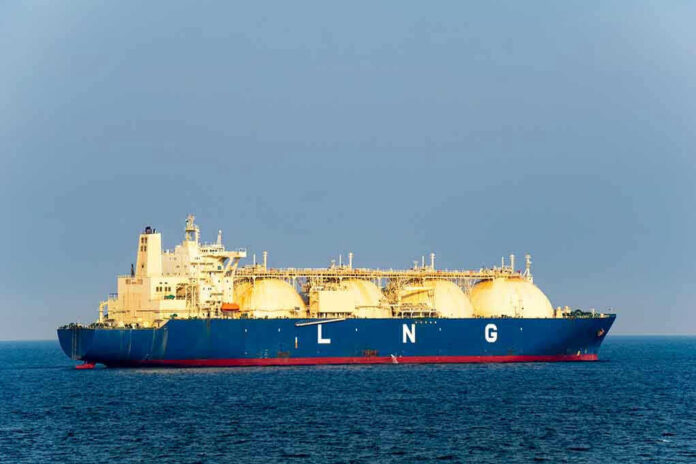
Iran’s ability to choke off the Strait of Hormuz—even after President Trump announced a ceasefire—has become the blunt reminder that global energy security can hinge on a single disputed waterway.
Quick Take
- Iran is still restricting tanker traffic through the Strait of Hormuz days after an April 7 U.S.-Iran ceasefire announcement.
- Iran cites ongoing Israeli strikes on Hezbollah in Lebanon, while the U.S. argues Lebanon was not covered by the ceasefire terms.
- Reports conflict on whether the strait is “fully closed” or merely “effectively closed,” with only limited passage at times.
- Energy markets remain sensitive because roughly one-fifth of global oil flows through the strait, making any disruption a direct inflation risk.
Ceasefire Announced, But the Shipping Chokepoint Stayed in Play
President Donald Trump announced a two-week ceasefire with Iran on April 7 after weeks of fighting that had already disrupted energy markets. The administration’s public message stressed an immediate, safe reopening of the Strait of Hormuz, a narrow corridor that is central to the world’s oil trade. Within days, however, multiple outlets described the strait as still effectively closed to tanker traffic, leaving shipping schedules and prices on edge.
Iran’s position has been that passage must occur “via coordination,” and Iranian state-linked reporting has described the situation as a complete closure at points. The White House, by contrast, has pushed back on “closure” claims and indicated the U.S. would manage traffic and maintain readiness. That disagreement matters because markets respond not just to physical conditions at sea, but also to whether major capitals can agree on what is happening.
Lebanon Became the First Test of a Narrowly Written Deal
Israel’s continued strikes against Hezbollah in Lebanon quickly became the flashpoint. U.S. and Israeli accounts have treated Lebanon operations as separate from the U.S.-Iran ceasefire, while Iranian officials and state media have framed those strikes as a violation of the broader understanding. That mismatch over scope—what the deal covers and what it does not—helps explain why the ceasefire produced a headline calm without delivering the practical outcome most Americans notice first: stable fuel costs.
Iran’s leadership has also used the moment to project leverage, with statements portraying Tehran as victorious and entitled to set conditions. For the U.S., the core issue is freedom of navigation through an international chokepoint, because allowing tolls or politically conditioned passage would encourage future brinkmanship. Even critics of Washington’s foreign-policy class can see the dilemma: if norms are not enforced, energy supply chains become bargaining chips, and families feel it at the pump.
Why Hormuz Still Drives U.S. Inflation Anxiety
The Strait of Hormuz is a 21-mile-wide route that carries about 20% of global oil, which is why it has been at the center of crisis planning since the 1979 Iranian Revolution and episodes like the 1980s “Tanker War.” When fighting erupted in late February 2026, the closure threat shifted from hypothetical to immediate. Even brief restrictions can reprice risk, raising shipping insurance and pushing crude and gasoline higher.
Some reporting noted oil prices dipping below $100 and then rebounding as the closure story hardened. That pattern reflects a deeper political reality in 2026: Americans across party lines are tired of being told that inflation is “cooling” while geopolitics keeps re-igniting price shocks. Conservatives, in particular, read these spikes as proof that national strength and energy security are inseparable—and that Washington’s first duty is to protect U.S. living standards, not manage endless overseas ambiguity.
What to Watch Next: Islamabad Talks and U.S. Military Posture
Peace talks were slated for Islamabad, with the ceasefire functioning as a limited pause rather than a settled peace. U.S. military leadership has described forces as ready if combat resumes, and reporting has indicated the administration remains prepared to act if shipping remains blocked. Meanwhile, the practical question for markets is simple: will tankers move consistently, or will “coordination” become a permanent gatekeeping tool that can be tightened whenever a separate regional front flares up?
One important limitation is that widely circulated claims about a specific backlog—such as “800 tankers”—have not been consistently confirmed across the cited outlets, even though the broader disruption is widely reported. Until independent, verifiable shipping data is published, the safer conclusion is the one supported across sources: traffic has been restricted enough to keep traders nervous and diplomacy fragile. In the near term, that uncertainty is itself a cost Americans end up paying.
Sources:
Iran-US war latest: Trump ceasefire and the Strait of Hormuz
Live updates: Iran, Trump ceasefire, Strait of Hormuz, Israel war, Hezbollah continues
Iran-U.S. Strait of Hormuz standoff and Khamenei’s position
As a Strait of Hormuz standoff grows, will Trump’s fragile Iran ceasefire hold?
Strait of Hormuz reopens, but U.S. remains ready for combat
Fox Business video: Kevin Hassett on Iran and the Strait of Hormuz