
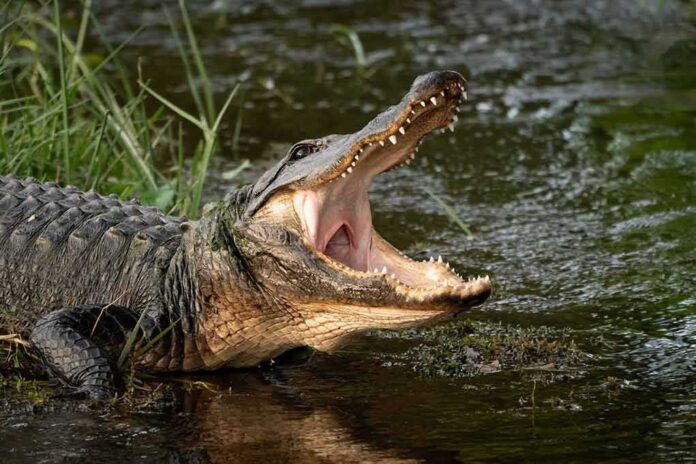
A Florida mother lost her right arm after an alligator charged a group of swimmers on the Silver River, turning a weekend outing into a fight for her life.
Story Snapshot
- Eyewitnesses say a fast-moving alligator hit the group, causing catastrophic injuries.
- Panicked 911 callers reported the victim’s arm was “gone,” confirming the severity.
- Boaters used a rope as a tourniquet and rushed swimmers to safety.
- Officials later captured a 9-foot, 8-inch alligator believed linked to the attack.
What Happened On The Silver River
On August 8, swimmer Dina Spann, 58, was in the Silver River near Ocala with a group when an alligator charged. Witness John Gamache said he saw the reptile’s head high above the water moving “full speed” toward the swimmers. He then saw “a terrible injury, bones poking out, blood everywhere.” Reports identified the stretch near Ray Wayside Park. First calls for help began soon after the bite, as boaters pulled people from the water.
Emergency calls captured the fear and the scale of the wound. One caller told dispatchers, “Somebody got bit by an alligator… it’s dangling off.” Another said, “Her arm is gone.” The calls triggered a rapid response by local authorities and medical teams. The 911 audio lines up with what witnesses described on scene and what rescuers saw when they reached Spann and the other swimmers that day.
Rescue Effort And Medical Outcome
Boaters jumped in to help before medics arrived. Gamache used a rope as a tourniquet to slow the bleeding as others lifted swimmers aboard and headed for shore. Another rescuer, Mike Head, also assisted during the frantic moments. Spann survived but later lost her right arm below the elbow and part of a finger on her left hand, according to family accounts and later reporting about her recovery progress.
State wildlife officers returned to the river after the incident. The Florida report says officials captured and removed a 9-foot, 8-inch alligator the next day. They believed it was the animal involved. Authorities did not publicly present forensic proof tying that specific reptile to Spann’s wounds, but the timing and location made it the likely target for removal from the area.
Why These Attacks Keep Making News
Florida’s own data show that serious alligator bites are rare, but they do happen each year. Over the last decade, the Florida Fish and Wildlife Conservation Commission reports an average of about eight unprovoked bites a year that need professional medical care. The chance of a Florida resident being seriously hurt in an unprovoked bite is roughly one in 3.1 million, according to the state fact sheet.
Researchers who reviewed human–alligator incidents found that risky human behavior often comes before bites. A 2023 study linked about 96% of recorded cases to some form of inattention or risky actions right before contact. That can include swimming in natural waters where alligators live, approaching wildlife for photos, or feeding behavior that teaches animals to see people as a source of food. The trend does not blame victims; it flags choices that raise risk.
Safety Tensions In A Crowded State
Florida’s growth puts more people near wild animals. Tourists and residents flock to rivers and parks to cool off or explore. Some locals warn that social media stunts and casual feeding make gators bolder. Families want safe public spaces, while wildlife managers try to keep natural areas open and wild. Attacks like this one renew calls for clear rules, better signs, and steady enforcement so people know where it is safe to swim and where it is not.
For readers across the political map, the lesson is simple and shared. Government should post clear warnings where risks are high, and then act fast when danger shows up. People should treat wild waters with respect and keep a safe distance from animals that can kill in seconds. This is not about panic. It is about plain facts, smart habits, and a system that puts citizen safety first without pretending nature is a theme park.
Sources:
facebook.com, wfmd.com, outdoorlife.com, orlandosentinel.com, foxbangor.com, foxnews.com
© nationalusnews.com 2026. All rights reserved.