South Korea’s proposed Platform Competition Promotion Act unfairly targets American tech giants like Google and Apple while giving Chinese competitors a free pass, triggering bipartisan pushback from U.S. lawmakers concerned about national security implications.
Key Takeaways
- Over 40 U.S. lawmakers have signed a letter warning that South Korea’s new tech regulations discriminate against American companies while exempting Chinese competitors
- The Platform Competition Promotion Act (PCPA) mirrors the EU’s Digital Markets Act, potentially undermining U.S. tech innovation and competitiveness
- Republican Representatives Adrian Smith and Carol Miller are leading efforts to pressure the Trump administration to address these concerns in trade negotiations
- Security experts warn that giving Chinese tech companies regulatory advantages raises serious risks related to data security and espionage
- A decision on South Korea’s request for a 90-day tariff pause extension is expected from President Trump next week
Republican Lawmakers Sound Alarm on Discriminatory Korean Tech Policy
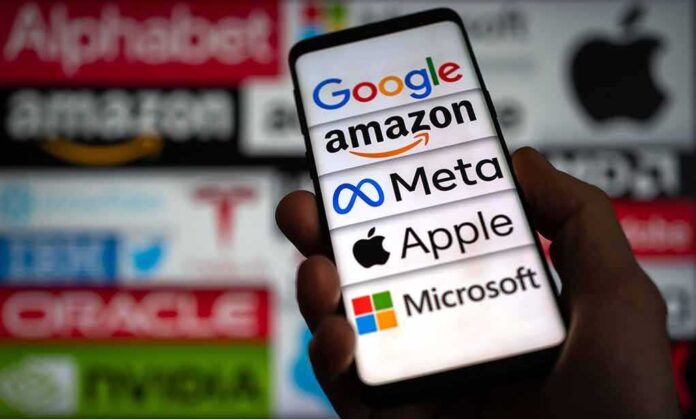
A growing coalition of Republican lawmakers is mobilizing against South Korea’s proposed Platform Competition Promotion Act (PCPA), legislation they believe unfairly targets American technology companies while giving Chinese competitors an unfair advantage. The initiative, supported by South Korean President Lee Jae-Myung, has drawn criticism for potentially imposing stricter regulations on U.S. tech giants like Google, Apple, and Meta than on Chinese companies such as ByteDance and Alibaba. This regulatory disparity has united more than 40 lawmakers who view the legislation as not just anti-competitive but potentially dangerous to American economic and security interests.
“The legislation mirrors the European Union’s blatantly discriminatory Digital Markets Act and would impose disparate legal and enforcement standards designed to undermine innovative business models and disadvantage successful American companies,” said Nebraska Rep. Adrian Smith, Chair of the House Ways & Means Trade Subcommittee, and Rep. Carol Miller, R-W.V.
The bipartisan letter, spearheaded by Representatives Smith and Miller, urges the Trump administration to address these concerns during ongoing trade negotiations with South Korea. Addressed to the U.S. Trade Representative, Treasury Secretary, and Commerce Secretary, the communication emphasizes the need for equitable treatment of American businesses in foreign markets. With South Korea currently seeking an extension to a 90-day tariff pause, the timing gives the administration significant leverage to address these discriminatory practices before making concessions.
National Security Concerns Mount Over Chinese Tech Advantages
The lawmakers’ concerns extend far beyond simple economic competition. The letter explicitly warns that South Korea’s regulatory approach could inadvertently advance Chinese Communist Party interests by hampering American tech companies while allowing Chinese competitors to operate with fewer restrictions. This discrepancy raises serious national security considerations, especially regarding data security, disinformation campaigns, and potential espionage activities. Critics argue that Chinese tech companies, which operate under the influence of the CCP, should face at least the same level of scrutiny as their American counterparts.
“Allowing these companies to operate free from the regulatory burdens imposed on their U.S. competitors would substantially increase threats related to data security, disinformation, economic coercion, and espionage stemming from the CCP’s influence over such Chinese tech giants,” warned the coalition of more than 40 lawmakers.
The PCPA’s similarity to the European Union’s Digital Markets Act has further fueled concerns. Both regulatory frameworks have been criticized for disproportionately affecting American tech companies, raising questions about whether these policies are more about protecting domestic industries than ensuring fair competition. Security experts point out that providing regulatory advantages to Chinese tech companies effectively expands the CCP’s influence in critical digital infrastructure and data collection capabilities, potentially compromising sensitive information of South Korean citizens and businesses.
Trade Negotiations Provide Leverage for U.S. Response
The timing of this controversy coincides with South Korea’s request for an extension of a 90-day tariff pause, giving the Trump administration significant leverage in addressing these concerns. President Trump is expected to decide on this request next week, and lawmakers are urging his administration to use this opportunity to pressure South Korea into adopting more equitable regulatory approaches. The situation highlights the complex interplay between trade policy, national security, and technological competition that defines modern international relations, particularly in the context of rising tensions with China.
This dispute represents more than just regulatory disagreements; it reflects the broader technological competition between the United States and China, with South Korea caught in the middle. As digital platforms increasingly become central to economic growth, national security, and geopolitical influence, ensuring fair treatment of American tech companies abroad has emerged as a critical priority for U.S. policymakers. The coming weeks will likely determine whether diplomatic pressure can succeed in persuading South Korea to reconsider its approach or whether more direct trade measures might become necessary.