President Trump’s executive order bypassed congressional deadlock to restore pay for furloughed TSA agents, bringing relief to airports nationwide but leaving conservatives questioning whether temporary fixes mask deeper dysfunction in Washington.
Story Snapshot
- Trump signed executive order on March 27, 2026, repurposing federal funds to pay TSA workers after DHS funding lapsed
- TSA absenteeism reached 40% with 500+ agents calling out, triggering massive airport security delays nationwide
- DHS Secretary confirmed paychecks arriving by March 30, easing immediate airport chaos but leaving broader shutdown unresolved
- House Republicans rejected Senate-approved DHS funding bill as inadequate, forcing executive action while full agency remains unfunded
Executive Action Bypasses Congressional Stalemate
President Trump signed an executive order on Friday, March 27, 2026, authorizing the repurposing of federal funds with a “reasonable and logical nexus” to Transportation Security Administration operations. The order came after prolonged congressional gridlock left the Department of Homeland Security without funding, forcing thousands of TSA agents to work without paychecks. DHS Secretary Mark Wayne Mullen announced TSA workers would receive pay as soon as Monday, March 30, providing immediate relief to employees struggling with rent and food expenses during the furlough.
Airport Operations Improve Amid Worker Morale Crisis
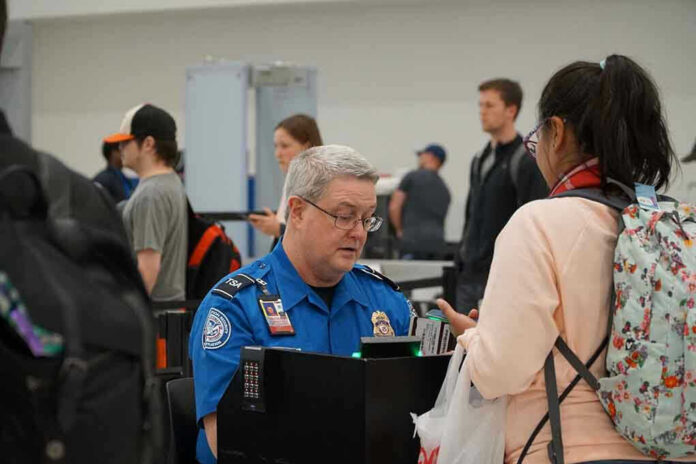
Prior to the executive order, approximately 40 percent of TSA agents called out sick, with over 500 workers absent at major airports during peak travel periods. Security checkpoint wait times stretched to hours, creating chaos for travelers and straining airport operations. By March 29, FOX 5 reported easing wait times as word spread of impending paychecks, though airports continued urging passengers to arrive two to three hours early. Travelers expressed relief that TSA families would receive financial support, acknowledging the crisis forced agents to choose between feeding their families and reporting to work.
Partisan Divide Deepens Over Funding Dispute
The Senate approved a DHS funding bill in a late-night session on March 27, covering TSA, FEMA, and Coast Guard operations. House Republicans immediately rejected the legislation, calling it a “joke” and refusing to advance what they viewed as insufficient measures. The impasse mirrors recurring federal shutdown battles, echoing the 2018-2019 crisis when TSA call-outs spiked 30-40 percent, resulting in over 10,000 missed bags and significant delays. Trump’s unilateral fund repurposing recalls his previous executive orders redirecting money for border wall construction, establishing precedent for “nexus”-based reallocations when Congress fails to act.
Temporary Fix Leaves Broader Issues Unaddressed
While TSA relief provides immediate respite for travelers and workers, the broader DHS shutdown remains unresolved with FEMA and Coast Guard funding still stalled. Reporters noted the executive action eases airport bottlenecks but sidesteps fundamental questions about congressional dysfunction and sustainable funding mechanisms. The move sets concerning precedent for executive branch bypasses of legislative appropriations authority, potentially deepening partisan divisions without addressing root causes of budget impasses. For conservatives frustrated with government overreach and fiscal mismanagement, the situation exemplifies Washington’s inability to perform basic constitutional duties, forcing unilateral executive action that may undermine separation of powers principles cherished by limited government advocates.