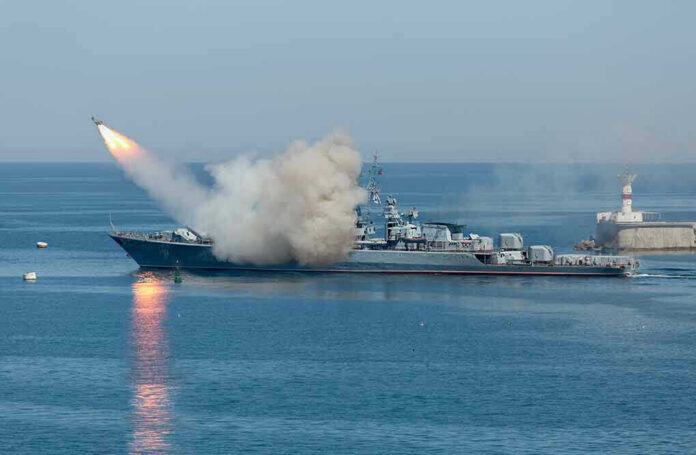
Iran escalated its war footing on Day 57 of the ceasefire by launching missiles and drones at U.S.-linked positions in Kuwait and Bahrain — killing at least one person and forcing Kuwait International Airport to suspend flight operations.
Story Highlights
- Iran’s Islamic Revolutionary Guard Corps fired missiles and drones targeting U.S. military assets in Kuwait and Bahrain on Wednesday, June 3, 2026.
- Kuwait confirmed one person killed and dozens wounded, with damage reported to civilian infrastructure including the international airport.
- U.S. Central Command reported intercepting or defeating the majority of incoming Iranian missiles and drones before they reached their targets.
- Iran claimed the strikes were retaliation for a U.S. attack on a communications tower near Qeshm Island in the Persian Gulf.
Iran Breaks the Ceasefire With Missiles and Drones
Iran’s Islamic Revolutionary Guard Corps launched a coordinated wave of ballistic missiles and Shahed-series drones targeting U.S. military positions in Kuwait and Bahrain on Wednesday. The strikes came on Day 57 of what had been a fragile ceasefire, shattering any remaining hope of a diplomatic off-ramp and thrusting the Gulf region back into active conflict. Kuwait International Airport suspended flight operations following the attacks, causing widespread disruption to civilian air travel across the region.
Kuwait’s government confirmed the human toll: one person killed and dozens wounded as a result of the Iranian strikes. Gulf News reported 63 injuries alongside damage to civilian infrastructure and vital facilities inside Kuwait. The death of a civilian during what Iran framed as a military operation targeting U.S. assets undercuts Tehran’s claim that it did not intentionally target civilian infrastructure. Airports, by any reasonable standard, are civilian facilities.
U.S. Forces Intercept the Bulk of the Attack
U.S. Central Command reported successfully defeating the Iranian assault, stating that two Iranian missiles fired at Kuwait fell short or broke apart in flight, while three missiles launched toward Bahrain were immediately intercepted. American forces also engaged and destroyed multiple Iranian drones before they could reach their intended targets. The U.S. military described the overall Iranian attack as a failure, though the casualties and airport disruption in Kuwait demonstrated that not every threat was neutralized without consequence.
The speed and effectiveness of the American intercept response reflects the significant air and missile defense infrastructure the United States maintains throughout the Gulf. U.S. Central Command’s posture in the region — with assets in both Kuwait and Bahrain — allowed for a rapid coordinated defense. Iran’s inability to penetrate those defenses cleanly, despite launching a substantial volley, signals that its long-range strike capability faces real limitations against prepared American defensive systems.
Iran’s Retaliation Narrative Doesn’t Hold Up
Iran’s Islamic Revolutionary Guard Corps claimed the strikes were a direct response to a U.S. attack on a communications tower south of Qeshm Island in the Persian Gulf. Tehran also floated a secondary justification involving an alleged U.S. strike on an Iranian tanker near the Strait of Hormuz. This dual-narrative approach — offering two separate triggers for the same attack — weakens the credibility of either claim. Genuine defensive retaliation typically has a singular, verifiable cause, not competing justifications released simultaneously.
IRAN in the last 24 HOURS attack KUWAIT and BAHRAIN fuelling escalation in the region
• Iranian missile and drone strikes targeted Kuwaiti infrastructure, including Kuwait International Airport.
• 1 person was killed and at least 63 were injured in Kuwait.
• The attack is…— Untrained Fellow (@kunlewande7) June 3, 2026
The broader pattern here is familiar and dangerous. Iran fires on U.S. allies, claims it was provoked, and counts on the international community to treat both sides as equally responsible. Conservative Americans should recognize this playbook for what it is: a regime using the language of self-defense to conduct offensive strikes against sovereign nations hosting American troops. Kuwait and Bahrain are U.S. partners. Killing their civilians and shutting down their airports is not retaliation — it is aggression. The Trump administration’s response, through U.S. Central Command’s successful intercepts, sent a clear message that American military strength in the region remains a credible deterrent, even if it cannot prevent every casualty.
Sources:
[1] Web – Ceasefire Day 57: Iran Strikes Kuwait and Bahrain with Missiles and …
[2] Web – Kuwait says one killed in Iranian missile, drone attack
[3] YouTube – US, Iran Trade Missile and Drone Blows as Kuwait …
[4] Web – US military says it has ‘defeated’ Iran missile, drone attacks …
[5] YouTube – Iran ATTACKS Kuwait, Bahrain prompting US military …
© nationalusnews.com 2026. All rights reserved.