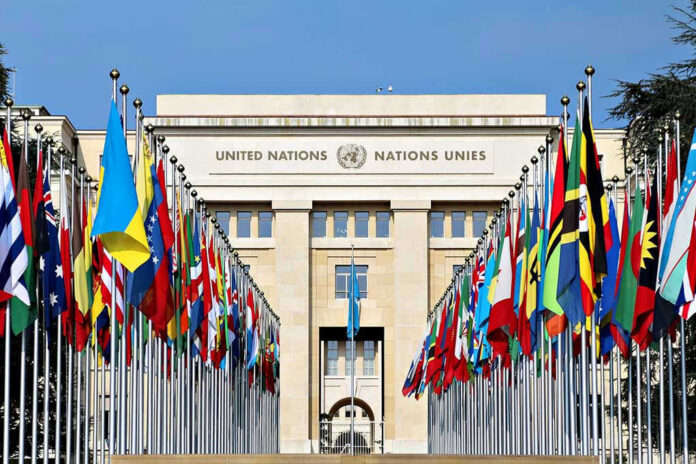
A proposed peace deal could unlock **$300 billion in reconstruction money for Iran** while leaving its terror proxies and missile programs untouched.
Story Snapshot
- A 14‑point draft deal talks about up to **$300 billion** for Iran’s reconstruction, plus **$24 billion** in frozen assets, with no clear limits on proxy funding.[3]
- Iranian sources say missiles and support for militant groups like Hezbollah are **“off the table”** in the current talks.
- U.S. officials insist any sanctions relief or asset release will be **“pay‑for‑performance,”** but the monitoring details are still vague.
- Vice President **J.D. Vance** says the reconstruction fund could reach $300 billion, largely from Gulf partners, if Iran fully gives up nuclear weapons.[1][4]
What We Know About the $300 Billion Plan
News outlets and regional media report that the draft U.S.–Iran peace framework includes a massive **reconstruction package** for Iran, with figures as high as **$300 billion** over time.[1][3] A Sky News Australia segment and other coverage say this money is meant to rebuild Iran after war and reopen its economy, tied to the broader ceasefire and nuclear talks.[1][3] Some reporting also describes a first step release of about **$24 billion** in frozen Iranian assets, with part of that possibly coming even before a final agreement is signed.[2]
Trump‑era White House experience looms large over this debate. In 2018, President Trump quit the old Iran nuclear deal, arguing that sanctions relief had **enriched the regime while it kept backing terror and missiles**. That history shapes how many conservatives see today’s plan. Supporters now say this new deal is different because Iran would have to give up all nuclear material and dismantle its weapons program before full funds are unlocked. But the size of the proposed fund and loose details on enforcement raise many of the same concerns that surrounded past deals.
Missiles and Proxies Left Off the Table
Coverage of Iran’s own 14‑point proposal is blunt: Iranian media and analysts say **missile programs and regional proxies are not part of the current talks**. A detailed explainer notes that, in this first phase, negotiations focus almost only on the Strait of Hormuz and lifting the naval blockade. Iran’s nuclear file is pushed to a later phase, and its ties to groups like Hezbollah and other non‑state allies are kept outside the framework for now. That means the draft does not yet impose any binding limits on how Tehran supports armed groups across the region.
This matters because Iran’s “axis of resistance” model relies heavily on **funding and arming proxy groups** to project power without direct war. Research on this network shows how Tehran has used militants in Lebanon, Syria, Iraq, and Yemen to bleed the United States and Israel and threaten shipping lanes. When large pools of money are freed with no specific proxy rules, experts warn that dollars are **fungible**: money labeled for “reconstruction” or “humanitarian goods” frees up other funds for missiles, drones, and terror operations. That pattern has worried U.S. and Israeli analysts every time sanctions are eased.
Supporters Say It Is “Pay‑for‑Performance”
U.S. officials, speaking to Axios and other outlets, push back on claims that this is a blank check. They say the 60‑day memorandum of understanding will require **concrete Iranian steps before any major funds move**. According to these officials, there are no “side deals” or hidden terms on sanctions relief. Instead, asset releases and shipping relief are framed as **pay‑for‑performance**: Iran must first meet commitments on nuclear material, the Strait of Hormuz, and ceasefire terms. Supporters argue this structure gives Washington leverage if Tehran cheats.
Vice President **J.D. Vance** has also tried to calm fears about the $300 billion figure. In one interview, he said Iran could have access to a **reconstruction fund funded mainly by Gulf nations**—not only American taxpayers—if it truly ends its nuclear program and accepts strict inspections.[1][4] He stressed that this is a conditional offer, not an upfront payout, and that the Gulf “coalition” would carry much of the financial load.[4] Still, critics note that markets and foreign governments already act as if a giant bailout is coming, long before we see a final, signed treaty with clear enforcement tools.[4]
Why Conservatives Fear a Repeat of Past Mistakes
Conservative and pro‑Israel analysts see an old playbook. Past briefings on the 2015 deal warned that easing sanctions and unfreezing oil revenues would give Iran tens of billions in usable cash, even if some funds were technically limited to certain purposes. A 2023 Jewish Institute for National Security of America study argued that any funds returned to Iranian control, even through “humanitarian” channels, would **“supercharge” Tehran’s terror and military activity** because money is interchangeable inside the regime’s budget. The same logic applies to today’s much larger sums.
New reporting released minutes ago by The Wall Street Journal indicates that Iranian oil sanction waivers are set to be released immediately after the public signing of the MOU in Switzerland.
"The provision for waivers of sanctions on oil sales takes effect immediately upon…
— Brett Erickson (@BrettErickson28) June 16, 2026
At the same time, Iran and some media outlets brand this as a **“peace breakthrough,”** talking up ceasefire, de‑escalation, and reopened shipping while downplaying proxy risks.[1] U.S. political and economic interests add more pressure. Reopening the Strait of Hormuz and lifting oil limits help drive down global energy prices, which many in Washington and on Wall Street welcome.[1] That creates a built‑in temptation to **soft‑pedal security concerns** in favor of short‑term economic relief, even if it means Iran’s proxy network gets stronger over time.
What Is Still Unclear — and What to Watch
For now, there is **no public proof** that any released funds are earmarked directly to Hezbollah, Hamas, or other specific groups. There are also signs that parts of the deal are still being negotiated, including some language on enforcement and nuclear steps.[3] A key open question is whether the final text will add **explicit bans on proxy funding**, or whether that issue stays outside the agreement as Iranian sources suggest. Until we see that signed document, both supporters and skeptics are arguing from partial information.
For constitutional conservatives, several red flags stand out. First, any move that unlocks tens or hundreds of billions of dollars for a hostile regime without clear, enforceable bans on terror support runs against the duty of the federal government to **protect American lives and allies**. Second, if the administration shifts huge economic benefits through executive diplomacy, Congress must guard its power of the purse and oversight role, as past Iran debates showed. Finally, Americans deserve full transparency on who pays for this $300 billion idea, what strings are attached, and how the United States will respond if Iran takes the money, keeps its proxies, and tests Washington again.
Sources:
[1] YouTube – $300 BILLION for Iran
[2] Web – ‘US-Iran peace deal now complete’, declares Trump; signing set for …
[3] YouTube – US–Iran Peace Deal “Complete” | Signing on June 19 in …
[4] Web – US-Iran Peace Deal To Be Signed In Geneva: “Trump Could Go For It”
© nationalusnews.com 2026. All rights reserved.