Melania Trump’s surprise Epstein speech did more than clear her name – it exposed how powerful people, media, and federal agencies all shape what the public is allowed to know.
Story Snapshot
- Melania Trump denied any Epstein role in her marriage and said she was never part of his crimes.
- Her adviser says years of rumors, viral posts, and disputed reporting finally pushed her to speak out.
- Defamation threats, media retractions, and partly secret government files now fuel anger across the political spectrum.
- Both critics and supporters see the fight over Epstein allegations as proof the system protects elites, not ordinary Americans.
What Melania Trump Said in Her Surprise Epstein Speech
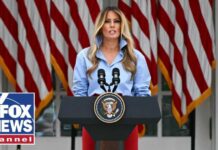
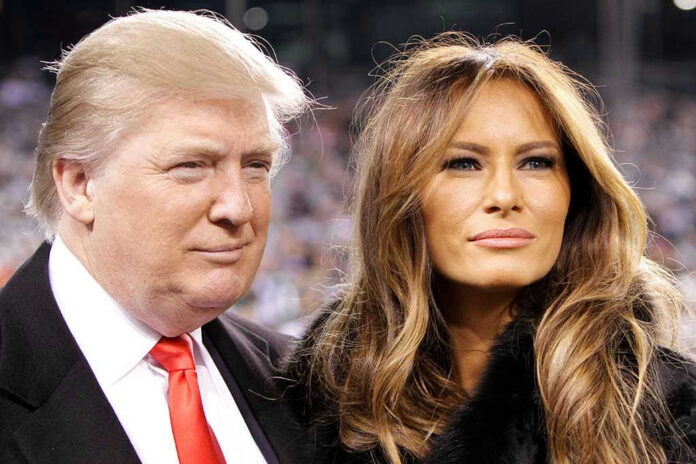
On April 9, 2026, First Lady Melania Trump walked into the White House Grand Foyer and delivered a prepared statement that stunned officials and staff. She said the “falsehoods” tying her to Jeffrey Epstein had to stop and firmly denied that Epstein introduced her to Donald Trump, insisting they met by chance at a New York City party in 1998, a story she says is detailed in her book. She also stressed that she is not an Epstein victim, never joined his crimes, never flew on his plane, and never visited his private island.
Melania added that her name has never appeared in court documents, depositions, victim statements, or Federal Bureau of Investigation (FBI) interviews tied to the Epstein case, and that she had no knowledge of his abuse at the time. She acknowledged crossing paths with Epstein at social events in New York and Palm Beach, explaining that rich circles often overlap but do not always signal close ties. She closed by calling for public congressional hearings so Epstein survivors could speak directly to the country, a move that surprised many in Trump’s own party.
The Adviser’s Explanation: “Enough Is Enough”
After the speech, Melania’s senior adviser Marc Beckman spoke publicly about why she chose this moment to go on offense. He said the First Lady had watched years of “legacy media, social media, different corporate entities and personalities” recycle claims about her and Epstein, and she reached a point where “enough is enough.” Beckman argued that the country should focus on her foster care and education work instead of unproven accusations, and that she “just wanted to set the record straight” about what did and did not happen.
Beckman pointed to fake images and online stories that had spread for years, feeding anger on both the left and the right. To many conservatives, these rumors look like another case of biased media trying to destroy a Republican White House. To many liberals, the same rumors seem like hints that powerful people are hiding ugly truths. Beckman noted that Melania had already taken legal steps, winning retractions and apologies from The Daily Beast, HarperCollins UK, and Democratic strategist James Carville over Epstein claims that could not be backed up. Those wins matter in a legal system where public figures usually lose defamation cases, but they have not ended public doubt.
Media, Lawsuits, and the Battle Over Reputation
Melania’s speech dropped into a media environment already primed for drama. Major outlets like ABC News, the BBC, National Public Radio (NPR), and PBS had spent months highlighting a photo of Melania and Donald Trump with Epstein and Ghislaine Maxwell at Mar-a-Lago, leaked emails signed “Love, Melania,” and a heavily redacted FBI interview that claims Epstein introduced the Trump couple. Together, these details built a counter-story that clashes with Melania’s version and invites viewers to assume there is more being hidden.
At the same time, defamation fights have become a regular weapon in national politics. Legal scholars note that famous figures almost always face an uphill battle in defamation suits because they must prove “actual malice” – that reporters knew allegations were false or recklessly ignored the truth. Yet research shows libel complaints against the media have surged in the Trump era as political actors on all sides turn to the courts to fight back against damaging stories. Melania’s threats of a billion-dollar defamation claim against author Michael Wolff fit this larger pattern, where lawsuits serve as both a shield for image and a sword aimed at critics.
Why This Story Feeds Deep Distrust of Government and Elites
For many Americans, the details of who introduced Melania to Donald Trump matter less than what the episode says about power. The Department of Justice released some Epstein-related materials, including that redacted FBI interview and the Maxwell email, but held back key names and context. That partial release lets people see just enough to suspect a cover-up yet not enough to reach clear answers. House Republicans have also been accused of blocking full Epstein transparency, which feeds a belief that both parties protect insiders while everyday citizens are left in the dark.
Melania Trump escalates $1B feud with 'preposterous' new legal move against author over Epstein claims https://t.co/Bglu7ZFpIe
— an johnson (@john44023) July 3, 2026
People on the right see a justice system and press that drag conservative figures through the mud while shielding liberal allies. People on the left see a government that refuses to fully expose sex trafficking networks tied to wealth and power. In both cases, the Epstein–Melania fight becomes another symbol of a federal system that seems more focused on protecting reputations than delivering truth, safety, and fairness. When the only choices are partly censored files, partisan media, and billion-dollar threats, many Americans conclude the game is rigged – and that conclusion reaches far beyond one First Lady’s speech.
Sources:
independent.co.uk, abcnews.com, bbc.com, pbs.org, reutersconnect.com, facebook.com, britannica.com, docs.house.gov, law.cornell.edu
© nationalusnews.com 2026. All rights reserved.