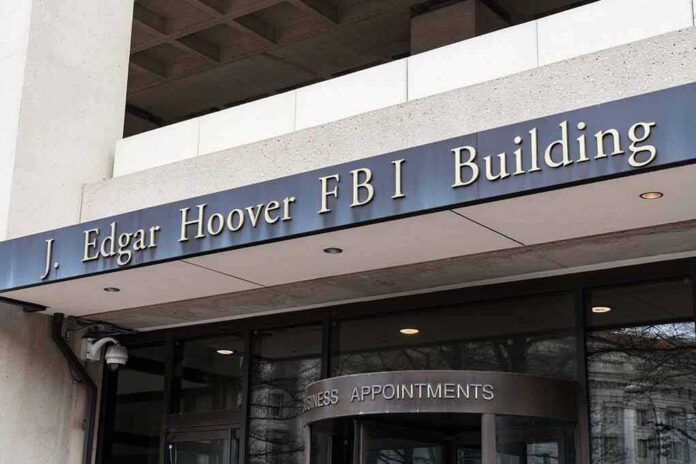
Federal agents arrested a Washington state man after a TikTok video urged killing President Trump and Secret Service agents, according to a filed federal complaint.
Story Snapshot
- Federal complaint says a TikTok video threatened President Trump and Secret Service.
- Ayden Langevin faces a charge for interstate threats; he admitted posting the clip, investigators say.
- Langevin told agents he was “ragebaiting,” deleted the video quickly, and denied intent to harm.
- Social posts claimed the arrest happened within a day of the clip going viral.
What Investigators Say Happened
Federal court records described a TikTok video that called for people to arm themselves, rush the White House, and kill President Trump and members of the United States Secret Service. Local reporting, citing a criminal complaint filed in United States District Court in Tacoma, named the suspect as Ayden Langevin and said he is charged with making an interstate threat to injure. Another outlet summarized the video as an explicit call for killing the president and his protectors.
Advocacy accounts on social media claimed that the Federal Bureau of Investigation (FBI) acted within a day. One widely followed account stated that agents arrested Langevin early the next morning after the clip spread online and tagged the FBI. Those social posts are not official records, but they align with the general timeline that the video spread fast and triggered a quick response. The formal charge, however, is for a threat, not an assault or attempt.
What The Defendant Reportedly Told Agents
The complaint summary reported that Langevin admitted the TikTok account was his and that he posted the video. He said he was angry about news events, removed the clip within 30 to 40 minutes, and sometimes posted similar content to “ragebait” or troll other users. He also said he did not intend to harm anyone, according to the report of what he told investigators. Those statements may shape the defense, but they do not erase the words used in the video, which prosecutors say crossed a legal line.
The First Amendment does not protect “true threats.” The Supreme Court recently held that prosecutors must show the speaker was at least reckless about the threatening nature of the words. That means the government does not need to prove a detailed plan to carry out violence, only that the speaker understood there was a real risk the words would be taken as a serious threat. Courts then weigh the exact language and the context in which it was said.
How This Fits A Larger Pattern
Online threats against public officials tend to draw fast action. Digital posts can spread within hours, trigger real fear, and force security changes. Prosecutors often move even when a speaker later claims it was a joke, hyperbole, or trolling. Under the Supreme Court’s recklessness rule, a post that calls for killing named people can still be a crime if the speaker knew there was a serious risk it would be seen as a threat. That standard is now guiding many social media cases.
🚨 Threats Against Trump Lead to Same-Day Arrest
Libs of TikTok exposed a man making repeated death threats against President Trump. Less than 24 hours later the FBI arrested Ayden Langevin and took him off the streets.
Public exposure plus rapid law enforcement response is…
— The Ugly Patriot (@the_uglypatriot) August 24, 2026
People across the political spectrum worry about lines being crossed online. Conservatives see a climate where rhetoric against leaders gets normalized. Liberals fear violent talk can spark copycats. Many also feel that powerful people get different treatment than everyone else. This case shows the system can act fast when a threat targets the president. The test now is even-handed enforcement when threats target judges, members of Congress, or everyday citizens too.
Why It Matters To Readers
Clear rules protect both safety and speech. You can be angry, protest, and criticize leaders. But when a post urges others to kill named people, you step into criminal territory. The charge here is not about the politics of the speaker. It is about the risk that violent words online turn into real harm offline. The court will decide if the government met the standard. The rest of us can demand consistent rules no matter who holds power.
What We Still Do Not Know
The full affidavit, any platform records, and video forensics were not posted in the public sources reviewed here. Official agencies have not issued a detailed press release tied to this arrest in the records we saw. Defense counsel has not offered a public statement beyond what agents say Langevin told them. Until those materials appear, stick to the charge, the complaint’s key claims, and the Supreme Court’s rule on true threats.
Sources:
thegatewaypundit.com, king5.com, wltreport.com, x.com
© nationalusnews.com 2026. All rights reserved.