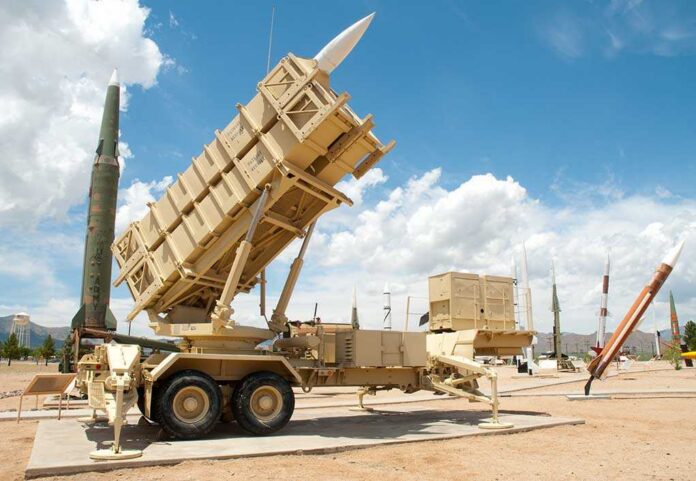
America’s high-end missile shield has been drained so deeply by the Iran war that experts say it could not be quickly rebuilt for a major fight with a power like China.
Story Snapshot
- CSIS estimates the U.S. has lost about two-thirds of its Patriot interceptors and a large share of THAAD, leaving under 1,000 of each in stock.
- Rebuilding these air-defense missiles will likely take years, not months, because production lines are slow and tightly stretched.
- The Pentagon is asking Congress for billions to refill munitions, but delivery schedules still lag behind what recent wars have burned.
- Analysts warn today’s shortages weaken U.S. readiness not only in the Middle East, but also for a future clash in the Indo-Pacific.
Severe interceptor losses from the Iran war
Center for Strategic and International Studies (CSIS) analysts say the United States entered the Iran war with about 2,300 Patriot interceptors and roughly 450 Terminal High Altitude Area Defense missiles. Their latest open-source study estimates U.S. forces have fired away around 65 percent of those Patriots, leaving fewer than 1,000 in inventory. CSIS also believes the THAAD stockpile has fallen by nearly 40 percent, with about 234 to 278 missiles left. These figures line up with anonymous Pentagon sources quoted by major outlets.
During the early phase of Operation Epic Fury and later flare-ups, U.S. air-defense crews used large numbers of interceptors to block Iranian ballistic and cruise missiles aimed at bases and ships. CSIS and news reports describe Patriot inventories “now under 1,000” and THAAD around 250, stressing that these are the premier systems for defending U.S. forces against high-end threats. This kind of drawdown in only months of combat shows how fast modern warfare can chew through expensive weapons that take years to replace.
Slow replenishment and years-long rebuild timelines
Analysts say the main problem is not just how many missiles were fired, but how slowly new ones arrive. CSIS estimates the United States produces about 183 top-end Patriot interceptors per year and that it takes around three and a half years from signing a contract until those missiles are delivered. Similar timelines apply to THAAD interceptors, where CSIS has warned of a delivery “gap” stretching well into 2027. That means today’s depleted stockpiles cannot be restored quickly, even if President Trump and Congress pour in more money.
Reports from outlets citing Pentagon data say current delivery schedules for advanced missiles are measured in dozens per month, far below the wartime rate at which they were used. U.S. officials told one network the defense industrial base simply cannot build precision munitions fast enough to support high-intensity operations and also refill inventories. CSIS concludes that, given these bottlenecks, rebuilding Patriot and THAAD stockpiles after the Iran war will take multiple years, not a single budget cycle.
Funding fights and a wider readiness warning
To close the gap, the Pentagon has asked Congress for tens of billions in extra funds earmarked for advanced air-defense weapons and cruise missiles. One media summary of internal requests cited an $18.2 billion package focused on Patriots, THAAD, and Tomahawks, on top of a record interceptor contract with major defense firms. These numbers fit a broader pattern many Americans now recognize: wars reveal that stockpiles are thin, factories are slow, and Washington responds with huge checks after the fact instead of planning ahead.
CSIS and Military Times coverage make clear that the worry is not only about finishing the Iran war, but about what happens if another major crisis comes before inventories recover. Their assessment warns that U.S. theater air defense and long-range strike capacity in the Western Pacific will likely be limited into the late 2020s. In plain terms, that means America’s ability to protect bases and ships in a Taiwan or South China Sea showdown could be weaker than many citizens assume today.
What this means for a future war with China
No public report proves exactly how many missiles the United States would need in a full-scale conflict with China or how long current stocks would last. War plans, threat models, and alliance roles are classified. Still, the pattern is clear: the United States has burned through much of its best air-defense ammunition for one regional war and cannot replace it quickly. CSIS explicitly warns that the greater risk is responding to “another high-intensity contingency” before Patriot and THAAD inventories are rebuilt. For many readers, that contingency is China.
For conservatives and liberals alike who worry that the federal government is failing basic readiness, this story hits a nerve. The United States spends hundreds of billions on defense, yet a few months of war left key bases more exposed and forced commanders to think about rationing interceptors. At the same time, defense contractors receive giant long-term contracts while delivery lags for years. That mix of slow planning, distant elites, and real risk to ordinary service members feeds the growing sense that Washington’s priorities are upside down.
Sources:
defenseone.com, cnn.com, militarytimes.com, abcnews.com, foxnews.com, csis.org, economictimes.indiatimes.com
© nationalusnews.com 2026. All rights reserved.