A convicted child predator’s death behind bars has left a murdered 13-year-old’s family without the one thing they were promised: the location of her body.
Story Snapshot
- Michigan inmate Jarvis Butts was found dead in his prison cell on March 27, 2026, with authorities investigating the death as a suicide.
- Butts had recently been sentenced after pleading guilty to second-degree murder and multiple sexual-assault counts tied to 13-year-old Na’Ziyah Harris and other child victims.
- Harris’ remains have not been recovered, despite a plea arrangement tied to disclosing where her body was left.
- Reports say Child Protective Services received multiple allegations about Butts for years, but none were substantiated.
Death in Custody Ends the Only Path to Answers
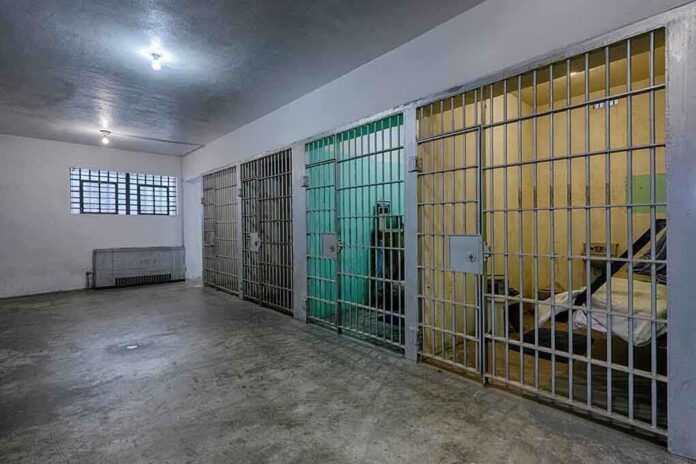
Michigan corrections officials found Jarvis Butts dead inside his cell at the Charles Egeler Reception and Guidance Center on March 27, 2026, roughly two weeks after his sentencing. Available reporting indicates the Michigan Department of Corrections is investigating the death as a suicide, but public details about how it happened remain limited. The timing matters because Butts was the key witness to one fact the public still does not have: where Na’Ziyah Harris’ body is located.
Prosecutors had secured guilty pleas that closed the legal case, but not the family’s agony. Harris’ relatives have warned that Butts’ death could mean permanent uncertainty about where to recover her remains, a basic step toward burial and closure. For many Americans, that outcome feels like a system that checked procedural boxes while failing the most human duty it has in murder cases: returning a child to her family.
What Investigators Say Happened to Na’Ziyah Harris
Detroit teenager Na’Ziyah Harris was last seen alive on January 9, 2024, after getting off a bus in Detroit, according to reporting that traces the case through her disappearance and the eventual prosecution. Authorities tied Butts to events around that date, and later activity placed him near the Rouge River area where evidence connected to Harris was found. Reporting also states a source relayed that Butts claimed he dumped her body in the Rouge River, though searches did not recover her remains.
Prosecutors described a pattern of grooming and exploitation that began when Harris was about 11 years old, and later documentation said Harris became pregnant in 2023. Investigators cited digital and physical evidence—such as messages, phone records, and items found during the search effort—to build a case strong enough to secure a plea. The hard limit was unavoidable: without recovering the body, even strong evidence leaves the public with unanswered questions about the final moments and exact location.
The Plea Deal, the Sentence, and the Unfinished Bargain
Butts pleaded guilty in February 2026 and was sentenced on March 13, 2026, to a 35- to 60-year term for second-degree murder, plus additional terms for multiple criminal sexual conduct counts. The plea was noteworthy because it was tied to resolving the central mystery of where Harris’ remains could be found. Yet reporting indicates the body was never recovered, and authorities still stated they were satisfied Butts complied with the plea terms, a conclusion that remains difficult for many citizens to understand.
That gap between “compliance” and “results” highlights a broader frustration: ordinary people expect the justice system to prioritize outcomes that protect victims and deliver answers, not just negotiated endpoints. When a plea arrangement hinges on a location disclosure, the practical question becomes how compliance is measured—especially when the only person who knows the truth may be lying, withholding, or providing unverifiable information. Available reporting does not provide enough detail to evaluate how prosecutors assessed compliance.
Warnings That Went Nowhere: CPS Reports and the Limits of Bureaucracy
Multiple outlets reported that Child Protective Services received at least five reports between 2015 and 2022 alleging molestation or sexual abuse tied to Butts, including a 2022 allegation involving inappropriate touching of Harris, but none were substantiated. Reporting also states Butts was a registered sex offender with a prior sexual-assault conviction dating back to 2005. Those facts point to a systemic problem conservatives often flag: government agencies can be expansive, expensive, and powerful—yet still fail at core responsibilities like protecting children.
The public record described in available coverage does not explain why those CPS reports were not substantiated, leaving key accountability questions unresolved. When the state’s protective apparatus misses repeated warning signs, the result is not just a paperwork failure; it is a real-world catastrophe for families and communities. If lawmakers want to restore trust, they will need transparent answers on investigative standards, inter-agency communication, and whether resources were misdirected away from the most basic mission: stopping predators.
Separately, Butts’ death raises questions about jail and prison suicide prevention and supervision practices, especially for high-profile inmates facing lengthy sentences. Available reporting does not provide specifics on the circumstances inside the facility, so firm conclusions are not supported by the public facts. Still, the impact is plain: the state now has to investigate a death in custody while Harris’ family continues living with uncertainty. The case closes in court, but it does not close in life.
Sources:
Pedophile Who Murdered 13-Year-Old Found Dead in Jail Cell
Serial Rapist Who Killed 13-Year-Old Girl He Impregnated Is Found Dead in Jail Cell
Serial child rapist dies by suicide in prison: Detroit
‘Serial child rapist’ denied bond in murder, abuse case of 13-year-old Detroit girl