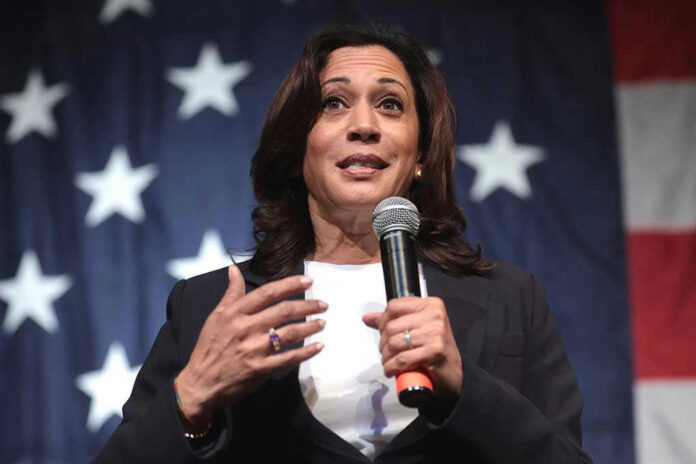
Former Vice President Kamala Harris continues to keep the door open for another White House bid in 2028, despite losing to President Trump in 2024, signaling what many Americans see as yet another example of political elites refusing to accept the electorate’s verdict.
Story Snapshot
- Harris publicly states she remains undecided on a 2028 presidential run while actively touring key primary states
- The former VP leads several Democratic primary polls despite widespread electability concerns from party donors and leaders
- Her expanded book tour and speeches in battleground areas contradict claims of indecision, raising questions about transparency
- Democratic insiders interpret her activities as pre-campaign positioning, marking a familiar pattern of political ambition over voter will
Harris Maintains Public Indecision While Actions Suggest Otherwise
Kamala Harris has repeatedly told media outlets she has not decided whether to pursue the 2028 Democratic presidential nomination, most recently stating in a February 2026 podcast that she “might” run and is “thinking about it.” These statements echo similar comments from October 2025, when she told the BBC “I am not done” and the AP “I haven’t decided… I may or I may not.” Yet Harris’s spokesperson Kirsten Allen frames her activities as party-building focused on “listening” and “shaping the way forward,” language that sounds remarkably similar to pre-campaign positioning that political operatives have used for decades.
NEW: Kamala Harris says she's STILL considering a presidential run in 2028:
"I might."
"I'm thinking about it." pic.twitter.com/q5TI6wd9vg
— John John (@John1fkenedy) April 10, 2026
Strategic Tour Targets Early Primary States and Key Demographics
Harris expanded her “107 Days” book tour in December 2025 to include early 2026 stops in critical primary states like South Carolina and cities with large Black populations including Detroit, Jackson, Memphis, and Montgomery. The tour, ostensibly promoting her book about the 2024 campaign, conveniently positions her before the very voters who will decide the 2028 Democratic nomination. She delivered a speech to Democratic National Committee officials criticizing what she called “nostalgia for a flawed system” and appeared before the United Farm Workers, receiving enthusiastic reception. These calculated moves in key electoral territories reveal a pattern that ordinary Americans recognize as political theater designed to maintain relevance while avoiding accountability for past failures.
Polling Strength Contrasts With Elite Skepticism
Morning Consult polls consistently place Harris at or near the top of hypothetical 2028 Democratic primary matchups, with particularly strong support among Black voters who remain crucial to Democratic primaries. February 2026 polling even suggested she could defeat President Trump in a rematch, though such speculation seems disconnected from the reality that voters already rejected her message in 2024. Despite these poll numbers, Democratic party leaders and major donors express significant electability concerns, creating a divide between grassroots enthusiasm and establishment wariness. This tension exemplifies the broader disconnect many Americans perceive between what political insiders want and what the country actually needs from its leadership.
Shift From Biden Defense to System Critique Raises Questions
Harris has notably pivoted from defending the Biden administration’s record to criticizing broader systemic failures, even characterizing President Trump as a “symptom” of a flawed system rather than the cause. This rhetorical shift allows her to distance herself from the policies she championed as Vice President while positioning herself as an outsider despite spending four years at the highest levels of government. The transformation mirrors a familiar pattern in American politics where officials who contributed to problems later campaign as the solution. Harris declined a 2026 California gubernatorial run in July 2025, keeping the presidential path open while rivals like Governor Gavin Newsom and Governor JB Pritzker monitor her moves with their own ambitions in mind.
Pattern Reflects Deeper Concerns About Political Class
Harris’s simultaneous claims of indecision and obvious campaign-style activities represent precisely the kind of political gamesmanship that frustrates Americans across the ideological spectrum. Whether conservative or liberal, many citizens share growing concern that elected officials prioritize personal ambition and career preservation over genuine public service. The former Vice President’s inability to clearly state her intentions while conducting what insiders describe as “initial steps toward another White House run” reinforces perceptions of a political class more focused on positioning and polling than on honest engagement with voters. As the 2028 election cycle approaches, this episode serves as another reminder of why trust in government institutions continues to erode among ordinary Americans who expect straightforward answers from those seeking the nation’s highest office.
Sources:
Harris stepping toward another White House run – Axios
2028 United States presidential election – Wikipedia