A high-profile Hollywood homicide case is colliding with California’s secrecy-heavy courtroom culture—just as prosecutors weigh life-or-death penalties and the defense signals a not-guilty plea.
Quick Take
- Nick Reiner is scheduled to be arraigned Feb. 23, 2026, in Los Angeles on two counts of first-degree murder in the stabbing deaths of his parents, Rob and Michele Reiner.
- Prosecutors filed special-circumstance allegations for multiple murders, a path that can allow life without parole or the death penalty under California law.
- The case has been delayed by waived speedy-arraignment rights and a major defense shakeup after attorney Alan Jackson withdrew; a public defender now represents Reiner.
- Authorities have released limited detail on motive and evidence, with court orders restricting what becomes public.
- Reports cite a history of addiction and deteriorating mental health, raising questions about what the defense will argue versus what the state can prove.
Arraignment Returns After Delays and a Defense Reset
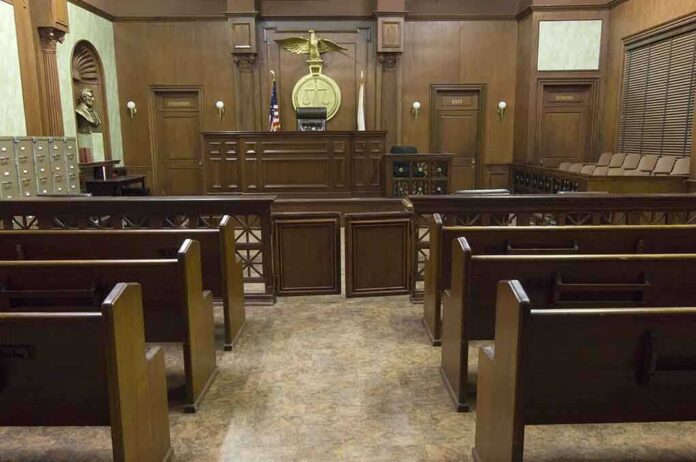
Nick Reiner, 32, is expected back in a downtown Los Angeles courtroom on Feb. 23 for an arraignment that has already been pushed twice since his first appearance in December. Prosecutors have charged him with two counts of murder in the deaths of his parents, film director Rob Reiner, 78, and photographer-producer Michele Singer Reiner, 70. The public docket has remained active, but major factual specifics have stayed out of view due to court limits.
Los Angeles County prosecutors allege the killings occurred early Dec. 14, 2025, at the family’s Brentwood home, with the bodies discovered hours later. Police arrested Reiner later that day in Exposition Park, and the district attorney’s office announced charges on Dec. 16, including allegations of personal use of a knife. Reiner has been held without bail. The arraignment is expected to produce a not-guilty plea, but that step mainly starts the formal pretrial clock.
What the Charges Mean: Special Circumstances and Sentencing Stakes
The district attorney filed special-circumstance allegations for multiple murders, which can elevate the sentencing range to life without parole or the death penalty in California, depending on charging decisions and later findings. The DA has not publicly committed to pursuing the death penalty, and that choice remains a key inflection point for the case. For conservative readers skeptical of California’s uneven approach to public safety, this is where policy meets reality: consequences depend on follow-through, not headlines.
Public information suggests prosecutors will rely on the medical examiner’s findings of multiple stab wounds and investigative work by LAPD’s Robbery-Homicide Division, but the state has not laid out a public narrative of motive. That gap matters because high-profile cases can become rumor-driven fast, especially in a media ecosystem eager to fill blanks. The U.S. system requires the state to prove guilt beyond a reasonable doubt, and the presumption of innocence remains intact until evidence is tested in open court.
Alan Jackson’s Exit and the Not-Guilty Signal
The biggest procedural twist so far is the defense-team change. Alan Jackson, a prominent attorney who briefly represented Reiner, withdrew in January citing “circumstances beyond control,” and a public defender, Kimberly Greene, was appointed. Jackson also publicly stated that Reiner was “not guilty of murder” under California law after his own investigation and complained about “false reporting.” Without the underlying work product becoming public, that assertion is more preview than proof, and it will stand or fall on what evidence emerges.
Attorney changes can be routine, but they also add delays and uncertainty, especially when the case involves mental-health records, treatment history, and questions about intent. Court observers should watch whether the defense focuses on disputing identity and actus reus (who did what) or argues about mental state at the time of the killings. Each path carries different burdens and different public implications. For families watching from afar, the slow pace can feel like a system that protects process more than people.
Mental Health, Addiction, and a State That Often Acts After the Fact
Reports describing Reiner’s addiction history and deteriorating mental health highlight a grim but familiar pattern: institutions frequently intervene late, after families have been overwhelmed for years. In California, the debate has been framed around funding and facilities—especially after voters approved Proposition 1 in 2025 to expand mental-health treatment infrastructure. Even supporters admit implementation takes time. This case, however, is not a ballot measure; it is a criminal prosecution where mental-health context may be raised but does not automatically erase accountability.
Investigators have not disclosed a motive, and media accounts describe unusual behavior and a reported argument the night before the deaths. Those details, while newsworthy, are not substitutes for courtroom evidence. Conservatives who have watched “woke” priorities crowd out basic governance will recognize the broader frustration: the public gets press releases and partial narratives, while the truth is locked behind protective orders and procedural walls. The more the system restricts transparency, the more critical it becomes that the eventual trial record is clear and contestable.
What to Watch on Feb. 23: Plea, Penalty Signals, and Transparency
The Feb. 23 arraignment will likely center on a plea and scheduling, but it can still produce clues about where the case is headed. Observers should listen for any discussion of special-circumstance litigation, potential psychiatric evaluations, and whether prosecutors indicate a timeline for deciding on capital punishment eligibility. They should also watch how firmly the court enforces gag-like restrictions and sealing orders. Public confidence is strongest when justice is both fair and visible—especially in a case involving famous names and devastating violence.
For now, the public record supports a narrow set of facts: two parents dead from stabbing injuries, an adult son charged, an arrest the same day, and a prosecution that has kept details close while the defense resets. The next steps will not just test one man’s legal fate; they will test whether a state known for political theater can deliver basic, constitutional due process without smothering public accountability. If California wants trust, it will have to earn it in the open.
Sources:
Rob Reiner’s son returns to court, may enter plea in the killing of his parents
Nick Reiner expected to enter plea in stabbing deaths of parents
Rob Reiner’s son returns to court, may enter plea in the killing of his parents
Son charged with fatally stabbing parents Rob and Michele Reiner in their Brentwood home
Nick Reiner: 3 California moms share hope after tragic killings of Rob and Michele Reiner
Rob Reiner’s son returns to court, may enter plea in the killing of his parents