
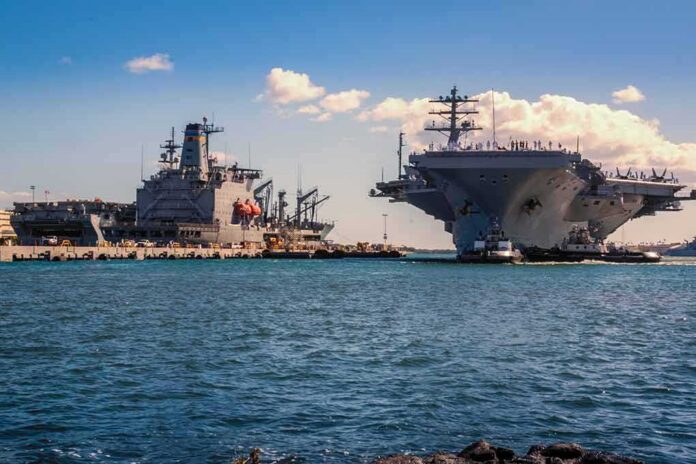
A Soviet Tu-16 bomber skimmed the waves beside USS Essex, caught a wingtip on the sea, and shattered into the water with no survivors.
Story Snapshot
- A Soviet Tu-16 made repeated low passes by USS Essex in the Norwegian Sea and crashed after clipping the water.
- The flyby fit a wider Cold War pattern of risky “buzzing” near U.S. carrier groups.
- The loss underscored how close-quarters signaling can turn deadly without a shot fired.
- Later agreements sought to curb these incidents after years of dangerous encounters.
What Happened Beside USS Essex
On May 25, 1968, sailors aboard the aircraft carrier USS Essex watched a Soviet Tu-16 “Badger” sweep low across the ship in the Norwegian Sea. After making close passes, the Soviet aircraft turned and dipped so near the surface that its wingtip struck the water. The impact tore the bomber apart. The crew did not survive. A U.S. Navy historical record documents the low pass, the wing strike, and the fatal crash with no survivors.
U.S. and Soviet forces often met at sea during the Cold War. Each side tried to collect intelligence and show strength without firing. Close flybys of carriers were common. These moves tested nerves and training on both sides. They also left little margin for error at high speed and low altitude. That mix of pressure and pride set the stage for tragic mistakes, including the Tu-16’s loss off Essex that day.
Why These Flybys Happened
Soviet leaders used near passes to signal reach and resolve. U.S. carrier groups were prime targets for that message. The Tu-16 was built for long range and carried cameras and sensors. A low pass let crews collect images and gauge reactions. U.S. Navy histories describe a pattern of harassment against carriers that included close approaches and other stunts. These actions aimed to unsettle crews and gather data without crossing into combat.
Commanders accepted these risks because they believed the gains mattered. Intelligence from a close look could shape plans and policy. But the costs could be sudden and severe. A wingtip strike at sea level can be fatal in an instant. That is what happened near Essex. The incident showed how a show of force can become a loss of life in seconds, even with no weapons fired and no hostile orders given.
What Changed After Years of Risk
After a long series of close calls, Washington and Moscow worked to reduce danger. The two sides signed the Incidents at Sea Agreement in 1972. That deal set rules for safe conduct. It aimed to prevent buzzing, dangerous passes, and other reckless moves. The goal was simple: limit the chance that a split-second mistake could spiral into a wider fight. Naval historians tie the agreement to years of tense encounters like the Tu-16 crash.
The lesson still resonates. Rivals will probe and watch each other at sea. Nations will send planes and ships to test defenses and gather clues. But low-level, high-speed passes near crowded decks or rough seas invite disaster. The Essex episode reminds us that deterrence without discipline soon fails. Clear rules and calm heads protect crews, prevent tragedy, and keep accidents from dragging nations toward war.
Sources:
theaviationgeekclub.com, history.navy.mil, myplace.frontier.com
© nationalusnews.com 2026. All rights reserved.