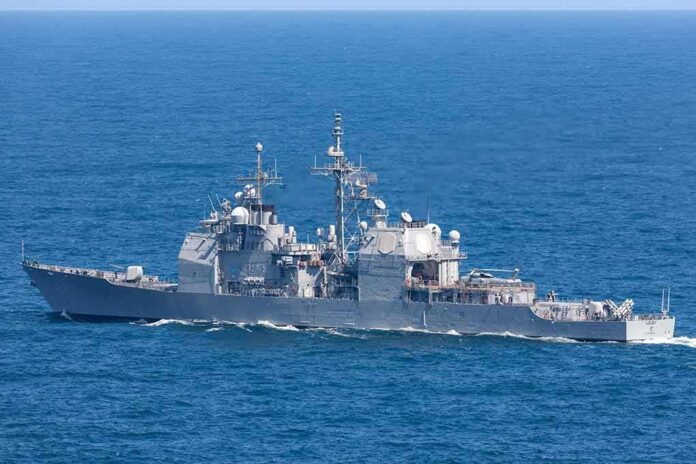
Washington kept the Iran blockade in place and widened interdictions after the midterms, raising fresh questions about where this standoff leads next.
Story Snapshot
- The United States maintained a naval blockade and expanded interdictions through Task Force Iron Gate after the elections.
- Iran warned of retaliation while also floating a deal that tied ending hostilities to lifting the blockade and releasing assets.
- President Trump said a new round of major strikes was “unlikely,” even as pressure actions continued.
- Supporters claim the blockade hurts Iran’s economy and reduces the need for large-scale war, but legal and escalation risks remain disputed.
What Washington Did After the Vote
U.S. Central Command announced Task Force Iron Gate to disrupt Iranian land trade and ground transit routes while the Navy kept the blockade at sea. Reporting says the administration chose to hold pressure after the midterms rather than wind down operations. These steps extend the campaign beyond sanctions into active interdiction. The White House signaled talks would continue, but officials framed the pressure as leverage while they test Tehran’s intent.
Secretary of State Marco Rubio argued that sanctions and the blockade were inflicting growing economic pain on Iran, reducing the need for major combat operations. Supporters said the aim is to limit funds for armed groups and strain the government’s control, describing the blockade as a tool, not the goal. Backers contend steady pressure can push leaders toward a deal. Critics counter that calling this “controlled” does not remove escalation risk.
How Tehran Responded and What It Offered
Iran’s Foreign Minister Abbas Araghchi warned that if the United States renews major attacks, Iran will “rain down hell,” but he also pointed to a two-day offer to pause hostilities. Other reporting says Tehran tied opening the Strait of Hormuz and suspending hostilities to ending the U.S. blockade and releasing frozen assets. These messages mix threat and diplomacy. They also show that the blockade, not just sanctions, sits at the core of Iran’s demands in any deal.
Analysts at The American Conservative argued the blockade itself functions as an act of war under international law and raises the chance of escalation. That claim reflects a legal view but the cited material does not present a treaty clause or court ruling to prove it, which limits how firmly readers can judge the legal status. Still, the article stresses that sustained interdictions can trigger responses even if Washington frames them as restraint.
The Administration’s Restraint Message vs. Escalation Fears
President Trump said further escalation was “unlikely,” and that there was no reason to renew large-scale attacks at this time. At the same time, officials kept the blockade and pursued interdictions on land routes, saying these steps help contain Iran’s resources while talks play out. This twin track lets the White House claim pressure without war, but it also keeps the temperature high. That tension fuels public worry about a wider conflict.
Trump Chooses a Third Path on Iran: Economic Strangulation Over War or Deal
* Axios
When Secretary of State Marco Rubio met his G7 counterparts in Paris on Tuesday, he told them President Trump had considered either resuming the war with Iran or striking a deal—but settled on a…
— mahmoud khalil (@sahel2212) November 11, 2026
Research on sanctions shows pressure often bites early but weakens over time as targets adapt, and it rarely delivers full capitulation without a clear off-ramp. That pattern fits the current bind: the United States seeks leverage, Iran signals pain but resists core concessions, and both sides trade threats while leaving doors open. For Americans across the spectrum, the risk is drift. Prolonged “limited” measures can become a slow walk into a larger war—or a stalemate that drains trust and treasure.
Why This Matters for Ordinary Americans
Energy markets watch the Strait of Hormuz, where much of the world’s oil passes. Any misstep can spike prices and hit family budgets fast. Many conservatives see long wars and vague goals as a bad deal. Many liberals see secrecy and open-ended pressure that harms civilians. Both camps worry that leaders in Washington say “manage the risk,” then ask the public to pay for it. Clear goals, legal clarity, and a real off-ramp are the guardrails voters should demand now.
Sources:
theamericanconservative.com, axios.com
© nationalusnews.com 2026. All rights reserved.