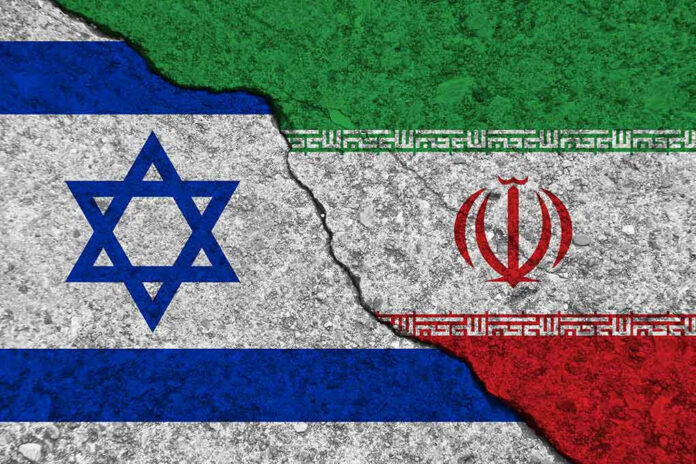
When the president of Iran goes on TV to declare that Israel tried—and failed—to blow him sky-high, you know the world has officially crossed into the theater of the absurd, with nuclear negotiations and international stability dangling by a thread.
At a Glance
- Iranian President Masoud Pezeshkian accused Israel of attempting to assassinate him during the June 2025 12-day war.
- The alleged attempt involved a targeted bombing while Pezeshkian was in a secret meeting; he claimed the US was not involved.
- The conflict resulted in over 900 Iranian deaths, including top commanders and nuclear scientists, and 28 Israeli fatalities.
- Pezeshkian’s accusation has stalled nuclear negotiations and heightened regional tensions, risking broader conflict.
Iranian President Levels Explosive Accusation: Israel Tried, But Failed, to Assassinate Me
Iranian President Masoud Pezeshkian is once again in the headlines, but not for opening a new bakery or promising more jobs—no, he’s accusing Israel of trying to assassinate him during the recent 12-day war. That’s right: in a July 2025 interview with Tucker Carlson, Pezeshkian claimed, “They tried, yes. They acted accordingly, but they failed.” He described surviving a bombing while attending a secret meeting, and made it clear—at least in his telling—that the United States sat this one out.
In case you thought this was just saber-rattling, Pezeshkian doubled down by stating he’s only willing to return to nuclear talks with the US if he gets ironclad guarantees against further Israeli attacks. It’s almost as if the Iranian regime, after years of playing with fire, is shocked—shocked!—that someone might finally strike back. Meanwhile, Israel has kept its mouth zipped, neither confirming nor denying a thing, sticking to its decades-old playbook of strategic ambiguity.
A Region on the Brink: Escalation, Retaliation, and a Whole Lot of Finger-Pointing
The backdrop to this drama? Pure chaos. The June 2025 flare-up wasn’t your typical war of words or shadowy cyberattacks. This was a 12-day slugfest featuring Israeli airstrikes that reportedly killed top Iranian military commanders and nuclear scientists. Iran fired back with a barrage of drones and missiles that left 28 Israelis dead. The timing couldn’t have been more suspicious: all this violence erupted just days before nuclear negotiations between Tehran and Washington were set to resume. Coincidence? You be the judge.
The cost: over 900 Iranian dead, including some of the regime’s most prized figures. Sites like Fordo, Isfahan, and Natanz—names that pop up whenever the world worries about nuclear Armageddon—took direct hits. In turn, Iran unleashed its proxies and ramped up anti-Israel rhetoric to fever pitch, pushing the region to the brink of a wider conflagration. As for the world’s “leaders,” they mostly watched from the sidelines, wringing their hands and issuing statements that accomplished precisely nothing.
Diplomacy on Ice, Trust Out the Window, and What’s Next for the Middle East Powder Keg?
With assassination plots now part of the conversation, prospects for any kind of reasonable diplomacy have cratered. Pezeshkian’s precondition—that the US guarantee Israel will stop attacking Iran—might as well be a demand for unicorns and rainbows. The trust deficit between Iran, Israel, and the US is now a canyon, and every new accusation only widens the gap.
The ripple effects are immediate and dangerous. Both militaries have gone on high alert, proxy groups are itching for payback, and economic instability is spreading like wildfire. Iranian hardliners are loving the chaos, using it to consolidate power and whip up anti-Western sentiment. In Israel, vigilance is the watchword, as civilians brace for more incoming rockets and the government doubles down on its security-first mantra.
Questionable Claims, Opaque Motives, and the Specter of Escalation
If you’re looking for hard evidence about the assassination attempt, don’t hold your breath. Pezeshkian offered no details about timing or location, and as usual, the Israeli side remains officially silent. Multiple international outlets, from MTV Lebanon to The Week and NDTV, have confirmed the broad strokes of Pezeshkian’s accusation. Still, the fog of war is thick: casualty numbers are impossible to independently verify, and the motives behind each move remain open to interpretation—and exploitation—for political gain.
Security analysts see the alleged assassination as part of Israel’s ongoing effort to decapitate Iran’s leadership and cripple its nuclear program. Diplomatic experts warn these tit-for-tat attacks only make de-escalation harder, especially with the US awkwardly caught in the middle. Academic voices remind us that targeted killings rarely solve anything and often fuel the very extremism they’re supposed to suppress.
Sources:
MTV Lebanon: Pezeshkian’s accusation and interview details
The Week: Context, casualty figures, and nuclear talks
NDTV: Confirmation of Pezeshkian’s statements and conflict timeline