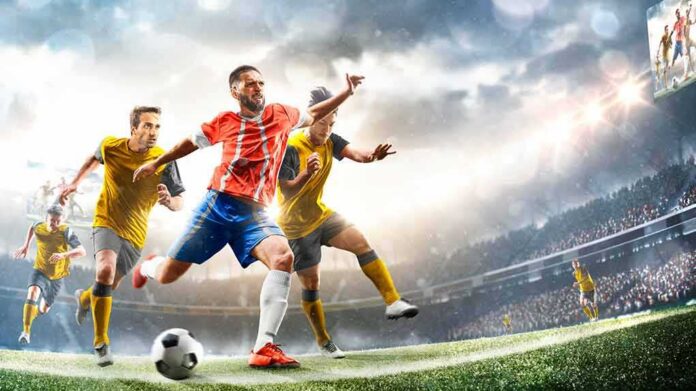
Spain did not just win the World Cup on the field — they walked away with almost every major individual honor, raising fresh questions about how far soccer’s power centers and superstars have shifted.
Story Snapshot
- Spain beat Argentina 1–0 in extra time to win the 2026 FIFA World Cup, their second title.
- Midfielder Rodri won the Golden Ball as best player, confirming Spain’s control of the tournament.
- Goalkeeper Unai Simón and defender Pau Cubarsí also won top awards, giving Spain three of four major honors.
- France’s Kylian Mbappé stopped a full sweep by taking the Golden Boot as top scorer.
Spain’s tense final win sets up a clean awards sweep
Spain’s 1–0 extra-time victory over defending champions Argentina in New Jersey set the stage for one of the most one-sided World Cup awards nights in recent memory. Substitute Ferran Torres scored in the 106th minute after a headed pass from Nico Williams, breaking a scoreless deadlock and ending what may be Lionel Messi’s last World Cup run. The win gave Spain their second men’s World Cup title and their first since 2010, capping an unbeaten and defensively dominant tournament.
Spain’s performance across the month made the final result feel like the logical end to a long, controlled march rather than a one-game upset. Reports note that Spain conceded only one goal all tournament, while repeatedly shutting down some of the world’s most expensive attacking stars. In a sport often ruled by big-money clubs and superstar forwards, this Spanish team won with structure, patience, and a mix of veterans and young players who were not the biggest commercial names.
Rodri, Simón and Cubarsí give Spain three of four top awards
After the final whistle, world soccer’s governing body announced that Spanish captain Rodri had won the Golden Ball, the prize for the best player at the tournament. Rodri controlled games from midfield, breaking up attacks and starting moves, and beat out global icons like Lionel Messi and Kylian Mbappé for the honor. Goalkeeper Unai Simón was awarded the Golden Glove as best keeper, while 19-year-old defender Pau Cubarsí was named Best Young Player, confirming Spain’s sweep of the non-scoring awards.
Those choices show how this World Cup quietly rewarded reliability over hype and teamwork over highlight clips. Simón’s Golden Glove came after he anchored the tightest defense at the tournament, backing up a system that asked every player to defend as a unit. Cubarsí’s Best Young Player award highlighted a teenager who read the game like a veteran, helping shut down older, more famous forwards. For many fans who worry that big sponsors and “brand” names decide everything, these awards offered a rare reminder that performance can still win.
Mbappé’s Golden Boot and what it says about modern soccer power
The only major award Spain did not claim was the Golden Boot, which went to France’s Kylian Mbappé for his tournament-leading 10 goals. Mbappé secured the top scorer prize with two goals in France’s third-place loss to England, finishing one ahead of Messi. That split outcome — Spain taking three awards, Mbappé taking the fourth — underlined how soccer’s power balance now sits between a dominant collective side and a global megastar who shines even when his team falls short.
For fans on both the right and the left who feel elites run every system, this World Cup painted a mixed picture. On one side, the biggest star from one of Europe’s richest clubs still walked away with the scoring crown. On the other, the sport’s top prizes for best player, best goalkeeper, and best young player went to a group built more on scouting, youth development, and a clear game plan than on giant sponsorship deals. It suggested that in soccer, at least for now, the “little details” of hard work and organization can still beat pure celebrity.
A rare moment of merit in a world many see as rigged
Many Americans across the political spectrum feel that powerful insiders twist rules in government, finance, and even sports so regular people never really win. This World Cup will not fix that distrust, but Spain’s run offers a small counter-story. A national team with no single marketing superstar dominated a month-long event, then collected almost every major honor by doing the slow, unglamorous things right — defending as a unit, trusting youth, and sticking to a plan.
Spain Clinch Second FIFA World Cup Title After Extra-Time Win Over Argentina
Spain were crowned champions of the 2026 FIFA World Cup after defeating Argentina 1-0 after extra time in the final at MetLife Stadium in New Jersey on Sunday.
The victory earned Spain their second… pic.twitter.com/vnvWI1TGI4
— Capital Sports (@capital__sports) July 20, 2026
Spain becoming the first country ever to hold both the men’s and women’s World Cup titles at the same time adds another layer. In a time when many worry that basic standards are falling, this double success came from a system that keeps producing skilled players and demanding excellence from them. People who feel let down by their own leaders may see a lesson here. Institutions do not have to rot from the inside. When those at the top reward real performance, not just fame or connections, entire nations can still rise.
Sources:
independent.co.uk, espn.com, sportingnews.com, beinsports.com
© nationalusnews.com 2026. All rights reserved.