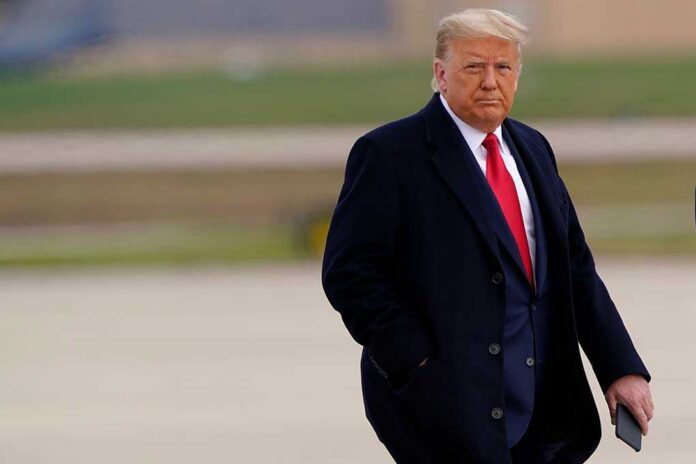
Senate Democrats just failed—again—to rein in President Trump’s Iran war powers, leaving Congress looking powerless as a real shooting conflict drags into its fourth week.
Quick Take
- The Senate voted 53-47 to block a war powers resolution requiring U.S. forces to leave hostilities with Iran absent new congressional authorization.
- The vote marked the third failed Democratic attempt as Republicans keep control of the floor and Democrats use “privileged” procedures to force roll calls.
- Two notable crossovers stood out: Sen. Rand Paul backed the resolution while Sen. John Fetterman opposed it.
- House Democrats are planning additional procedural pushes, but the path remains steep with Senate rules and an expected presidential veto.
Senate vote blocks Democrats’ latest attempt to force a withdrawal
Senate Democrats, led by Sen. Cory Booker of New Jersey, fell short in a 53-47 vote to advance a resolution that would require President Donald Trump to withdraw U.S. forces from hostilities against Iran unless Congress authorizes the mission through a declaration of war or a specific authorization for the use of military force. The defeat was the third such failure, underscoring how little leverage the minority has once the majority closes ranks.
Sen. Chris Murphy, the resolution’s author, framed the measure around the War Powers Resolution framework that Congress passed in 1973 to limit unilateral military action. The vote’s tight margins still highlighted political complexity: Sen. Rand Paul of Kentucky was the lone Republican to support the effort, while Democratic Sen. John Fetterman of Pennsylvania voted against it. Those defections made headlines, but they did not change the outcome.
Why the war powers fight keeps returning—and why it keeps failing
The current U.S.-Iran operation entered its fourth week as the Senate voted, with no new, tailored congressional authorization for hostilities against Iran described in the research. The Trump administration has pointed to the president’s Article II authority as the legal basis for strikes and ongoing operations. Democrats counter that the Constitution assigns Congress the power to declare war, arguing that sustained combat without authorization weakens democratic accountability.
Procedure is also driving the story. With Republicans controlling both chambers, Democrats have leaned on “privileged” war powers mechanisms designed to force floor consideration even when leadership would prefer to avoid a vote. That tactic creates public accountability—every senator must go on the record—but it does not guarantee passage. In the Senate, practical hurdles include the chamber’s rules and the political reality that any measure reaching Trump’s desk would face a likely veto.
House Democrats try new pressure tactics as GOP prioritizes other fights
In the House, Democrats have pursued parallel efforts after a similar resolution sank last month, with some Democrats joining Republicans in opposition. Since then, reporting cited shifting positions from some House Democrats, including Reps. Henry Cuellar of Texas and Greg Landsman of Ohio, who were described as moving toward support as the conflict continued. Democrats also planned additional maneuvers, including attempts via unanimous consent during pro forma sessions.
The fight has unfolded alongside other high-stakes legislative battles, including an elections-related debate on Capitol Hill where Republicans have sought to keep the floor moving and President Trump has applied pressure. That collision of priorities matters for voters who already believe Washington is distracted by process and power. When Congress can force symbolic votes but cannot impose a clear policy direction, it reinforces the sense—shared across left and right—that institutions are optimized for political survival, not problem-solving.
What this episode signals about oversight, escalation, and public trust
Democrats have argued the stakes are intensified by Trump’s rhetoric about escalation and potential targets, while the White House and most Republicans have defended continuing the operation. The immediate impact of the Senate defeat is straightforward: there is no new constraint on the president’s conduct from this vote. Longer term, the recurring failures test a core constitutional question—how Congress exercises war oversight when it lacks the votes to stop a determined executive.
For conservative readers, the takeaway is not just partisan theater. A government that cannot clearly authorize, define, and oversee military commitments invites mission creep, higher costs, and uncertainty for service members and taxpayers. For liberal readers, the concern is unchecked executive power and the fear that Congress is surrendering its role. Either way, the pattern is familiar: leaders talk about the Constitution, but the system often produces symbolism instead of binding decisions.
Sources:
Democratic lawmakers fail in symbolic bid to curb Trump’s Iran war powers
Senate defeats Trump Iran war powers vote Booker
Senate Democrats force war powers vote as Trump’s war in Iran spirals out of control
Democrats momentum Trump Iran war powers
House Democrats ramp up pressure on Trump with Iran war vote
Trump genocide Iran war powers Dems
Democrats threaten grind Senate to halt force public Iran hearings