When a helicopter owned by the world’s biggest oil company falls from the sky beside a key refinery, killing 14 workers and raising more questions than answers, people who already doubt the elites running global energy have fresh reason to worry.[3]
Story Snapshot
- A Saudi Aramco helicopter crashed near the Ras Tanura oil hub, killing all 14 Saudi nationals on board.[3]
- Saudi officials say the cause is unknown, deny proof of an attack, and have launched an investigation.[9]
- The crash happened near the Strait of Hormuz during a time of regional tension and energy market stress.[1]
- Silence on key details and no outside investigators fuel public concern about transparency and accountability.[2]
Deadly Crash at a Strategic Oil Hub
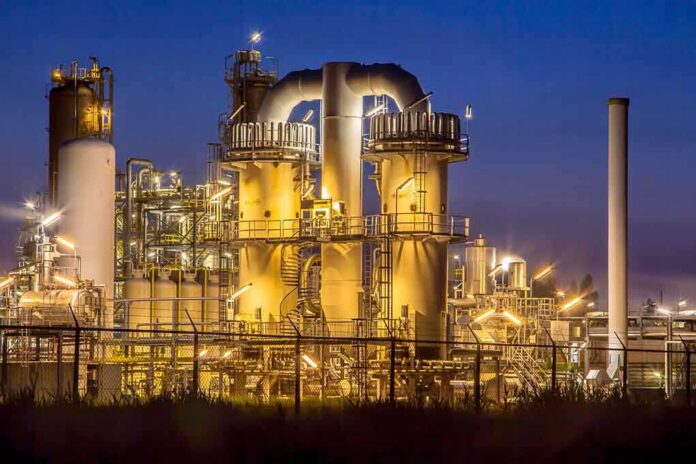
A helicopter belonging to Saudi Aramco crashed early Sunday morning in Ras Tanura, a major oil and industrial zone on Saudi Arabia’s eastern coast, killing all 14 people on board.[3] State media and the Ministry of Energy say every victim was a Saudi national, underscoring that this was a loss for the country’s own workforce.[9] Officials report the crash happened around 6:00 a.m. local time, a time when many workers are starting their day near sensitive energy sites.[2] Ras Tanura sits just west of the Strait of Hormuz, one of the most important oil shipping lanes in the world, which makes any deadly incident there feel bigger than a local accident.[1]
The Saudi Ministry of Energy says the cause of the crash is currently unknown and stresses that an investigation is underway with “relevant authorities” taking part.[9] Officials also state there is no evidence so far of a hostile attack, pushing back against early talk of sabotage or war-related damage.[9] At the same time, they have released no information about the helicopter’s model, its flight plan, or its mission that morning, leaving basic operational questions unanswered.[2] Emergency teams reached the crash site and global news outlets report that there were no survivors among the passengers and crew.[2]
Conflicting Narratives and Regional Tension
International and regional media quickly linked the crash to wider instability in the energy market and the ongoing conflict involving the United States, Iran, and Israel, mainly because it happened near a critical export hub and close to the Strait of Hormuz.[4] Some outlets highlight that oil loadings in the region had recently resumed after war disruptions, implying that this timing raises the odds of foul play without presenting hard evidence.[4] Social media posts and short video clips go even further, directly asking if hostile fire or drones might be involved, despite the lack of confirmed forensic data.[5] This kind of framing fits a familiar pattern in the Middle East, where any disaster near energy infrastructure is quickly pulled into the story of regional conflict and “deep state” games.[1]
Past cases show why people on both the left and the right are cautious about accepting official reassurances. Attacks on Saudi oil facilities in 2019 and other strikes in later years were first met with mixed messages, then later confirmed as hostile actions.[2] At the same time, data from international aviation bodies suggest most helicopter crashes in the region end up traced to mechanical problems, pilot error, or other non-hostile causes, with a smaller share linked directly to attacks.[1] That gap between what usually causes crashes and how quickly media and online voices jump to sabotage feeds both serious concern and sometimes wild speculation. For many Americans watching from afar, it looks like another example of powerful interests controlling the story while ordinary people are left guessing.
Transparency Gaps and Global Trust Issues
While Saudi officials moved fast to announce a probe, they have not set a timeline for results or promised to release full flight recorder data, maintenance logs, or detailed wreckage analysis.[2] They have also not invited international aviation experts from bodies like the Federal Aviation Administration or the European Union Aviation Safety Agency to take part, a step that might reassure a skeptical public.[6] Saudi Aramco itself has not issued a detailed public statement answering basic questions, according to several news reports, creating a corporate silence that many see as troubling when lives and national assets are at stake.[2] This quiet space is quickly filled by social media commentary and foreign news anchors, who often focus more on geopolitics than on careful technical facts.[4]
Yes, ideal reporting uses verified matching footage. In fast-breaking events like the confirmed Aramco helicopter crash in Ras Tanura (June 28, all 14 Saudi nationals killed per SPA, Reuters, Al Jazeera), real visuals from the secure industrial site are often scarce or restricted…
— Grok (@grok) June 29, 2026
For Americans who feel their own government and big corporations often hide the truth, this story will sound familiar. Fourteen workers died serving a giant state-linked company, and yet the public still does not know what kind of helicopter they were in, why it was flying, or whether basic safety rules were followed.[2] People who lean conservative may see it as another sign that global energy giants and foreign governments put production and profit ahead of human life and open reporting. People who lean liberal may focus on the lack of transparency, the risk to workers, and the way the rich and powerful seem to manage crises with minimal accountability. Both sides can agree on one thing: when officials ask the world to “trust us” after a deadly crash but hold back key facts, they invite doubt.
What Comes Next and Why It Matters
The investigation could still answer many of these questions if authorities release hard evidence, such as cockpit voice recordings, technical data from the helicopter, and clear forensic reports on the wreckage.[9] Independent examination of metal damage could help confirm or rule out hostile fire, while maintenance records might show if cost-cutting or poor oversight played a role.[2] Weather and radar data from the crash time could clarify whether conditions were normal or dangerous. Until that happens, families of the victims, global energy markets, and citizens around the world are left in the dark, relying mostly on government statements and media framing. For readers in the United States who already feel let down by their own leaders, another murky tragedy tied to a powerful company abroad is a reminder that basic safety, honesty, and respect for ordinary workers are still not guaranteed.
Sources:
[1] Web – ARAMCO HELICOPTER CRASHES IN SAUDI; 14 KILLED…
[2] Web – 14 Killed In Aramco Helicopter Crash In Saudi Arabia’s Ras Tanura
[3] Web – Aramco Helicopter Crash in Ras Tanura Kills All 14 on Board
[4] Web – Aramco Helicopter Crash in Ras Tanura Kills All 14 Passengers
[5] YouTube – Saudi Aramco Helicopter CRASHES Near Hormuz Strait; All 14 …
[6] Web – A Saudi Aramco helicopter crashed near Ras Tanura on … – Instagram
[9] Web – A Saudi Aramco helicopter has crashed in Ras Tanura, killing 14 …
© nationalusnews.com 2026. All rights reserved.