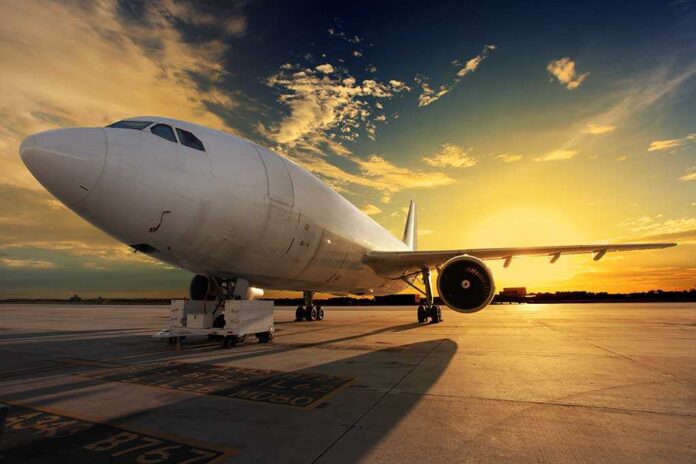
An eye‑popping Cold War–style story claims Americans tried to secretly buy Soviet nuclear bombers for space launches — but the records tell a very different tale.
Story Snapshot
- A real U.S.-backed deal involved giant Ukrainian bombers, but they were Tu‑160s, not Tu‑22M nuclear “Backfire” bombers.
- The Tu‑22M3 is a powerful Soviet‑designed nuclear‑capable bomber, but no hard proof shows a U.S. attempt to buy a fleet for satellite launches.
- Post‑Soviet chaos did create strange arms deals, yet serious arms‑control records do not list this claimed Tu‑22M purchase.
- Conservatives should demand documents, not just clickbait headlines, when stories involve nuclear bombers, Ukraine, and U.S. policy.
What We Really Know About Bombers, Ukraine, and U.S. Deals
Right after the Soviet Union fell apart, Ukraine suddenly owned a huge strategic bomber force, including Tu‑22M3 “Backfire” aircraft and even larger Tu‑160 “Blackjack” bombers.[1][7] Those jets were built for nuclear strikes and long‑range missile attacks, not civilian work. Washington pushed hard to get these heavy bombers and their cruise missiles either destroyed or sent back to Russia as part of wider nuclear‑risk cuts.[1][8] That pressure fit a larger plan to lock down stray Soviet weapons and avoid loose nukes.[16]
Official records show the United States and Ukraine signed a formal deal in 1998 to scrap forty‑four heavy bombers and over one thousand Kh‑55 nuclear cruise missiles, with Washington paying much of the bill.[2][8] A follow‑on plan allowed three Tu‑160 bombers to be spared from the cutting torch and offered for sale to an American company called Platforms International, which wanted to turn them into launch platforms for Pegasus small satellite rockets.[2] That project involved named companies, dates, and Ukrainian government approval, so it can be tracked in open sources.[2]
The Tu‑22M “Backfire”: Real Capabilities, Questionable Story
The Tu‑22M3 “Backfire” itself is a serious machine: a Soviet‑designed, nuclear‑capable, supersonic bomber with swing wings and long range.[7] It can carry heavy loads of bombs or large anti‑ship missiles and was built to strike NATO fleets and bases from a distance.[1][7] Russia still uses Tu‑22M3 bombers today to fire Kh‑22 and Kh‑32 cruise missiles at Ukrainian cities and infrastructure, making it one of Moscow’s main tools for terror from the sky.[5][7]
That raw power is why the recent claim catches attention: a conservative outlet said an American company secretly tried to buy an entire fleet of Ukrainian Tu‑22M bombers and turn them into satellite launchers.[1] On the surface, the idea sounds just believable enough. The Tu‑22M3 has the payload and size to lift a small rocket, and other aircraft have been used for air‑launch space missions. But large claims need large proof, and here the paper trail matters more than the headline.[1][5]
Paper Trail: Tu‑160 Deal Documented, Tu‑22M Deal Missing
When you look at documented history, you find detailed reporting on the Tu‑160 plan but almost nothing solid on a Tu‑22M satellite project. Aviation historians and defense writers describe the 1999 effort to sell three Ukrainian Tu‑160 bombers, plus spare parts, to Platforms International for Pegasus launches, all for about twenty million dollars.[2] Ukrainian officials were authorized to make that sale, and the launch work was tied to the American company Orbital Network Services Corporation.[2]
By contrast, the Tu‑22M3 story lacks basic facts. There is no named American firm, no contract number, no Freedom of Information Act release, and no Ukrainian export license to back it up.[1] Arms‑control chronologies that carefully log bomber scrapping and transfers out of Ukraine do not list a Tu‑22M sale to a United States buyer.[8] Open‑source histories focus on how many Tu‑22M3 bombers Ukraine dismantled with U.S. funding, and how others were handed over to Russia, not on any conversion into space trucks.[1][8]
Why Conservative Readers Should Care About Evidence
For readers who support a strong America, secure borders, and honest government, this matters for two reasons. First, nuclear‑capable bombers and missile technology sit at the heart of national defense. If Washington really tried to buy Soviet “Backfires” in secret, citizens deserve to see the paperwork, not just a narrative. Second, the same partisan media that once pushed “Russia hoax” stories can also float unproven tales on the right, which hurts real conservative arguments.
Post‑Soviet chaos did create odd, sometimes shady arms deals across Eastern Europe and the Caucasus, as cash‑strapped leaders sold off weapons for hard currency.[8][9][12] That backdrop makes wild stories more tempting, but it also means careful checking is vital. Here, the solid documents point to a real, named Tu‑160 space‑launch proposal and a documented program to scrap or transfer Ukrainian Tu‑22M3 bombers, not to a confirmed American move to turn “Backfires” into satellite trucks.[1][2][8] Patriots should keep an open mind, but also keep both eyes on the evidence.
Sources:
[1] Web – America Secretly Tried to Buy a Fleet of Soviet Nuclear Bombers, to …
[2] Web – Falling From the Sky: Why Russia’s Tu-22M3 Backfire Bomber Is …
[5] Web – Tu-22 Heavy Bomber: Pride Of Russia, Why India Never Got Serious …
[7] Web – Tupolev Tu-22 | The Kristoffer’s Universe In War Wiki | Fandom
[8] Web – Rockwell B-1 Lancer – Wikipedia
[9] Web – The Renewed Backfire Bomber Threat to the U.S. Navy
[12] YouTube – The Tupolev Tu-22 – The Soviet Bomber That Killed Its Own Pilots
[16] Web – [PDF] Linking State Collapse and Small Arms Proliferation
© nationalusnews.com 2026. All rights reserved.