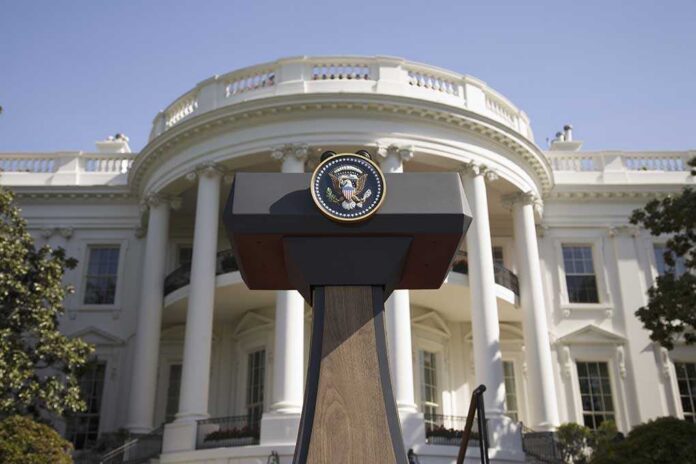
In a move that stirs both hope and suspicion, the White House has tapped a polarizing Harvard alien hunter to help it decide what is really flying in America’s skies.
Story Snapshot
- Avi Loeb, a Harvard astrophysicist known for controversial alien claims, now chairs a new UAP Science Advisory Council advising the White House on UFOs.
- The council is tasked with studying Unidentified Anomalous Phenomena as a possible national security threat, while using only open, unclassified data.
- The panel mixes hard scientists with psychologists, a communicator, an anthropologist, and a famous skeptic, raising questions about whether it studies UFOs or public reaction to them.
- Loeb’s history of splashy alien theories and clashes with mainstream scientists fuels concern that Washington is blurring the line between science, showmanship, and secrecy.
A Controversial Scientist Moves Inside the Trump White House
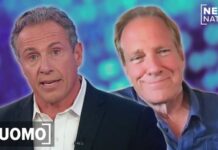
Harvard astrophysicist Avi Loeb has spent years pushing the idea that some strange space objects and UFO reports might be signs of alien technology, often against the views of most other scientists. In June 2026, he says he was asked by the White House and top intelligence agencies to chair a new Unidentified Anomalous Phenomena Science Advisory Council, giving him direct influence over how the federal government studies and explains UFOs. NBC News aired an interview where Loeb describes being asked to “establish a council that studies the science of UAP and advise the White House,” confirming at least public acknowledgment of his new role.
The timing fits a broader shift in Washington. Recent government reports admitted that many military UFO encounters remain unexplained, while stressing there is no proof of alien technology. Under President Trump’s second term, with Republicans controlling Congress, the administration has signaled more openness to declassifying some UFO files, but also a harder line on security threats. Loeb’s appointment drops a media-savvy alien theorist into that mix, right at a moment when both conservatives and liberals already suspect the “deep state” hides key truths and protects itself first.
What This New UFO Council Is Supposed to Do
Loeb says the new council will work with agencies like the Office of the Director of National Intelligence, the Pentagon’s All-domain Anomaly Resolution Office, and the Federal Bureau of Investigation to give scientific advice on strange aerial and space data. He describes a mandate to study anomalous signals using the scientific method, focus on open, unclassified information, and brief a governing board that includes representatives from these agencies. In public talks, he insists the council will look first at whether unusual “orbs” and craft-like objects could be drones, natural phenomena, or simple sensor errors before anyone claims “aliens.”
At the same time, Loeb continues to lead the Galileo Project, a privately funded effort that builds observatories with machine learning tools to scan the sky for odd objects. He says these observatories use triangulation to measure distance, speed, and acceleration for millions of targets, aiming to catch any movements that do not match known human technology. Taken together, the government council and Galileo Project put Loeb at the center of both official and independent UFO data streams. For many citizens, that concentration of power in one controversial figure feels less like transparency and more like a new gatekeeper deciding what the public gets to see.
A Council Built To Study UFOs—or To Study Us?
One of the strangest parts of Loeb’s council is who sits on it. In interviews he explains that, besides physicists and military veterans, he invited psychologists, an anthropologist, a communications specialist, and well-known skeptic Michael Shermer. He says this design helps the panel avoid bias and understand how people react when their worldview is challenged. The idea is to guard against both blind belief and knee-jerk dismissal. Yet for many Americans, left and right, it raises another worry: is this about figuring out what UFOs are, or about managing how citizens think and talk about them?
That fear plugs into a wider frustration about elite control. Research on conspiracy beliefs shows millions of Americans already doubt government stories on issues from pandemics to space travel. A council that mixes science with psychology and messaging, seated inside a White House many view as self-protective, looks to some like an early-warning system—not only for threats in the sky, but for threats to trust in government itself. When the same insiders decide which data stays classified, which gets “explained,” and how the public should hear it, the risk of narrative control becomes hard to ignore.
Loeb’s Track Record: Bold Ideas, Thin Evidence, and Deep Distrust
Loeb’s new power comes with serious baggage. He famously argued that the interstellar object ‘Oumuamua was likely a piece of alien technology, a claim many astronomers called flimsy and irresponsible. Peer-reviewed studies and expert reviews later concluded that ‘Oumuamua behaved like a natural comet, not a spacecraft, undercutting his key example. Other scientists have criticized him for going to the media with dramatic alien claims before those claims pass normal peer review, warning that this blurs science with entertainment and feeds conspiracy thinking.
Avi Loeb is considered the RFK Jr of cosmologists/Astronomers appointed to UFO/UAP White House board
Harvard professor with polarizing alien theories is picked to lead new White House UFO councilhttps://t.co/z5A55JLgP3
— PatriceCherie (@kmcpcc) July 1, 2026
These clashes matter because they show how far Loeb sits from the scientific mainstream even as he moves closer to federal power. Opinion pieces from working astronomers argue that his “alien hypothesis” remains in the realm of science fiction and misrepresents what evidence really shows. A recent study on expert figures in UFO conspiracy culture warns that charismatic scientists can amplify fringe ideas through social media, reshaping public belief without solid data. That picture—of a media-savvy outsider, backed by wealthy donors, now helping the government define “truth” about phenomena it cannot fully explain—is exactly the kind of elite behavior many Americans, conservative and liberal, see as proof something in Washington is badly broken.
Sources:
military.com, apnews.com, ground.news, pbs.org, facebook.com, aol.com, reddit.com, sites.psu.edu, earthsky.org, theness.com, lweb.cfa.harvard.edu, politico.com, nature.com
© nationalusnews.com 2026. All rights reserved.