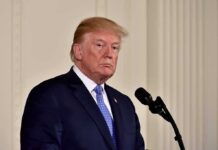
Trump’s bold promise to cut your electric bill in half has expired, and federal data now show many families paying more instead of less.
Story Snapshot
- Residential electricity rates are up about 18% since Trump’s second inauguration, not down by 50% as promised.
- Experts say the presidency simply does not have the tools to slash power prices that fast, given market and grid limits.
- Rising fuel costs, tariffs on key materials, and utility rate hikes are pushing bills higher for households across the country.
- Both conservatives and liberals now see the gap between big campaign promises and everyday reality as proof the system is failing them.
Trump’s 50% Price Cut Promise Meets Hard Reality
During the 2024 campaign, Donald Trump told voters he would cut energy and electricity prices in half within 12 to 18 months of taking office. That pledge was simple and powerful: cheaper gas, cheaper lights, cheaper heat, fast. But government data now tell a very different story. From Trump’s January 2025 inauguration to April 2026, average residential electricity rates rose about 18%, according to the federal Energy Information Administration. Instead of dropping by half, prices climbed, leaving families who trusted that promise feeling misled and stuck.
Over that same April‑to‑April stretch, electricity prices jumped 7.3%, roughly twice the pace of overall inflation. Other analyses of 2025 show similar trends. One Guardian review of Energy Information Administration data found the typical household electric bill was 6.7% higher in 2025 than in 2024, costing the average family about $116 more for the year. A congressional report cited by Pennsylvania Independent estimated an average $110 increase, or 6.4%. Different groups use slightly different methods, but they all land on the same core point: bills are going up, not down.
Why Presidents Can’t Simply Slash Power Bills
Trump’s promise collided with the basic way the energy system works. Electricity prices are shaped by the cost of fuel, the machines that make power, the wires and poles that deliver it, and the rules set by state regulators and private utilities. James Sweeney, a longtime energy scholar at Stanford University, has said it was “technically impossible” to cut prices in half on the timetable Trump laid out because so much of the cost is baked into long‑term infrastructure and delivery expenses that cannot be changed quickly. In simple terms, you cannot rebuild the grid, rewrite state rules, and rework global fuel markets in a year and a half.
Other experts stress how limited presidential power is over retail electricity rates. Travis Fisher, an energy policy analyst, noted that the federal government has very little direct involvement in the prices households see on their monthly bills. Much of that control sits with state utility commissions and investor‑owned power companies. NBC News similarly reported analysts’ view that energy prices are driven mainly by global oil and gas producers and market forces, not the White House. That does not mean presidents have no impact. It does mean they cannot flip a switch and magically cut everyone’s bill in half, no matter what they promise on a rally stage.
Policies, Market Shocks, and the Squeeze on Families
While experts warn against blaming one person for complex price moves, several Trump‑era choices pushed in the wrong direction for consumers. The Washington Examiner reported that tariffs on steel and aluminum, key materials for power plants and transmission lines, raised construction costs for energy projects. Higher build costs often feed into higher rates over time. At the same time, natural gas prices for the electric power sector surged more than 40% in early 2025, with another big jump expected, according to Energy Information Administration projections cited by CNN. When fuel costs spike, power companies pass those costs on.
Remember Trump's promised to cut Electricity Prices in Half in 18 months.
That time has Arrived. Rates Are Up 18%.
Another broken promise. Will Trump now blame Biden?
— mountainviews (@mountainviews) July 20, 2026
Utility companies have also been asking regulators for large rate increases. In West Virginia, the Los Angeles Times reported that investor‑owned utilities sought nearly $31 billion in higher charges nationwide in a single year, twice the amount requested the year before. Consumer advocates say these hikes, combined with higher fuel and infrastructure costs, leave around 80 million Americans struggling to pay monthly gas and electric bills. That pressure lands hardest on working families, retirees on fixed incomes, and small businesses that cannot easily raise prices. For many, the math is simple and painful: wages barely move, but the power bill keeps climbing.
Broken Promises, Blame Games, and Deepening Distrust
As the numbers came in, advocacy groups and media outlets from across the spectrum declared Trump’s energy promise broken. Evergreen Action used federal data to estimate that the average household paid over $500 more for electricity in 2025 than it would have if prices had actually fallen by half. PolitiFact’s “MAGA‑Meter” rated the pledge to cut energy costs in half as “Stalled,” noting gasoline had dropped somewhat while electricity and natural gas rose instead. These findings feed a wider sense that big promises from both parties rarely survive contact with reality, especially on complex issues like energy.
The political fight has followed a familiar script. Democrats point to rising bills as proof of “failed policies,” saying Trump and Republicans raised costs while favoring industry. Trump allies respond by blaming earlier climate and regulatory moves and global events, arguing that “Biden‑era” rules and foreign producers made energy expensive long before this term. Lost in that shouting match is the shared frustration of ordinary Americans. Many conservatives see inflated bills as the result of broken globalist policies and deep‑state interference. Many liberals see them as proof that “America First” has mostly meant profits first.
What This Says About Government and the Energy System
Underneath the partisan noise is a deeper story: our leaders keep making sweeping, simple promises about a system that is neither simple nor under their full control. Experts across institutions agree that cutting electricity prices in half in 12 to 18 months was never structurally realistic. Yet the pledge was made, repeated, and widely reported. That gap between rhetoric and reality fuels growing distrust. It confirms what many Americans already suspect — that politicians, regulators, and corporate executives will say almost anything to gain power, then blame someone else when the bill arrives.
For citizens who feel shut out by elites and squeezed by bills, this episode is another warning sign. It shows how energy policy, tariffs, utility decisions, and global markets can quietly reshape family budgets while Washington trades talking points. It also shows why careful, honest debate about what government can and cannot do is vital. Whether you lean right or left, you are living with the consequences when promises outrun the limits of the system. Until leaders stop overpromising and start fixing the real structural problems, many Americans will keep staring at their electric bill and wondering who, if anyone, is on their side.
Sources:
feedpress.me, doggett.house.gov, nytimes.com, washingtonexaminer.com, bbc.com, cnn.com, nbcnews.com, fastcompany.com, theguardian.com, evergreenaction.com
© nationalusnews.com 2026. All rights reserved.