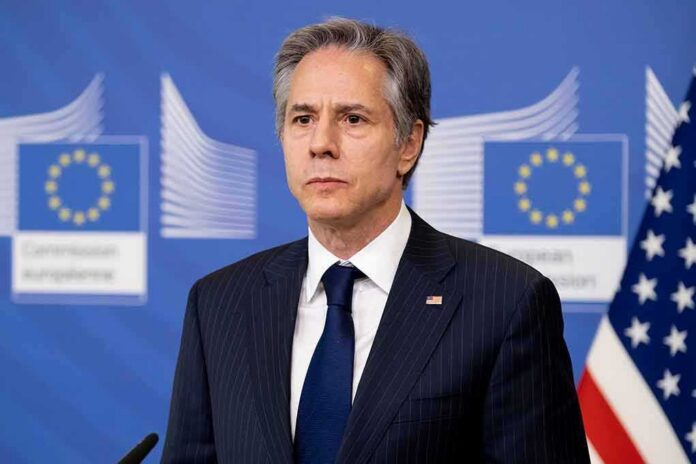
Rep. Rashida Tlaib accused Antony Blinken of “doing nothing” as Gaza’s civilian crisis worsened, sharpening a public clash over whether U.S. leaders delayed action while hospitals fell and casualties climbed.
Story Snapshot
- Tlaib charged that Blinken waited too long and failed to stop a genocide in Gaza.
- Blinken rejected genocide claims and emphasized U.S. pressure for more aid and civilian protection.
- United Nations bodies and rights groups have asserted genocide findings, deepening the policy fight.
- The dispute reflects a wider breakdown of trust in leaders to act before crises spiral.
What Tlaib Alleged And Why It Resonates
Rep. Rashida Tlaib said Antony Blinken “totally waited” as Gaza’s hospitals failed, the death toll rose, and munitions harmed civilians, then “did nothing” to stop genocide. Her attack fueled a long-running split inside the Democratic Party over Gaza and U.S. policy toward Israel. The charge taps a broader worry shared by many Americans: leaders see warning signs but respond too late. That fear bridges right and left when lives, credibility, and tax dollars are on the line.
Blinken has been a frequent target of Tlaib’s criticism since the early months of the war. She has also pushed for his resignation over claims he ignored internal warnings about blocked aid flows, a point echoed in activist and partisan outlets. The censure of Tlaib in 2023 over her Israel-Gaza remarks underscored how charged this debate is, even within Congress. Her latest post revives a core grievance: that Washington delayed using leverage while humanitarian conditions collapsed.
What Blinken And U.S. Officials Say They Did
Antony Blinken rejected the genocide label and called a South Africa case at the International Court of Justice “meritless,” arguing it distracts from aid and protection work. He said the United States pressed Israel to scale down operations, reduce civilian harm, and open more routes for assistance. He also said too many Palestinian civilians, including children, had died and that Washington was pushing daily to improve deconfliction and deliveries into Gaza.
The record shows repeated U.S. statements urging Israel to use “every possible means” to move aid and to improve civilian safety. Blinken said the administration could not back a Rafah assault without a humanitarian plan and later cited partial uptake of U.S. recommendations by Israel, while warning that more steps were still needed. In May 2024, he also said it was reasonable to assess Israel violated humanitarian law in some cases, though not as a final legal finding.
Why The Word ‘Genocide’ Drives The Policy Fault Line
United Nations investigators and prominent rights groups have concluded that Israel committed genocide in Gaza, a position that clashes with the U.S. government’s stance at the time and raises the stakes of policy delay. Their findings argue that multiple genocidal acts occurred and that conditions of life were imposed to bring about destruction. Supporters of that view say early warnings were abundant. Critics argue that courts, not politics, should decide, and that the United States focused on aid and de-escalation.
Rep. Rashida Tlaib Says Antony Blinken ‘Totally Waited’ and Did Nothing to Stop the Genocide in Gaza https://t.co/LyH2GrpPh6
— Dallys1515 💋 (@Dallys1515) September 11, 2026
This is where trust breaks down. Many Americans see a familiar pattern: officials speak about values but move only after damage is done. Conservatives see mission creep, weak leverage, and elite double standards abroad. Liberals see moral red lines crossed and slow-walked accountability. Both ask why Washington, with vast influence and taxpayer-funded arms, could not force faster changes that save lives. That shared doubt now shapes how people read every statement, metric, and promise from leaders.
What To Watch Next
Congressional oversight fights may intensify as members seek internal cables and timelines on what the State Department knew and when. Humanitarian access data, border crossing capacity, and casualty tracking will be key tests of progress. Court outcomes and new United Nations findings could harden positions on the genocide question. The question for voters is simple: did U.S. leaders use all tools early enough to limit civilian harm, and are they using them now with speed and honesty?
Sources:
twitchy.com, truthout.org, bbc.com, abcnews.com, politico.com, timesofisrael.com, edition.cnn.com
© nationalusnews.com 2026. All rights reserved.