
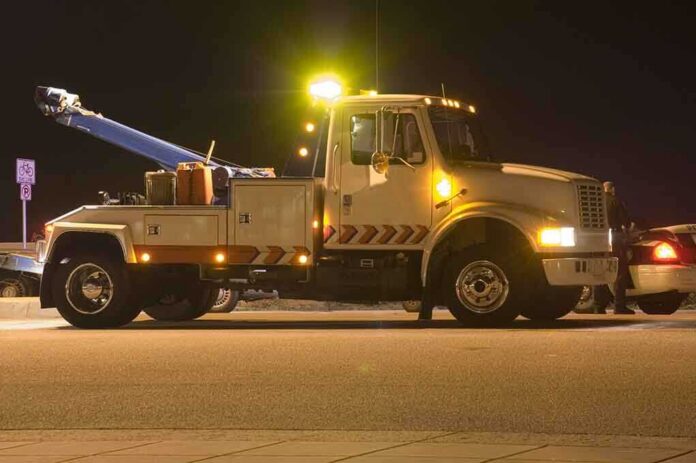
Concertgoers say a $562 tow-and-pay gauntlet emptied a Sacramento lot and sent drivers scrambling to a warehouse for their cars.
Story Highlights
- Multiple drivers reported the same $562 tow-and-release pattern after an Aftershock event.
- One driver said his car was badly damaged; his insurer treated it as a stolen-vehicle claim.
- Invoices allegedly lacked key tow details, and an authorization affidavit was questioned.
- Festival guidance disclaimed nearby lots and warned towing for overnight parking.
Drivers Describe a Pattern That Feels Like a Trap
Drivers who parked near the Aftershock festival in Sacramento reported a stark pattern. Cars vanished after the show. A temporary sign listed a phone number. Callers were sent to a Del Paso Boulevard address and charged $562 to get their cars back. Several people told the same story, naming J&B Towing on receipts. One driver, Ryan Capagli, said the charge was the same for many, and that their cars had been removed during the event, not overnight.
Capagli said his car was so damaged when he retrieved it that he could not drive it. He said his insurer treated the case like a stolen-vehicle claim, not a standard tow. He also said the company paperwork lacked basic facts. The invoice did not show the vehicle identification number, tow time, or release time. He also questioned an affidavit that was supposed to show tow authorization, saying it looked forged. These points remain allegations at this stage.
Paperwork Gaps and a Police Report Add Heat
Drivers said the tow documentation raised more questions than answers. The lack of key times and identifiers can block consumers from checking if a tow followed the rules. Capagli reported the matter to the Sacramento Police Department, creating an official record and a starting point for review. The towing company’s owner reportedly said the company was legitimate, but did not give a license number or records when asked by reporters.
Public records checks showed a mixed picture. J&B Towing appeared active in the United States Department of Transportation Registration System, which tracks interstate carriers. But searches described as required for California towing operations did not show the same name. That mismatch could be a paperwork issue, or it could signal a compliance problem. Regulators and police will need to compare legal names, license numbers, and addresses to be sure.
What the Law Requires When a Car Is Towed
California law sets guardrails for private-property tows. The property owner or lawful agent must authorize the tow. Charges for private-property tows and storage cannot exceed approved local law enforcement rates or the California Highway Patrol rate for the company. State law also limits certain fees and requires specific disclosures to the vehicle owner. These rules are meant to stop surprise tows and price spikes that leave families stuck and angry.
Consumer complaint data shows towing problems are not rare. The state’s enforcement reports list dozens of towing and storage complaints each quarter. One recent report counted 131 complaints across categories tied to towing and storage in a single period. These numbers do not prove wrongdoing in any one case. But they show why clear records, photos, and timing matter when people challenge a tow and its price.
Festival and City Guidance Narrow Who Is Responsible
Aftershock’s official page tells fans there is no general on-site parking and that nearby paid lots are not run by the festival. It says parking is at your own risk and bans overnight parking, warning that cars left overnight can be towed. City parking pages offer event options but do not cover private lots near the venue. These facts explain why blame is hard to place fast when a private lot and a private tower are involved.
Here, the public record does not yet show how many cars were taken, who authorized each tow, or whether every tow followed the law. The drivers’ stories are consistent on the $562 fee and the pickup location, and a police report exists. The towing owner’s brief defense lacks proof so far. The next steps are clear: examine tow authorizations, itemized invoices, timestamps, yard logs, and license files. Facts, not finger-pointing, will decide what happened.
Sources:
nypost.com, law.lis.virginia.gov
© nationalusnews.com 2026. All rights reserved.