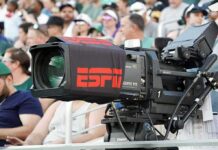
The Justice Department is probing whether five rival networks staged an illegal group boycott when they briefly halted pooled White House coverage after CNN was barred.
Story Snapshot
- Justice Department investigators requested documents from ABC, CBS, CNN, NBC, and Fox News tied to a paused television pool.
- A spokesperson said group boycotts among competitors can violate the Sherman Act, signaling a formal antitrust theory.
- The networks said they paused the pool after the White House blocked CNN from its assigned duties and later resumed coverage.
- The clash sits at the crossroads of press access, competition law, and public trust in powerful institutions.
What triggered the federal investigation
Reuters reported that the Department of Justice contacted ABC, CBS, CNN, NBC, and Fox News and requested communications about the White House television pool after the networks briefly stopped pooled coverage following CNN’s exclusion from the White House. A Department of Justice spokesperson said members of the television press pool had “proudly boycotted” White House events and warned that group boycotts among competitors can violate the Sherman Act. TheWrap likewise reported an active Antitrust Division inquiry.
The New York Times reported, citing people familiar, that investigators sought documents and messages related to the pause in coverage and how the pool operates. Reports described the pool as a longstanding cost-sharing and rotation system that gathers and distributes presidential footage to other outlets. This structure makes the pool more than a loose habit. It is a coordinated logistics and distribution channel that can affect who sees what the president does, and when.
How the networks explain the pool pause
CNN and Fox News published a joint statement from the five networks saying the public needs accurate, independent information and that no administration should restrict a news outlet because it dislikes its reporting. The networks said they declined to replace CNN after the White House blocked CNN from its scheduled pool shift. Time reported that coverage later resumed, and that each network still chose whether to attend open press events during the pause.
USA Today cited the pool chair’s note that the pause followed the White House preventing CNN from performing assigned duties. The Washington Examiner and other outlets framed the step as solidarity with CNN after its ban. These accounts describe a limited, temporary response to a government action, rather than a plan to limit market access. But they do not answer the antitrust questions about agreement, purpose, market impact, and whether the move withheld a critical input for too long.
The antitrust theory and what is still unknown
The Department of Justice’s statement points to a classic “concerted refusal to deal” theory under the Sherman Act, sometimes called a group boycott. To succeed, the government would need evidence of coordination among competitors, proof of an agreement, and some showing of harm to competition, not just a news disruption. Public reporting does not yet show emails, call logs, or messages that would prove an agreement, and it does not spell out the market or the consumer harm.
Time reported that pooled coverage resumed within days, which can cut against claims of lasting harm. Still, the Department of Justice asked for internal records from the networks, which suggests it wants to test whether they coordinated beyond public statements. The legal line often turns on specifics: who talked to whom, what was agreed, what alternatives existed, and whether viewers or rival outlets lost access to essential footage during the pause.
Why this matters beyond one media fight
This fight mixes two core American values: free press access and fair competition. Many readers on the right and left feel big institutions bend rules to protect their own power. Some see media giants acting in lockstep; others see government using law to pressure critical reporters. Both views reflect a deeper worry that elites call the shots while the public loses out on honest information and real accountability.
🚨 DOJ OPENS ANTITRUST PROBE INTO MAJOR TV NETWORKS AFTER WHITE HOUSE COVERAGE BOYCOTT
WASHINGTON, UNITED STATES – The networks now face a harder choice than the original protest that triggered the dispute. Any future collective response to White House access restrictions could… pic.twitter.com/81yWUqGcp4
— The Content Factory (@tcf_updates) October 11, 2026
Seeing the facts clearly helps. The record shows a brief pool pause, a public statement of principle from the networks, and a live antitrust probe focused on possible coordination. Hard proof of an agreement has not been made public. The Department of Justice must show more than timing and rhetoric. The networks must explain how they made choices and whether they weighed the public’s need for coverage against protest goals. Until documents surface, strong claims from either camp outrun what we can verify.
Sources:
mediaite.com, nytimes.com, rmb.reuters.com, ansa.it, ground.news, en.wikipedia.org, ap.org, bbc.com
© nationalusnews.com 2026. All rights reserved.