
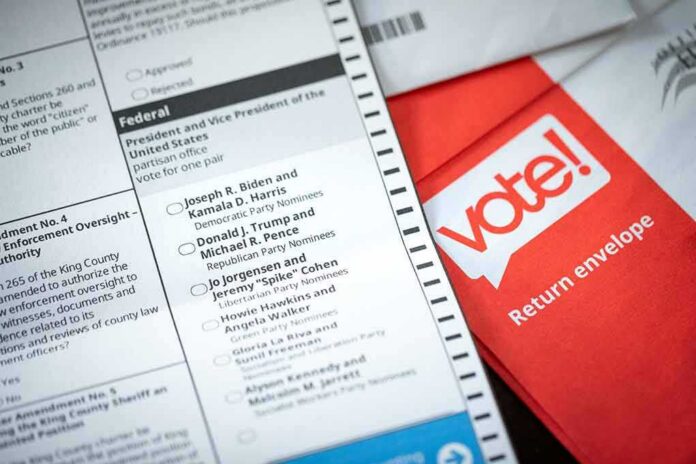
Colorado voters approved three child-focused ballot measures, tightening rules on sports and surgeries for minors and imposing life without parole for child sex trafficking.
Story Highlights
- Voters passed Propositions 133, 134, and 135, each with statewide support.
- Proposition 133 sets life without parole for trafficking a minor for sexual servitude, with a victim-coercion exception.
- Proposition 134 requires school sports teams to align with sex assigned at birth, with limited exceptions.
- Proposition 135 bans certain surgeries on minors while leaving nonsurgical care legal.
What Voters Approved and by How Much
Colorado’s unofficial results show strong support for a tougher penalty on child sex trafficking and narrower wins on policies tied to gender and youth. Unofficial counts put Proposition 133 above sixty-two percent. Proposition 135 passed by about fifty-two percent to forty-eight percent, a margin also reported by the Associated Press. Local coverage described all three measures as approved. The results mark a notable shift in a politically blue state and signal that child-protection themes drew cross-pressured voters in both parties.
Proponents framed the measures as clear steps to protect children. Critics argued they target transgender youth and insert the state into family medical choices. Both views will shape what happens next. Two measures alter state law, not the constitution, which makes them easier to change or repeal in the legislature. That reality tempers claims of a lasting mandate and keeps the door open to future legal or policy fights over their scope.
Proposition 133: Life Without Parole for Child Sex Trafficking
Proposition 133 increases the penalty for trafficking a minor for sexual servitude to life imprisonment without parole. State voter materials and church statements described a narrow exception for victims coerced into helping offenders, so prosecutors and courts can avoid punishing those forced to assist. Support for this measure was broad compared with the others. The vote reflects a common demand to get tough on those who profit from abuse and to remove leniency for predatory crimes against children.
Advocates called the penalty a needed deterrent. The measure answers a bipartisan concern that the system often fails victims and allows repeat exploitation. The law puts the heaviest possible sentence on the table for the worst conduct. The fact base in public reports centers on the legal change, not on new statewide trafficking numbers after passage. That means the data on impact will come later from prosecutions and sentencing records, not from the campaign claims themselves.
Proposition 134: School Sports Based on Sex Assigned at Birth
Proposition 134 requires school and college teams to be listed as male, female, or coed. It generally ties eligibility to sex assigned at birth and allows girls to join boys’ teams if no girls’ team exists. Supporters cite fairness and safety in girls’ sports. Opponents warn it can exclude transgender students and does not explain how schools should verify sex, raising fears of invasive checks of students’ bodies or records if disputes arise.
The public record shows the rule and the election result, not a statewide injury or dispute database. Reporting did not identify a verified count of Colorado events where transgender participation changed outcomes or caused injuries. That gap leaves important questions for school districts, athletic groups, and courts. Implementation will require clear procedures that respect student privacy while following the law. Expect challenges that test how schools verify eligibility without harm.
Proposition 135: Limits on Specified Surgeries for Minors
Proposition 135 prohibits certain surgeries intended to change minors’ biological sex characteristics, with medical exceptions. Coverage emphasized that the measure does not ban nonsurgical care, such as counseling, puberty blockers, or hormones. Supporters say the line protects kids from irreversible procedures while allowing other care to continue. Opponents argue the measure may still chill needed treatment and could be read more broadly in practice than supporters claim.
Grassroots, Not Money, Won The Ballot Initiatives In Colorado!
Erin Lee, Protect Kids Colorado, fought for three years to protect children from gender ideology and defend girls sports; On November 3rd the efforts of one mom and 5000 plus grassroots volunteers paid off. Three… pic.twitter.com/BTa37i4gWe— Moms for Liberty (@Moms4Liberty) November 7, 2026
The official ballot packet sets out the statutory language and exceptions, which will guide doctors and insurers. Litigation is likely as families, physicians, and advocacy groups test how hospitals apply the rule to complex cases. Courts may weigh legislative authority against medical judgment, a debate that other states have already faced. Like the sports measure, this statute can be revised by lawmakers, which keeps policy risk high even after voter approval.
Why This Matters Beyond Colorado
These votes place Colorado inside a national struggle over child safety, parental rights, fairness in sports, and medical uncertainty. Opponents, including civil rights and health groups, say the state has stepped between families and doctors and singled out a vulnerable group. Proponents say voters demanded hard rules after years of elite gridlock and mixed messages. With margins close on Propositions 134 and 135, the fight will likely shift to courts, agencies, and the statehouse.
What to Watch Next
Watch for rulemaking from education and health agencies that sets verification steps and medical exceptions. Track any legislative bids to amend or repeal parts of 134 and 135, since both are statutes. Follow court cases that test privacy, equal protection, and parental authority. Finally, look for transparent data: school eligibility disputes, injury records, and hospital procedure counts. Solid numbers, not slogans, will reveal whether the new laws meet their goals or create new harms.
Sources:
facebook.com, coloradokids.org, kunc.org, completecolorado.com, coloradotimesrecorder.com, coloradosun.com, gazette.com, sentinelcolorado.com, coloradopolitics.com
© nationalusnews.com 2026. All rights reserved.