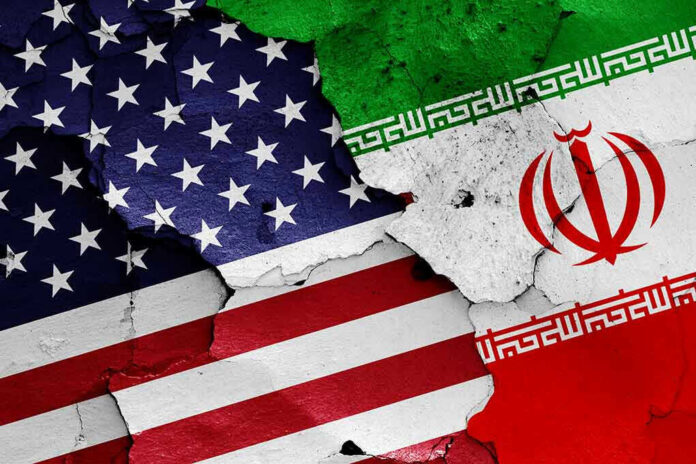
Trump’s reported Iran deal may be the clearest sign yet that the region’s war is now being shaped as much by headlines as by hard terms.
Quick Take
- Reports say Vice President J.D. Vance and Iranian Parliament Speaker Mohammad Bagher Ghalibaf were expected to sign a memorandum in Geneva.[1][4]
- The draft reportedly calls for a halt in hostilities, including in Lebanon, and a reopening of the Strait of Hormuz.[1][4]
- Several reports also say the package would trade sanctions relief and frozen assets for de-escalation.[1][4]
- Officials and Iranian media still disagree on whether a final, binding deal has actually been reached.[4][7]
What the reported memorandum would do
Reuters-derived reporting says the draft memorandum would stop hostilities on several fronts and reopen the Strait of Hormuz.[1][4] It also says the United States would lift a naval blockade on Iranian ports and ease sanctions on Iranian oil exports.[1][4] In exchange, Iran would face limits tied to future talks on its nuclear program, which several reports say were pushed into a later phase.[1][4]
The reported structure matters because it reads less like a full peace treaty and more like a first-stage framework. Ahram Online said “a text has been agreed upon” but also reported that Washington expected to sign only an initial deal.[4] That same reporting said the nuclear file would be handled later, which leaves the core dispute unresolved even if the signing story is real.[4]
Why the story has drawn so much attention
The political appeal is obvious. A deal that lowers risk in the Persian Gulf and keeps oil moving would matter far beyond Washington and Tehran. One report said Trump framed the accord as a way to make the Strait of Hormuz “permanently toll-free,” showing that the White House wanted the message to sound durable and decisive.[8] That kind of claim also helps explain why the story spread fast across major outlets and social media.[3][7]
But the reporting also shows why many readers remain skeptical. CBS News said Vice President Vance said negotiators had “made a lot of progress,” yet the outlet also noted no final presidential decision had been announced at that point.[7] Iranian Foreign Minister Abbas Araghchi also said no final agreement had been reached, even while saying an understanding could be announced soon.[4] That gap between optimism and confirmation is the heart of the dispute.[4][7]
What remains unclear
The largest unresolved issue is implementation. The reports conflict on whether Iran would simply regain access to the Strait of Hormuz or keep some role in managing it.[1][4] They also leave open the timing of sanctions relief, the handling of frozen Iranian funds, and the exact rules for maritime security.[1][4] Without the signed text, the public still has reporting about a deal, not the deal itself.[4]
👌🏾
Yes, Donald Trump has officially signed an initial framework peace agreement with Iran electronically alongside Vice President JD Vance and Iranian Parliament Speaker Mohammad Bagher Ghalibaf.
While the baseline text is signed from the U.S. side, a formal, in-person signing…
— Jade Siley-Winditt (@phX_risingseer) June 15, 2026
That uncertainty feeds a familiar problem in U.S.-Iran diplomacy: people on both sides are asked to trust leaks before they see binding language. Supporters will see a possible off-ramp from a dangerous conflict. Skeptics will see another example of elites selling a breakthrough before the facts are locked in. Based on the current record, both reactions have some basis, because the reporting points to serious talks, but not to a fully verified final agreement.[1][4][7]
Sources:
[1] Web – Trump, Vance and Iran speaker Ghalibaf electronically signed deal: US …
[3] Web – U.S.-Iran Peace Memorandum Could Be Signed On Sunday In …
[4] YouTube – US-Iran Peace Deal: JD Vance To Attend Geneva Signing As …
[7] Web – Trump And Vance Angrily Deny Peace Deal Favors Iran – Forbes
[8] Web – Trump recently edited possible U.S.-Iran agreement, including on …
© nationalusnews.com 2026. All rights reserved.