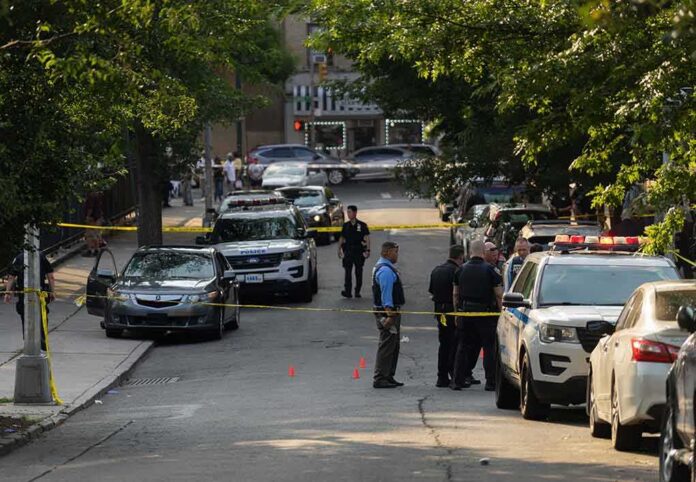
Video shows federal agents detain and injure a U.S. citizen in Evanston, Illinois, before realizing they had the wrong man, raising fresh questions about basic safeguards in immigration enforcement.
Story Snapshot
- Cellphone video and police reports confirm a U.S. citizen was mistakenly detained and injured near Chicago.
- Department of Homeland Security (DHS) says the man resembled their target and resisted before being released.
- Evanston police say agents later confirmed his citizenship and called for medical aid.
- Past reviews show citizen detentions are a known, recurring problem that agencies struggle to track.
What Happened In Evanston
On a Sunday in Evanston, Illinois, federal immigration agents detained a man they believed matched a target in a planned operation. Cellphone video showed the man on the ground with visible injuries as agents held him. Evanston police later said agents determined he was not the person they sought and learned he was a U.S. citizen. Local outlets reported head and jaw injuries, and officers requested medical aid at the scene. NBC Chicago and other local reports described the mistaken detention and injuries.
DHS told reporters the person resembled the target and that agents identified themselves as law enforcement. The agency said the man did not comply with lawful commands and refused to identify himself. DHS said agents left without further incident once he identified himself as a citizen. CNN reported DHS also cited its legal authority to question and arrest under federal immigration law, consistent with the Fourth Amendment.
Conflicting Accounts And The Known Facts
Witness video and local police notes point to a clear mistake in identity and a citizen injured during the stop. DHS maintains the man did not cooperate, which it says led agents to detain him while they verified identity. Evanston police reported a federal agent said the man refused to provide identification and resisted detention for fingerprinting. Police also said agents later confirmed he was a U.S. citizen and released him. The exact escalation steps remain under review in local reporting.
Several national outlets, including the New York Times and CNN, reported the same core facts: the man was not the target and was a citizen who suffered injuries during the encounter. Those reports cited DHS statements and video evidence that the stop ended once identity was confirmed. None of the public materials include body-camera footage from agents, detailed use-of-force records, or sworn statements that settle the dispute over compliance and force levels.
Why This Case Resonates Beyond One City
The Evanston case echoes a long-standing issue: immigration agents sometimes detain U.S. citizens by mistake. Past investigative work and academic studies have documented citizen detentions tied to database errors, look-alike targets, and rushed field checks. ProPublica’s reporting and legal scholarship have described a base rate of citizenship errors within broader enforcement, showing this is not a one-off problem but a recurring failure that demands better tracking and verification.
Report: More Than 500 U.S. Citizens Detained By ICE Officials dlvr.it/TVpSLM #News #ImmigrationandCustomsEnforcement pic.twitter.com/sZALCHQVOr
— The Randy Report 🇺🇸 🏳️🌈🇺🇦 (@randyslovacek) October 6, 2026
Government watchdogs have urged stronger systems to log and review cases involving citizenship claims. Analysts argue that reliable identity checks, better data sharing, and transparent after-action reviews could reduce harm to innocent people while still allowing the government to pursue actual targets. Without those fixes, each mistake feeds the belief that powerful agencies act first and explain later, and that ordinary citizens pay the price when systems fail.
What Both Sides Of The Aisle See Here
Conservatives look at the video and see a government that struggles with basic competence. They want law and order, yet they expect accurate identification and restraint. Liberals see overreach and possible profiling, where force meets a citizen before facts do. Both groups share one fear: a system that can pin down an American on a sidewalk and only afterward check if he belongs in cuffs. That fear grows when data and accountability are thin.
People can disagree on immigration policy and still agree that citizens should not be injured during a mistaken stop. DHS says it followed training and left after confirming identity. The video and police reports show harm and confusion that should not happen under strong safeguards. A credible fix would include clear identity protocols, preserved video, public reporting on errors, and simple complaint paths for citizens. DHS’s own guide describes complaint avenues for citizens affected by immigration actions.
What To Watch Next
Watch for release of any official video, medical records, or detailed timelines that could clarify the force used and the man’s responses. Look for local or federal reviews of the stop and whether officers followed procedure. Track whether Congress or agency leaders push for better logging of mistaken-citizen detentions and faster verification tools. Small steps, like rapid database checks and on-scene supervisors, could prevent the next sidewalk injury and rebuild trust across the political divide.
Sources:
nytimes.com, cnn.com, people.com, yahoo.com, nbcchicago.com, congress.gov
© nationalusnews.com 2026. All rights reserved.