
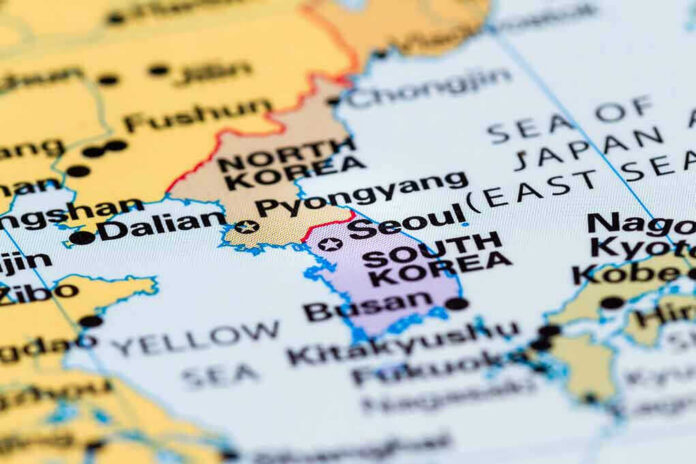
Russia and North Korea’s new road bridge, set to open this summer, forges a direct link between two adversarial regimes, challenging U.S. global security interests under President Trump’s second term.
Story Highlights
- Construction of the first-ever North Korea-Russia road bridge over the Tumen River began April 30, 2025, with significant progress by October 2025.
- Project spans 850 meters core length, totaling 1.3 km with ramps, connecting to Russia’s highway network for trade and travel.
- Agreement sealed during Putin’s 2024 North Korea visit; virtual groundbreaking attended by leaders from both nations.
- Opening projected for Q1 or summer 2026, boosting strategic ties amid sanctions and global tensions.
- Symbolizes deepening anti-Western alliance, raising concerns for American-led efforts to isolate these regimes.
Construction Milestone on Tumen River
North Korea and Russia broke ground on April 30, 2025, for their inaugural road bridge over the Tumen River near the 1959 Friendship railway bridge. Russian Prime Minister addressed “comrade Pakong” in a virtual ceremony marking the start. The 850-meter span, including 1.3 km with ramps, targets direct road connectivity at Tumangang (North Korea) and Khasan (Russia). This fills a long-standing gap in road access despite existing rail links. Rapid six-month progress underscores commitment to bilateral infrastructure.
Historical Context and Agreement
Discussions for the road bridge predated 2024 but accelerated after Russia’s 2022 Ukraine invasion and Western sanctions. President Vladimir Putin formalized the pact during his 2024 North Korea visit, aligning with mutual defense pledges. The project integrates with Russia’s Far East highway system, easing isolated border logistics. Precedents include the 1959 rail bridge and recent trade talks on arms, labor, and goods. This development counters isolation efforts by the U.S. and allies, prioritizing national sovereignty over globalist pressures.
Current Progress and Timeline
Satellite imagery from October 14, 2025, reveals substantial advances in bridge span and ramps since April. CSIS Beyond Parallel analysis confirms high construction pace, projecting Q1 2026 opening if resources hold and winter cooperates—earlier than initial summer 2026 estimates. Russian state firms lead building, with North Korean involvement. Local officials manage site work under Putin and North Korean leadership direction. Uncertainties remain on weather impacts, but momentum suggests timely completion.
Strategic Motivations and Power Dynamics
Russia seeks sanction-bypassing logistics, North Korean labor, and weapons support. North Korea gains economic access and technology amid its isolation. This symbiotic alliance, post-2024 pact, positions both against Western influence, including U.S. policies under President Trump. Russia funds and builds primarily, holding leverage. Border communities in Khasan and Tumangang anticipate jobs, tourism, and trade surges from enhanced connectivity.
Russia, North Korea connect road bridge ahead of summer openinghttps://t.co/Ln4f0Kx4uQ
— Insider Paper (@TheInsiderPaper) April 21, 2026
Impacts on Global Security
Short-term, the bridge enables road travel and trade by mid-2026, creating an economic corridor. Long-term, it cements Russia-North Korea ties, potentially expanding commerce and military cooperation versus South Korea and the West. Transport logistics in the isolated region improve, setting precedents for further pacts. Americans on both sides of the aisle share frustration with elite-driven foreign entanglements that undermine limited government and America First priorities, echoing failures to curb adversarial alliances.
Sources:
Significant Progress of the North Korea-Russia Road Bridge (CSIS Beyond Parallel)