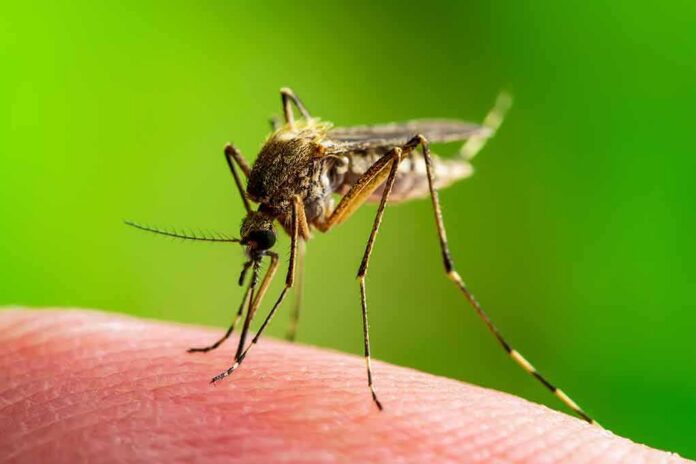
Florida health officials confirmed that 80-year-old Tampa resident Gay Small died from dengue fever amid a fast-growing local outbreak, turning a neighborhood mosquito bite into a fatal case on her birthday.
Story Snapshot
- Florida confirmed a dengue-related death of Tampa resident Gay Small, age 80.
- A death certificate lists dengue infection with septic shock and multi-organ failure.
- Hillsborough County reported a surge of locally acquired dengue cases during this period.
- County crews expanded mosquito control with aerial and ground spraying in affected zones.
Confirmed Fatality and Identification
Florida’s Department of Health confirmed the dengue-related death of Tampa resident Gay Small on September 18, after earlier saying the case was under investigation. Family members told local outlets that she died at Tampa General Hospital on her 80th birthday, hours after a rapid decline that followed a dengue diagnosis. Reporters described a short illness that progressed within a week. Officials did not release further personal medical details, citing privacy rules that limit disclosures in individual public health cases.
USA Today reported that the death certificate listed “dengue infection” as the cause, with septic shock and multi-organ failure as contributing conditions, matching the family’s account of a sharp downturn. That language aligns with how severe dengue can trigger a dangerous chain of events, including plasma leakage, shock, and organ failure. Tampa Bay Times coverage identified Small by name and placed the death at Tampa General Hospital, consistent with the family’s statements and hospital records cited in reporting.
Local Outbreak and Likely Exposure Zone
This death occurred during a documented surge of dengue in Hillsborough County, where officials logged an unusually high number of locally acquired cases this summer, indicating mosquitoes in the area carried the virus. Family members said Small had not traveled recently and likely encountered the bite near her Bayshore Boulevard condo, a few miles from where county crews focused control efforts. While officials determine “local” versus “travel-related” through investigations, the high local case count supports the family’s exposure timeline.
Early in September, the Hillsborough health department said it was actively investigating a local resident’s death possibly associated with dengue, a standard step before final confirmation. That cautious approach reflects how public health agencies verify cause and classify acquisition. Confirmation later closed the loop for this case. The sequence—investigation first, confirmation later—can feel slow to the public, but it follows established outbreak protocols in Florida and beyond.
Mosquito Control Response and Public Guidance
Hillsborough County expanded mosquito control during the outbreak, adding helicopter spraying and targeted ground work near trap detections and complaint clusters. These operations seek to knock down adult mosquito populations and disrupt breeding in standing water. Residents were urged to drain water around homes, cover skin with long sleeves and pants, and use repellent with proven active ingredients. Timely source reduction remains key because the Aedes aegypti mosquito thrives in small containers in dense neighborhoods.
Florida is experiencing one of its worst surges of dengue fever in decades, and the toll now includes a death in the Tampa Bay area. https://t.co/aMMGT8pijS
— South Florida Sun Sentinel (@SunSentinel) September 18, 2026
Health officials stressed that most dengue infections do not become severe, but older adults and people with underlying conditions face higher risks for complications. Doctors advised seeking care for high fever, severe headache, eye pain, body aches, nausea, or unusual bleeding. People who feel worse after a fever breaks should get urgent care, as that can signal severe dengue. Clear, simple steps—dump standing water, screen windows, and wear repellent—help families cut risk when the county cannot be everywhere at once.
Why This Matters Beyond One Case
This fatal case shows how a basic task—controlling pests and protecting neighborhoods—becomes a test of government follow-through. Families want straight answers, fast action, and proof that their taxes fund visible results. When agencies confirm a death weeks after first alerts, people on both the left and the right worry that bureaucracy slows common-sense steps. Clear updates, maps of spray zones, and plain-language guidance rebuild trust while giving residents tools they can use the same day.
Dengue in Florida tends to rise with travel and warm, wet weather, but local spread depends on whether the mosquito population meets the virus at the wrong time and place. That mix is happening more often in Gulf and Atlantic states. The lesson is simple: when government communicates early and acts fast in the block where people live, more neighbors stay safe. In Tampa, officials say the surge is real, the first death is confirmed, and the plan is to push mosquito numbers down now.
Sources:
medicaldaily.com, tampabay.com, wusf.org, cbsnews.com, floridatrend.com
© nationalusnews.com 2026. All rights reserved.