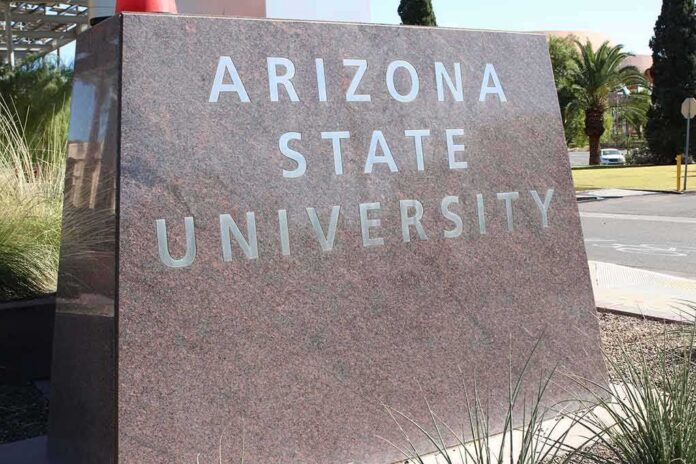
Dozens of University of Arizona groups formally demanded a “sanctuary campus,” including a ban on Immigration and Customs Enforcement on university grounds, forcing a high-stakes clash between student activists and federal authority.
Story Highlights
- Student, staff, and alumni groups issued seven concrete demands, including banning federal immigration activity on campus.
- The campaign cites a former detainee’s account alleging harsh treatment in custody to justify urgent action.
- University policy expects employees to comply with federal law enforcement, creating a direct conflict with the demands.
- A university faculty leader voiced support for a sanctuary model, signaling split views within the institution.
What the coalition asked the university to do
Organizers sent a letter on October 12 to President Suresh Garimella and the Office of General Counsel. They asked the school to bar Immigration and Customs Enforcement and United States Customs and Border Protection from campus, student housing, and Banner University Medical Center. They also called for free legal help for targeted students and workers, strict limits on record sharing, training for departments, surveillance rollbacks, a federal job-fair ban, and abolition of a border-security center on campus.
Named groups behind the push include UA Resist, Feminists Organized to Resist, Create, and Empower, Students for Socialism, the National Lawyers Guild campus chapter, DeFlock Tucson, United Campus Workers of Arizona, and Planned Parenthood Generation Action. Supporters argue these steps would protect vulnerable classmates and staff. They set an October 23 response deadline. As of mid-October, public reporting had not identified a formal acceptance by the administration.
Why the push intensified now
The coalition centers its case on conditions reported in immigration detention. A former University of Arizona aerospace engineering student, Yassine Halhoul, described a 23‑day stretch in custody after an arrest by Homeland Security Investigations. He alleged shackling, poor food and medical care, and very cold holding rooms. He called the cold “a tool of torture.” These are allegations, not proven in court, but they fuel campus calls to restrict cooperation with federal immigration actions.
Faculty Chair Leila Hudson publicly said federal immigration agents should have “no place on our campus,” and backed the sanctuary-campus idea. That statement shows visible faculty support for policy change. It also signals pressure on administrators to set clear procedures for warrants, data requests, and access to nonpublic spaces. At the same time, the record does not show a detailed university response to each demand yet.
The legal and policy hurdles in play
University of Arizona policy says employees are expected to comply with federal law enforcement. That baseline creates direct tension with a blanket ban on Immigration and Customs Enforcement and United States Customs and Border Protection. Public reporting also notes the administration had not explained how it would handle those agencies on campus. That leaves a practical gap: who decides access to dorms, labs, and clinics, and under what documents or warrants.
The coalition’s request to abolish the National Center for Border Security and Immigration runs into another barrier. The university describes the center as tied to the Department of Homeland Security’s Center of Excellence network, with work that helps protect borders, support trade, and inform immigration policy, serving agencies that include United States Customs and Border Protection and Immigration and Customs Enforcement. Ending that center could affect research ties and funding, raising costs far beyond student-affairs policy.
What universities can and cannot do
National guidance makes a key point: “sanctuary campus” is a policy label, not a legal shield. Schools can require judicial warrants for access to nonpublic areas and can limit voluntary data sharing. But they cannot block lawful federal activity in public areas or exempt their grounds from federal immigration law. Most change happens in the gray zone of consent, records protocols, and campus-police roles, not in outright bans.
WHEN to they have time for college classes???????????????? Will u of a be held hostage by a bunch of kids???
Gateway Pundit
·5h@gatewaypundit
Student Groups Make Demands! Leftist Coalition Demands University of Arizona Ban ICEhttps://t.co/BtdEMZoY74
— Jenn (@Jenn02175257781) October 19, 2026
That is why the seven demands vary in feasibility. Training, legal referrals, and clearer warrant rules are possible with planning and budget. A categorical bar on federal agencies across hospitals and housing is harder and may fail in public or shared spaces. Surveillance limits would need a full audit to know what tools exist, how they are used, and which require warrants. Without those facts, cost and risk remain unclear for students and administrators.
Why this matters beyond Arizona
This fight echoes a broader frustration from both left and right. Many people see powerful institutions protecting themselves while regular people face fear, paperwork, and rising costs. If the university stays vague, students may feel exposed. If it overreaches, it may clash with federal law and lose research partners. Clear, posted rules on warrants, data, and access could lower the temperature while leaders assess costs for legal aid and technology audits.
Sources:
thegatewaypundit.com, campusreform.org, tucson.com, azluminaria.org, tucsonspotlight.org, coppercourier.com, news.azpm.org
© nationalusnews.com 2026. All rights reserved.