
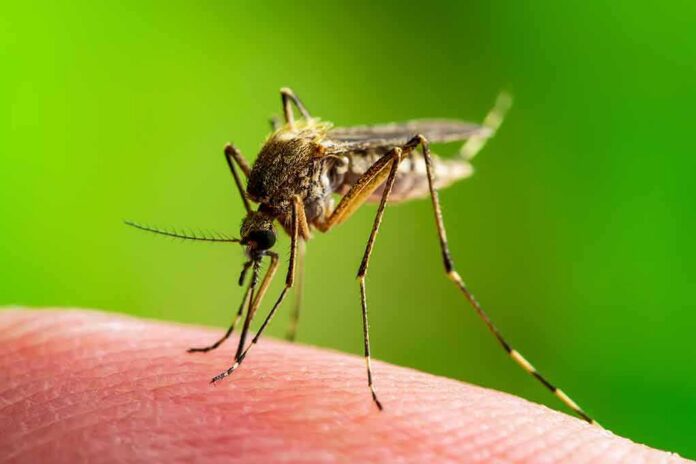
Scientists found that no single person attracted all three major mosquito species tested, upending the idea of a one-size-fits-all “mosquito magnet.”
Story Highlights
- A Florida International University study tested 119 people against three mosquito species; none attracted all three.
- Each species linked to different skin odors and bacteria, showing species-specific preferences.
- Shared signals still mattered: one compound drew all species, while another repelled them.
- Data and code are public, allowing outside checks on the findings.
What The New Study Actually Showed
Florida International University researchers measured how three mosquito species responded to the scent of 119 volunteers using a controlled single-port airflow device. The team tested Aedes aegypti, Aedes albopictus, and Culex quinquefasciatus, which are common and medically important. The authors reported that not a single participant attracted all three species, pointing to species-specific preferences rather than a universal “mosquito magnet.” The study appears in the journal iScience with full methods in the public record.
The design captured how female mosquitoes moved toward human odor in a standardized way, reducing noise from heat, carbon dioxide, or movement. This approach allowed the team to compare people directly across species. While the test focused on odor-guided attraction and not biting, the setup provided robust, repeatable measures of interest. The work fits a broader pattern in past research that shows some people draw more mosquitoes than others due to odor and skin microbes.
How Odors And Bacteria Shape Species Preferences
The team linked Aedes albopictus to people with higher levels of certain ketones. By contrast, Aedes aegypti and Culex quinquefasciatus tended to favor people with less overall skin odor. Several skin bacteria also tracked with attraction. Reported links included more Staphylococcus with Aedes aegypti, and distinct bacteria with Aedes albopictus and Culex quinquefasciatus. These findings suggest that body chemistry and skin microbes help drive which species picks which person, rather than one scent profile ruling them all.
Some signals crossed species lines. All three species showed more attraction to ethyl 2-methylbutanoate and were less attracted to 1-penten-3-ol. Those shared cues explain why many repellents or lures can work on more than one mosquito. But the mix still varied by species, which helps explain why friends outdoors can have very different bite experiences on the same night. The split between shared and unique cues is the key to understanding the new results.
Why This Matters For Health And Everyday Life
Different mosquito species spread different diseases. Aedes aegypti can carry dengue and Zika. Culex quinquefasciatus can spread West Nile virus. If species target different people based on odor and skin bacteria, then personal risk may depend on which species is common in your area. That could change how public health teams design traps, alerts, and messages. It also hints that better repellents may need species-tuned formulas instead of one general blend.
A new Florida International University study finds each mosquito species is drawn to its own mix of human skin odors, chemicals, and bacteria, challenging the idea of a universal mosquito magnet and pointing toward better repellents. 🦟 pic.twitter.com/sQcl6XP8KV
— Bio DNA (@biodnaa) November 11, 2026
The authors deposited their data and code in a public Dryad archive. That allows outside teams to recheck the models, test new questions, and measure how well the signals predict attraction in people not used to build the models. The study tested 119 people in lab settings, so larger and more diverse follow-ups will help show how the patterns hold across places, seasons, and mosquito colonies. But open data is a strong step toward better tools and clearer guidance.
Practical Takeaways For Readers
Personal care choices can change your scent, but genetics, skin microbes, and local species also matter. What works for your neighbor may fail for you if the local species key on different odors. Layer simple steps: remove standing water, use Environmental Protection Agency-listed repellents, wear long sleeves, and use fans outdoors to disrupt odors and flight. Watch local health advisories to know which species are active. Tailoring your approach to your area and season can cut bites and risk.
Sources:
wusf.org, pmc.ncbi.nlm.nih.gov, datadryad.org, sciencenews.org
© nationalusnews.com 2026. All rights reserved.