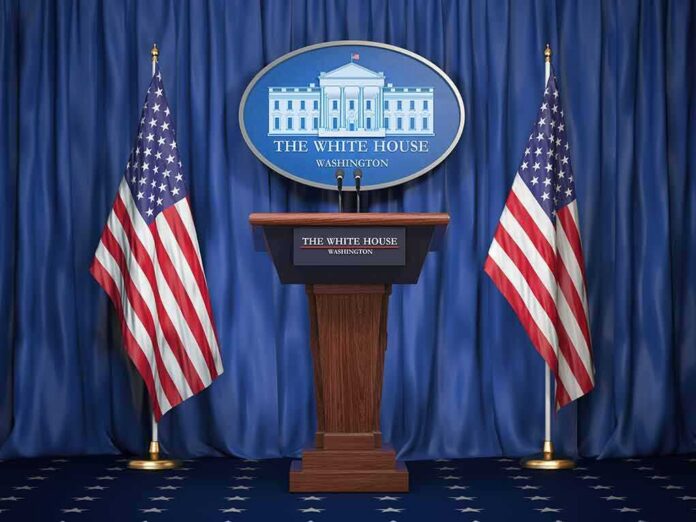
Trump’s high-stakes Beijing summit could test China on trade fairness and energy stability while pushing back against years of globalist drift.
Story Snapshot
- China and the White House confirmed President Trump’s May 13–15 state visit with formal meetings and ceremonial events [1][4][5].
- Analysts expect modest but stabilizing outcomes on trade and crisis management rather than sweeping breakthroughs [3].
- Commentary warns Beijing may try to set the terms and pocket symbolism unless Washington ties optics to measurable gains [2][3].
- Human-rights advocates urge Trump to integrate liberty issues with trade and security talks [9].
Confirmed Summit Schedule And Stakes For U.S. Households
Chinese officials announced President Donald Trump will make a state visit to China from May 13 to 15 at President Xi Jinping’s invitation, a timeline the White House also confirmed, including bilateral meetings, a state banquet, and cultural stops in Beijing [1][4][5]. Concrete scheduling matters because energy prices, inflation pressures, and supply chain reliability ride on signals from this summit. Everyday Americans feel those shocks directly at the pump, in grocery aisles, and on utility bills when U.S.-China relations wobble.
Policy direction coming out of Beijing will influence whether American manufacturers see fair access, whether farmers secure predictable purchase commitments, and whether technology theft remains contained. Structured talks offer a channel to press for reciprocity and transparency after years of offshoring, intellectual property loss, and manipulated market access that squeezed U.S. workers. The administration’s leverage rests on linking ceremonial optics to traceable outcomes with deadlines, audits, and enforcement that shield American jobs and family budgets [3].
Analysts Predict Incremental Steps, Not Grand Bargains
Nonpartisan assessments anticipate measured progress that reduces near-term friction without resolving structural disputes on technology controls, subsidies, and state-directed industrial policy [3]. Such summits historically generate limited truces or purchase pledges rather than deep reforms that stop coercive practices. That pattern suggests success will be judged by concrete de-escalation and practical gains for U.S. exporters, energy stability, and crisis hotlines, with the understanding that verification and follow-through after the cameras leave are the real tests of durability [3].
Foreign policy commentators argue Beijing will try to shape the agenda toward calm imagery and symmetric statements while protecting its industrial model and geopolitical space [2]. That caution underscores why Washington must attach metrics to any joint text, ensuring tariff relief or regulatory consideration moves only in parallel with documented compliance. Conservatives should watch for specifics: dates, quantities, inspection rights, and penalty triggers that protect American sovereignty and deter backsliding masked by photo opportunities [2][3].
Human Rights, Religious Freedom, And American Values On The Table
Human-rights experts urge integrating liberty and religious freedom into the trade-and-security package, contending that moral clarity strengthens—not weakens—U.S. leverage by aligning policy with American principles and bipartisan law [9]. Raising these issues alongside commercial reciprocity counters the past era of silent engagement that too often rewarded repression with market access. The administration’s challenge is to make values operational: conditioned privileges, targeted sanctions relief, and transparent monitoring that link privileges to measurable improvements [9].
US President Donald Trump to visit China from May 13 to 15
At the invitation of Chinese President Xi Jinping, US President Donald Trump will pay a state visit to China from May 13 to 15, a Chinese foreign ministry spokesperson announced on Monday.#XiJinping #Trump #ChinaUS… pic.twitter.com/Z5sM3ESNQc
— CGTN Europe (@CGTNEurope) May 11, 2026
Advancing core freedoms while pursuing fair trade can reassure Americans who endured offshoring, censorship-enabled platforms, and supply chain dependencies that invited coercion. Incorporating liberty benchmarks into any economic roadmap protects U.S. companies from complicity risks and encourages resilient sourcing. That approach also deters weaponization of trade against American speech and faith communities, aligning economic statecraft with the Constitution and the conviction that free people and free markets go together over the long haul [9].
How The Administration Can Turn Optics Into Outcomes
White House negotiators can convert ceremony into substance by demanding reciprocal market access, ending forced technology transfers, and securing time-bound, verifiable purchase agreements that support U.S. agriculture and energy producers [3]. Clear enforcement—snapback measures, tariff reimposition triggers, and third-party audits—ensures commitments outlast a news cycle. Even incremental steps can lower inflation pressure if they meaningfully reduce uncertainty in shipping, customs processes, and critical inputs essential to American factories and small businesses [3].
Conservative readers should track whether the joint statements include enforcement architecture, not just aspirations. The yardstick is simple: Will this deal shield American workers, safeguard intellectual property, and reduce exposure to foreign coercion? Independent analyses caution against grand expectations but affirm the value of predictable channels to cool crises and steady trade flows when married to verification. That balance—firm on sovereignty, pragmatic on sequencing—can protect families from price spikes while advancing U.S. strength in a dangerous world [2][3].
Sources:
[1] China confirms dates for Donald Trump’s state visit to Beijing
[2] At the Trump-Xi Summit, China Will Have the Upper Hand
[3] Trump-Xi Summit in Beijing: Managing the World’s Most Important Relationship
[4] 2026 state visit by Donald Trump to China – Wikipedia
[5] U.S. President Donald Trump to pay state visit to China from May 13 …
[9] Trump’s China Trip Offers a Golden Chance to Inspire Freedom