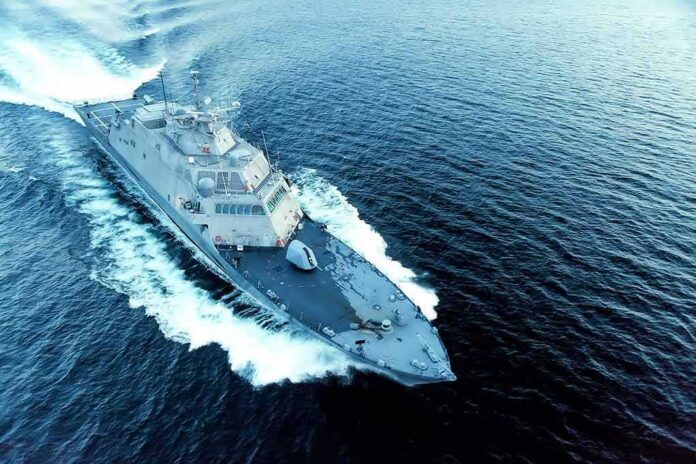
After Iran fired ballistic missiles at two U.S. Navy ships, American forces struck three Iranian oil tankers in a move that pushes the Gulf crisis toward a dangerous new phase.
Story Snapshot
- U.S. Central Command linked the tanker strikes to Iran’s missile attacks on U.S. warships.
- Iran claims its actions are defensive and disputes key U.S. accounts.
- Shipping risk in and near the Strait of Hormuz keeps rising with each strike.
- Both sides frame force as self-defense in a long tit-for-tat cycle.
What The U.S. Says Happened And Why It Matters
U.S. Central Command said American forces hit three Iranian crude oil tankers on Saturday. The command tied the action to Iran’s launch of ballistic missiles at two U.S. Navy ships earlier the same day. The military has also said recent waves of strikes targeted Iranian air defense systems, maritime assets, and communications sites to curb further attacks. These moves show a clear U.S. aim: raise the cost for Iran and blunt its ability to threaten ships and crews transiting vital sea lanes.
The United States argues the tankers support a broader Iranian maritime network that funds and enables armed groups. That claim fits months of U.S. actions against vessels tied to Iran’s oil trade and efforts to enforce a shipping blockade. American statements describe a pattern of warnings, interdictions, and, when ignored, precision fires to disable ships without mass casualties. The message is simple: missile attacks on U.S. forces will trigger strikes on the logistics and financing that back them.
How Iran Is Framing The Fight
Iran’s leaders reject the U.S. account and present their own. Tehran’s foreign ministry has said recent Iranian attacks were “defensive,” aimed at U.S.-linked military targets after alleged American aggression. Iranian state and military channels have claimed prior tanker incidents involved “non-compliant” ships that ignored warnings or sailed through mined routes, though U.S. officials have labeled some of these reports false. These dueling claims are part of an information battle that runs alongside the shooting war.
Conflicts like this often feature rapid claims and counterclaims before outside proof appears. Each side leans on legal language about self-defense under international law, while evidence about specific routes, warnings, and sensor tracks remains classified or delayed. This dynamic can make it hard for the public to sort truth from spin. It also feeds the broader fear that powerful actors can shape the story faster than facts can catch up.
Why This Flashpoint Keeps Returning
The Strait of Hormuz carries a large share of the world’s oil flows. Any strike, seizure, or missile launch near this choke point sends prices higher and rattles supply chains. Analysts describe a recurring cycle here: the United States and Iran trade blows, test red lines, and pressure shipping to gain leverage. Each move invites a reply, and independent verification often trails the first headlines by days or weeks. That delay increases the risk of miscalculation across a crowded waterway.
https://twitter.com/Zoltan__D/status/2096519399213552045
For Americans watching at home, this raises familiar worries. People on the right and the left see rising costs, market shocks, and the risk of another long conflict. Many think elites make these choices while regular families carry the price through energy bills, inflation, and the danger to U.S. service members. The core question is whether Washington has a clear goal, a legal footing, and a path to reduce the threat without sliding into a wider war that our leaders struggle to explain.
What To Watch Next
First, watch for proof on key claims. U.S. officials may release imagery or timelines tying the Iranian missiles to the tanker network. Iran may publish its own tracks or statements from ship crews. Second, track shipping behavior. If more tankers divert or turn back, insurance costs and pump prices could jump. Third, look for signals from allies and energy producers, who can add pressure or relief. Each action will shape whether this standoff cools or escalates further.
Sources:
© nationalusnews.com 2026. All rights reserved.