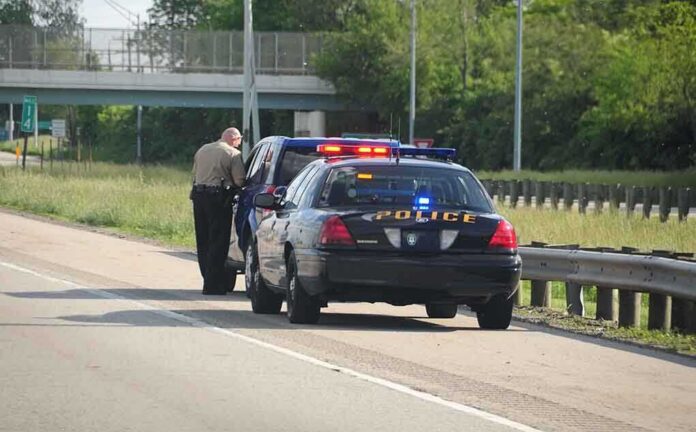
A 20-year-old Haitian student died after stepping onto an Ohio interstate while wearing a government ankle monitor, renewing hard questions about surveillance and dignity in immigration enforcement.
Story Highlights
- Officials say the student entered Interstate 70 traffic and was hit by a truck.
- Immigration and Customs Enforcement (ICE) confirms it placed an ankle monitor on July 29, 2026.
- Family and reports say he felt shame and humiliation over the device.
- Authorities say the death remained under investigation, with no official cause released at first.
What Authorities Confirmed About the Death
Ohio State Highway Patrol investigators reported that Pierre Damas Bel left his car on Interstate 70 and stepped into the westbound lanes, where a truck struck him on August 31, 2026. Newsrooms across the country echoed that sequence based on patrol statements. Coverage stated the county coroner had not yet issued a final cause of death at the time, and officials said the case remained open. That left some details pending while the basic timeline was clear.
Immigration and Customs Enforcement said Bel had been enrolled in an “alternatives to detention” program and fitted with a Global Positioning System ankle monitor on July 29, 2026, while his immigration case continued. ICE also said it would not comment on the cause of death while the investigation was ongoing. The agency pushed back on blame, saying attempts to fault ICE for the death were false in separate reporting, but it did not dispute the monitor placement or the timeline.
Family Accounts and the Question of Harm
Bel’s family and several reports said he spoke about shame and humiliation tied to the ankle monitor in the weeks before his death. Some outlets cited his social media posts and relatives who described a sharp change in mood after the device was added. Those claims came from people close to him and from community advocates, not from a final official finding on motive. Reporters flagged that distinction while noting the overlap in timing and distress.
The link between monitoring and mental strain matches a wider pattern noted by researchers. Human Rights Watch and legal advocates have documented that electronic surveillance can cause anxiety, social stigma, and daily disruptions, even when presented as a softer option than detention. A policy brief and related filings describe lasting mental health impacts among people who wear these devices, including sleep problems and depression. Those findings do not prove cause in Bel’s case, but they show the risk is real in similar situations.
The Policy Collision Behind the Tragedy
Bel’s case unfolded during shifting rules for Haitians who once had Temporary Protected Status. Several reports tied his troubles to the loss or change of that protection and to enforcement that followed. Outlets said the monitor came after those changes, which moved many Haitians into more rigid supervision. The exact status details for Bel’s file were not publicly available in the reports, leaving some case specifics unclear even as the broader policy backdrop was reported.
Pierre Damas Bel was 20, an honors graduate of Springfield High School, a JROTC member and soccer player, and a freshman at Wright State who wanted to study neuroscience. ICE fitted him with an ankle monitor on July 29 after his Temporary Protected Status ended, and he died on… https://t.co/jFk0EgttqF pic.twitter.com/TDOMX29y8J
— Mike Young (@micyoung75) October 5, 2026
Across the political spectrum, people worry that government systems treat regular people as case numbers. Conservatives see waste, mission creep, and technology that polices without solving root problems. Liberals see a surveillance dragnet that can humiliate the poor and the powerless. Bel’s death sits in that shared space. Officials verified the monitor and the highway sequence. Families described shame and bullying. The unresolved pieces underline a larger test: can the system enforce the law without stripping people of dignity.
What We Still Do Not Know
Reporters noted several limits. The public record did not include the full coroner’s report, toxicology, or a final manner-of-death ruling at first publication. ICE’s case notes explaining why a monitor was chosen over other options were not released. Without those documents, the exact chain from policy to outcome cannot be drawn with certainty. The confirmed facts, however, show a young man under surveillance who then entered traffic and died from his injuries.
Sources:
abcnews.com, nbcnews.com, cnn.com, theatlantic.com, cleveland.com, abcnews4.com, amicacenter.org
© nationalusnews.com 2026. All rights reserved.