Competing claims over Houthi strikes on Riyadh and Yanbu left flames on camera, alerts in the capital, and key questions about how safe Saudi oil really is.
Story Snapshot
- Houthis said missiles and drones hit “sensitive sites” in Riyadh and Aramco in Yanbu, causing fires.
- Saudi coalition said air defenses intercepted a ballistic missile targeting Riyadh and thwarted other attacks, with no damage reported in the capital.
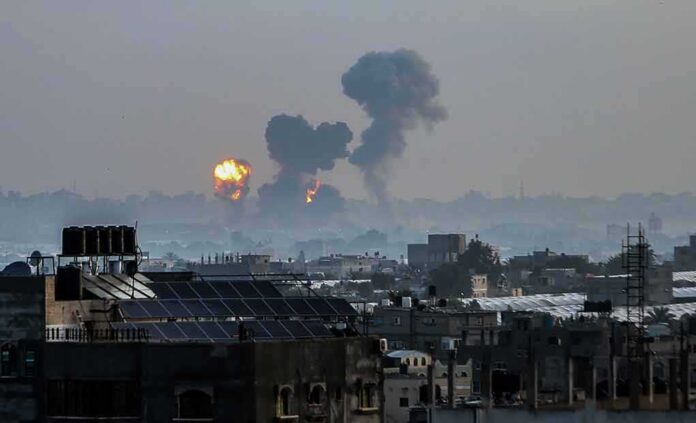
- Reporters and residents saw flames or smoke near Riyadh’s airport after alerts sounded.
- Saudi officials confirmed fires and temporary halts at some energy facilities in earlier September attacks, showing real impacts on oil operations.
What Each Side Says Happened
Houthi spokesman Yahya al-Sarea said fighters launched missiles and drones at “sensitive sites” in Riyadh and at Saudi Aramco facilities in Yanbu. He claimed the strikes caused “massive fires.” Those claims came without presented evidence but were widely reported across outlets that track the war. The same morning, the Saudi-led coalition said it intercepted a ballistic missile headed for Riyadh and stopped other attack attempts on Taif, Baish, Farasan, and Yanbu. Officials reported no casualties or damage in the capital.
Saudi authorities and several outlets described air alerts in Riyadh around dawn. People near the airport reported an explosion and later saw a plume of smoke. Footage and photos shared with reporters showed flames or smoke near King Khalid International Airport. Officials did not confirm damage to the airport itself. The result is a split picture: a visible incident near the airport but an official account of a successful intercept and no confirmed capital damage from a direct hit.
What Is Verified, What Remains Unclear
Two facts can be held at once. First, the Houthis have hit Saudi energy sites before, and Saudi officials confirmed fires and temporary shutdowns at some facilities earlier in September. Those events produced injuries and short-term disruption, proving the threat is not empty. Second, for the Riyadh and Yanbu episode at issue, the official line says intercepts worked and no capital damage was recorded. The open question is whether any claimed Yanbu targets suffered direct hits that day.
Independent proof for the Riyadh and Yanbu claims remains thin in public view. There is no verified satellite imagery or engineering data confirming precise impact points for the capital or for the Aramco facilities named in the Houthi statements. That gap is common in fast-moving conflicts. It takes time to match photos, map burn marks, and compare before-and-after pictures. Until then, the most grounded reading is that an interception occurred over Riyadh and that smoke was seen near the airport the same morning.
Why It Matters for Energy, Security, and Public Trust
Attacks and attempted attacks on Saudi oil matter because even short halts can ripple through global prices. Traders move on headlines long before engineers publish repair logs. The Houthis aim to show reach and raise costs, while Saudi leaders aim to project control and keep oil flowing. That clash creates a fog of claims and denials. People see smoke on their phones, but they do not see plant telemetry, fire reports, or damage surveys in real time.
SECURITY UPDATE | Yanbu
Saudi Arabia says it intercepted six Houthi ballistic missiles targeting Taif and the Yanbu area on September 24.The Houthis later claimed missile and drone strikes against Saudi Aramco facilities in Yanbu, although damage to the facilities has not been…
— Littoral Insight (@LittoralInsight) September 25, 2026
Americans across the spectrum distrust official spin, whether from a militia or a monarchy. They want clear facts. Here, the most reliable anchors are simple: Houthis claimed deep strikes; the coalition said it intercepted a missile bound for Riyadh; smoke was visible near the airport; earlier that month, confirmed fires did disrupt some energy operations. More proof would come from satellite images, civil defense logs, and Aramco incident reports. Until then, treat big claims and clean denials with equal care.
Sources:
© nationalusnews.com 2026. All rights reserved.