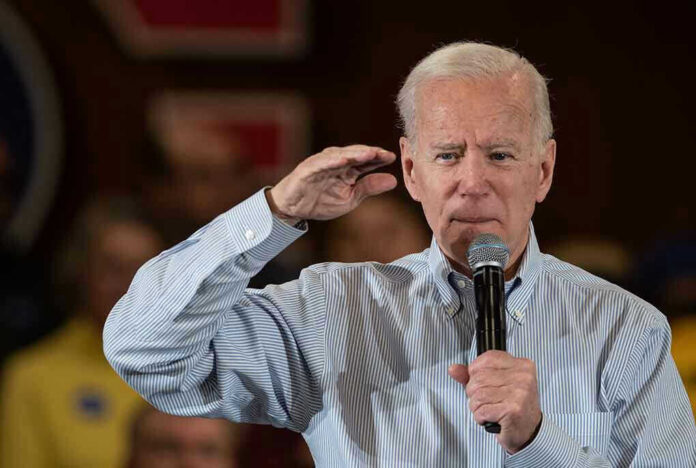
Former President Joe Biden sparked outrage by calling a Black university trustee “Barack,” fueling accusations that he assumes all Black men look like Obama—a gaffe that exposes the elite’s disconnect from everyday Americans.
Story Highlights
- Biden referred to Syracuse University trustee Jeffrey M. Scruggs as “Barack” during a portrait unveiling event.
- The remark, intended as humor, went viral, drawing mockery and charges of racial insensitivity.
- Critics highlighted it as evidence of unconscious bias, while supporters dismissed it as a harmless slip.
- The incident overshadowed Biden’s celebration, shifting focus to debates on intent versus perception.
The Gaffe Unfolds at Syracuse University
Joe Biden appeared at Syracuse University in New York on Tuesday for the unveiling of his presidential portrait. During his speech, he spotted Jeffrey M. Scruggs, a Black member of the university’s Board of Trustees, in the audience. Biden said, “I always want to turn around to one guy and say… ‘Barack, what are you doing?'” before inviting Scruggs onstage. The comment, meant as lighthearted banter, immediately drew attention for conflating Scruggs with former President Barack Obama. This moment, captured on video, quickly spread across social media, amplifying scrutiny of Biden’s public speaking.
Viral Backlash and Polarized Reactions
The clip exploded online, dominating discourse and news coverage. Critics labeled the remark inappropriate, accusing Biden of racism or revealing unconscious bias by linking a Black man’s appearance to Obama. Supporters countered that it was a benign verbal slip in a friendly context, not malicious intent. The viral spread overshadowed the event’s purpose—honoring Biden’s legacy through the portrait. This division reflects deeper frustrations shared across political lines: leaders more focused on optics than addressing real issues like economic pressures and government overreach that hinder the American Dream.
Broader Implications for Public Discourse
The gaffe reignited debates over intent versus perception in statements touching on race. In an era where every word faces microscopic analysis, such slips highlight how elite figures often stumble while ordinary Americans grapple with inflation, border chaos, and elite priorities that ignore working families. Conservatives see this as another example of liberal hypocrisy on race, quick to judge yet blind to policy failures like open borders and woke mandates that divided the nation. Both sides increasingly agree: Washington insiders prioritize power over people, eroding trust in institutions founded on individual liberty and merit.
Jeffrey M. Scruggs joined Biden onstage without apparent issue, but the online firestorm persisted. The trustee, a respected figure at Syracuse, became an unwitting focal point. This incident underscores tensions in interpreting ambiguous comments amid heightened cultural sensitivities. As President Trump’s second term advances GOP reforms—curbing spending, securing borders, and reviving energy independence—such distractions remind voters why they rejected the status quo. Frustrations unite left and right against a “deep state” more concerned with legacies than livelihoods.
'All Black Guys Look Like Obama?' Biden's Awkward Gaffe Goes Viral https://t.co/UYuwvwzxsp
— Meredith (@Mermaz) April 15, 2026
Lessons from a Moment That Backfired
Biden’s remark shifted attention from celebration to controversy, exemplifying how public figures’ words can derail narratives. With Republicans controlling Congress, Trump’s administration pushes America First policies amid Democratic obstruction. Yet events like this reveal shared cynicism: government serves elites, not citizens facing high costs and eroded opportunities. Acknowledging biases—conscious or not—demands accountability, aligning with conservative calls for personal responsibility over excuses. True unity emerges when leaders confront failures head-on, restoring faith in limited government and hard work.
Sources: