Four Kansas school districts are facing a stark ultimatum from Washington: rewrite “gender identity” rules for bathrooms, sports, and parent notification—or risk losing federal education dollars.
Quick Take
- The U.S. Department of Education concluded four Kansas districts violated Title IX and FERPA through transgender-related policies.
- Federal officials say the districts must align bathrooms and sports with biological sex and provide parents access to gender-related student records.
- The investigation began after an August 2025 complaint and ended with an April 2026 federal finding and a compliance window.
- One district, Olathe, disputes at least part of the federal allegation, underscoring the likelihood of negotiation or litigation.
Federal finding targets bathrooms, sports, and parent notification
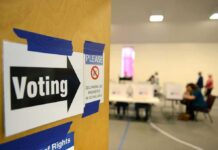
The U.S. Department of Education announced it had completed an eight-month investigation into Olathe, Shawnee Mission, Kansas City (Kansas), and Topeka public schools, concluding district policies tied to transgender students broke federal law. Investigators focused on three flashpoints: whether students could use bathrooms and locker rooms based on gender identity, whether sports teams were open based on gender identity, and whether parents could be kept out of the loop on gender transitions at school.
The department’s conclusion matters because it treats these issues not as local disputes but as compliance questions under Title IX and FERPA—two statutes tied to federal funding. Officials said districts must change policies to base facilities and athletics on biological sex and to ensure parental access to gender-related education records. The core leverage is money: districts that refuse corrective action can face the loss of federal dollars, a budget hit that can ripple into staffing and programs.
Why Title IX and FERPA are the legal levers in this fight
Title IX was written to bar sex-based discrimination in education programs receiving federal funds, and FERPA was designed to protect student privacy while also guaranteeing parents access to their children’s education records. Under the previous administration, federal guidance increasingly treated gender identity as protected under Title IX. Under President Trump’s second-term approach, federal enforcement has moved back toward biological sex distinctions, reframing what counts as discrimination and what counts as privacy.
The Kansas case also spotlights a tension that leaves families on both the right and left skeptical of institutional behavior. Conservatives see federal law being used to restore boundaries in female spaces and to reaffirm parental rights in schooling. Many liberals view the same federal action as narrowing accommodations for LGBTQ students. What is not in serious dispute is the mechanism: compliance demands backed by the threat of funding cuts place school boards, not voters, under immediate pressure.
Kansas isn’t the only battleground as complaints spread nationwide
The Kansas findings land amid a broader national pattern of investigations and political backlash around gender identity in schools. Reporting from other states shows similar disputes triggering federal attention and news coverage, including cases involving bathroom policies and questions about whether districts are disclosing sensitive information to parents. In Michigan, debates over sex-education standards that include gender identity fueled partisan conflict and additional scrutiny of local district practices, highlighting how state-level curriculum fights can become federal issues.
Related investigations in places like Massachusetts and Wisconsin illustrate how quickly local rules become national test cases when they touch student privacy, girls’ sports, and parental access to information. That trend has created a kind of policy whiplash, with districts caught between shifting federal interpretations and highly mobilized activists on both sides. The Kansas enforcement action will likely encourage more complaints, because it signals that Washington is willing to issue formal findings rather than simply open inquiries.
District pushback and compliance deadlines will shape what happens next
The immediate next step is not a courtroom showdown but a compliance process, typically involving deadlines for policy revisions and documentation of changes. The department’s statements framed the issue as a parent-respect and safety matter, with Assistant Secretary for Civil Rights Kimberly Richey criticizing school systems for policies she said had “run amok” and sidelined parents. The districts can accept corrective action, negotiate details, or prepare for litigation if they believe the findings overreach.
Education Department Finds Four Red-State School Districts Pushed 'Gender Identity' on Kids https://t.co/bl4hxSY831 #gatewaypundit
— Cajun Jarhead (@bayou_barry) April 27, 2026
One complication is factual disagreement. Olathe disputed the allegation related to bathroom policy, suggesting the investigation’s characterization may not match the district’s actual rules or implementation. That kind of dispute can become decisive, because Title IX and FERPA enforcement depends on what policies say and how they are carried out, not simply on political rhetoric. For families watching, the larger takeaway is that education governance is increasingly shaped by federal enforcement swings, leaving parents feeling unheard until crises erupt.
Sources:
Gender identity lessons in schools fuel GOP backlash
U.S. Education Department says 4 Kansas districts broke federal law with gender identity policies
Department of Education investigates Massachusetts school district transgender bathroom policy
Department of Education launches investigation over Wisconsin school district’s bathroom