When a Democrat calls for the House to police the mental and physical fitness of its oldest members, you know we’ve reached a new level of absurdity in political theater—one that could set fire to the very idea of self-government.
At a Glance
- Rep. Marie Gluesenkamp Perez (D-Wash.) proposes House Ethics oversight of aging lawmakers, igniting debate about age and capacity in Congress.
- The push follows years of publicized health scares and increasing scrutiny of elderly members’ ability to serve.
- The House Ethics Committee, historically focused on misconduct, would be tasked with reviewing lawmakers’ cognitive and physical fitness under the new plan.
- Proposal faces sharp questions over potential abuse, politicization, and the erosion of electoral accountability.
Democrat’s Plan to Police Aging Lawmakers: Who Decides Fitness to Serve?
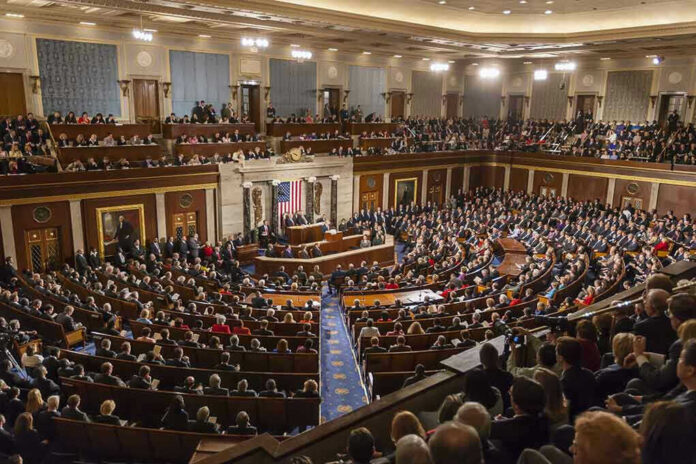
On July 14, 2025, Rep. Marie Gluesenkamp Perez (D-Wash.) took the House floor to suggest that the Office of Congressional Conduct and the House Ethics Committee devise formal standards for evaluating the cognitive and physical capacity of aging lawmakers. The pitch comes after a string of media frenzies over health scares and memory lapses among some of the oldest members of Congress, who—let’s not forget—were elected by their constituents, not appointed by some D.C. medical board. If this proposal becomes more than a trial balloon, it would mean the House Ethics Committee—originally created to investigate ethical misconduct, not run wellness checks—could be ordering investigations into whether fellow members are up to the job. That’s a dangerous precedent in a self-governing Republic, where voters, not bureaucrats, should decide who represents them.
This plan surfaced in the wake of growing calls (mostly from frustrated voters) for more transparency about lawmakers’ health, especially after highly publicized memory lapses and hospitalizations. But the answer from the left is, as always, more bureaucracy, more oversight, and more government power—this time, to decide who’s allowed to serve. Instead of trusting the judgment of the American people, the proposal would empower a handful of committee members and staffers to police their own colleagues. And, as history teaches, every time you hand more power to a committee, you get less accountability and more excuses for why things don’t get done.
A Solution in Search of a Problem—or a Political Weapon?
The House Ethics Committee was created in 1967 to uphold ethical standards, not to act as a human resources department for aging politicians. The committee has never routinely conducted fitness reviews; it only steps in when there’s clear evidence of misconduct. Under this proposal, however, it would open investigations into members’ health based on newly created standards, which could include “significant irreversible cognitive impairment.” There’s no precedent for this kind of systematic review, and the risks are obvious: It’s a slippery slope from “fitness” investigations to outright political purges disguised as concern for public trust. Today, the target could be a frail opponent; tomorrow, anyone who’s inconvenient to the majority.
Rep. Gluesenkamp Perez insists the move is all about accountability and restoring faith in Congress. But the American people are already losing faith—thanks to government overreach, not a lack of medical gatekeeping. The left’s reflex to “fix” every problem with more rules and panels, instead of trusting voters to make their own choices, is exactly the kind of thinking that got us endless spending, chronic gridlock, and the circus we’ve seen in recent years. At what point do we stop treating elected officials like children and start holding the system itself accountable for its failures?
Who Really Benefits? And Who Gets Hurt?
If this proposal moves forward, it will have real consequences for Congress and for the country. Senior lawmakers, many of whom hold key committee chairs, would face public scrutiny and the possibility of forced resignation—not based on misconduct, but on subjective interpretations of “fitness.” Congressional staffers, already tasked with running interference for absent or ailing bosses, would find their roles even more politicized. And the voters, who are supposed to be the final authority, would be left to wonder whether their choices can be overturned by a panel of unelected “experts.”
The short-term result is more infighting, more bureaucracy, and more distractions from real issues like runaway spending, border security, and inflation caused by years of leftist mismanagement. In the long term, this could reshape Congress itself—opening the door for similar moves in state legislatures, the courts, and even the private sector. The endgame? More government power, less individual liberty, and an America where “fitness to serve” is decided in secret, not at the ballot box.
Sources:
WJBC: Dem Suggests House Ethics Oversight on Old Members
Newsmax: House Oversight Proposal
Wikipedia: United States House Committee on Ethics
Politico: House Ethics Reviewing McIver Case