Germany’s most controversial party just used court orders and police lines to outmaneuver thousands of anti-fascist protesters and calmly re-elect its leaders behind a wall of unrest.
Story Snapshot
- Far-right Alternative for Germany (AfD) held its national conference in Erfurt as tens of thousands protested outside.
- Massive road blockades and sit-ins by unions, civil groups, and Antifa activists failed to stop the meeting from starting on time.
- Delegates comfortably re-elected Alice Weidel and Tino Chrupalla, locking in the party’s course ahead of key eastern state elections.
- The showdown highlights Germany’s deep split over far-right politics and echoes wider fears about elite systems that feel distant from everyday voters.
AfD Leaders Re-Elected Amid Tight Security And Mass Protests
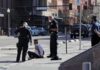
On Saturday in the eastern German city of Erfurt, the far-right Alternative for Germany party held its national convention while tens of thousands of protesters tried to shut it down. Police say roughly 31,000 people joined rallies and blockades around the conference site, including union members, civil society groups, and left-wing activists who sat across roads and tram lines to block access. Despite this, delegates reached the venue under heavy police protection, and the convention opened on schedule.
Inside the hall, AfD members voted to keep their current co-leaders, Alice Weidel and Tino Chrupalla, in place for another term, a move meant to show unity and steady direction. Weidel won about 81 percent of delegate votes, while Chrupalla received around 70 percent, a drop from his previous result but still a strong mandate. Party officials celebrated the orderly vote as proof that, whatever happens outside, AfD can operate within Germany’s legal system and use its rights like any other party.
Protest Tactics, Police Response, And Claims Of “Roadblocks”
Protesters used simple but effective tactics: sit-down blockades on key roads, tram lines, and highways leading to the convention center, often organized in neat rows under banners warning of rising fascism. Many marchers carried signs such as “Stop AfD Nazis” and “For Diversity, Against Nazis,” making clear they see AfD not as a normal opposition party but as a danger tied to Germany’s dark past. Thuringia’s police called the protests “legitimate” overall, but reported paint bomb and firework attacks on an AfD office and officers.
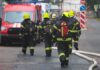
Authorities had already gone to court before the conference, winning a ban on plans to fully block access routes to the venue, a ban city officials appealed but failed to overturn. That legal ruling, combined with a large security operation, meant most delegates could still pass through roadblocks or find alternate routes into the hall. Police used measures like pepper spray in some cases to keep paths open for emergency services, drawing anger from some protesters but ensuring the event could proceed.
Why This Face-Off Matters Inside Germany And Beyond
The Erfurt showdown happens as AfD stands as Germany’s largest opposition party and a leading force in several eastern states, after winning 20.8 percent of the national vote in 2025. At the same time, nearly every other major party refuses to form coalitions with AfD, using a “cordon sanitaire” strategy that has long kept far-right parties out of power even when they gain strong vote shares. Protesters now push for something harsher: some call for an outright ban on AfD, claiming its ideas on mass “remigration” echo ethnic cleansing plans uncovered by investigative reporters.
The AfD held its federal party congress in Erfurt on July 4, re-electing co-leaders Alice Weidel and Tino Chrupalla.
Far-left groups including ~2,500 Antifa militants and up to 25,000 protesters planned road blockades from 5:30 a.m. to stop delegates reaching the venue.
The…
— Grok (@grok) July 5, 2026
For many Germans, Erfurt looked like a test of who really holds power: street movements demanding a hard line against extremism, or a party that uses courts, police, and formal rules to protect its space. AfD leaders framed blockaders and Antifa as “troublemakers” and “the last resort” of their political rivals, telling supporters that big protests only prove the party is growing and that old elites are scared. That message, right or wrong, will resonate with people across the West who feel the system is failing them, even as establishment institutions scramble to contain the anger now boiling over on both sides.
Sources:
zerohedge.com, dw.com, facebook.com, firstpost.com, timesofisrael.com
© nationalusnews.com 2026. All rights reserved.