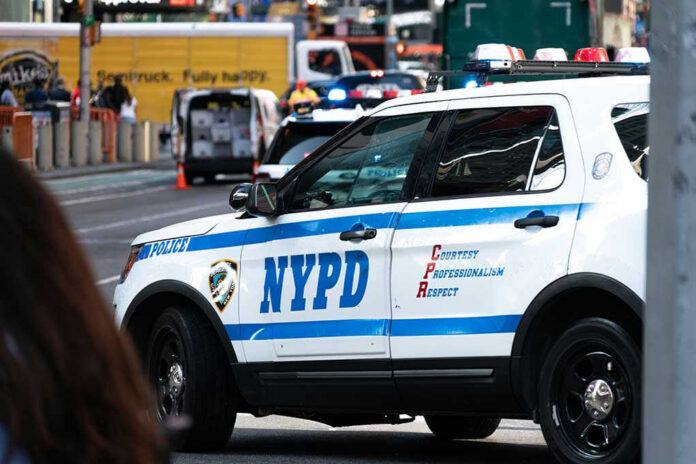
Federal promises to “flood” New York with immigration agents signal a deeper fight over who really runs public safety: local voters or the federal bureaucracy.
Story Snapshot
- Tom Homan says New York will see a major surge of federal immigration agents [1][3][10].
- Homan links the surge to New York limiting cooperation with immigration arrests in jails [1][3].
- Mayor Eric Adams moved to allow federal agents back into Rikers Island, drawing pushback [2].
- Supporters say jail arrests are safer; critics fear heavy-handed tactics without clear data [1][3].
What Homan Announced, and Why It Matters
Tom Homan said he will send “more immigration agents than you have ever seen” to New York City. He tied the plan to state and local rules that limit help for federal immigration arrests inside jails [1][3]. He argued arrests are safer and faster in jails than on the street, so more agents are needed if jail access is blocked [1][3]. Local leaders said this is an overreach. The clash sets up a test of power between New York officials and federal enforcement [10][11].
Mayor Eric Adams recently allowed immigration officers to return to Rikers Island, the city jail complex, for limited cooperation. That step drew fast pushback in New York City politics [2]. Adams framed it as a public safety move. Critics called it a retreat from sanctuary rules. Homan’s vow suggests that even with the Rikers change, federal leaders still plan a larger surge across the city. That would shift more arrests from jails to neighborhoods if local limits remain [2][3].
The Core Dispute: Jail Arrests vs. Street Arrests
Homan says taking custody in jails reduces risk to officers, detainees, and bystanders, and cuts time and cost [1][3]. He argues that when local rules block transfers from jails, agents must find people at homes or workplaces, which raises risk and needs more staff [1][3]. New York officials counter that broad federal requests can sweep up nonviolent residents and erode trust. The supplied record does not show a New York-specific safety study that proves either side right on risk [2][3].
The missing data leaves voters in the dark. There is no public New York dataset in the record comparing injuries, complaints, or use of force in jail versus street arrests. There is also no clear tally of how local limits changed transfer numbers or federal arrest outcomes. Without those facts, leaders debate by soundbite. That vacuum feeds anger on both sides, and it fuels the belief that insiders guard information while communities bear the cost [2][3].
How This Fits the National Pattern
Similar battles have played out for years when cities restrict cooperation with federal immigration authorities. Federal leaders call those rules an obstacle. Local leaders call big federal deployments political pressure. Homan’s “flood the zone” language matches that long fight. News reports say New York could see the largest wave of agents yet, after new state actions and public back-and-forth with Governor Kathy Hochul [1][10][11]. The rhetoric raises the stakes and hardens public views.
Republicans who back strict enforcement see a needed course correction after violent crimes by repeat offenders with removal orders. Democrats who back limits see a chilling effect on families and workers who fear any contact with police. Both sides say they want safety. Both sides accuse the other of ignoring real harms. The shared worry is this: powerful institutions keep making big decisions with little transparency, while neighborhoods absorb the fallout [1][2][3][10][11].
What to Watch Next: Oversight, Metrics, and Impact
New York lawmakers can press for concrete numbers. How many jail transfer requests did the federal government make before and after the rules changed? How many arrests happened in the street instead of in a jail? How many injuries, complaints, or wrongful detentions occurred in each setting? Public hearings and record requests could force those answers into the open. Clear data would help settle safety claims and inform any future limits or cooperation deals [2][3].
As I’ve told the President and Tom Homan, New York will never be a sanctuary for dangerous criminals.
We will continue working with federal authorities to target violent offenders.
But we will not stand by if ICE floods our communities with agents, separates families, and turns… https://t.co/LHlXXlT9j9
— Governor Kathy Hochul (@GovKathyHochul) June 9, 2026
Residents should also track how the surge is carried out. Watch arrest locations, priority targets, and coordination with city agencies. Look for whether federal agents focus on people with violent convictions or cast a wider net. Follow whether city services, schools, and hospitals see disruptions. If the plan narrows in on high-risk cases and reduces street chaos, support may grow. If not, pressure for stricter local limits will rise [1][2][3][10].
Sources:
[1] YouTube – Tom Homan promises to send more ICE agents to New York in ‘Fox & …
[2] Web – Tom Homan vows to ‘flood’ New York with ICE despite Hochul’s refusal
[3] Web – Mayor Adams on FOX with border czar in NYC – FOX 5 New York
[10] YouTube – Tom Homan says ICE will “draw down” its federal agents in favour of …
[11] Web – Homan says NYC will ‘see more ICE agents’ than ever in … – KGAN
© nationalusnews.com 2026. All rights reserved.