Trump’s unprecedented military strikes on Venezuela have captured dictator Nicolás Maduro and positioned U.S. oil companies to seize control of the world’s largest proven oil reserves, marking the most dramatic shift in American energy policy in decades.
Story Highlights
- U.S. forces captured Venezuelan President Nicolás Maduro on January 3, 2026, following military strikes in Caracas
- Trump administration seized sanctioned oil tankers and announced U.S. oversight of Venezuela’s transition government
- American oil companies are positioned to gain access to Venezuela’s massive petroleum reserves under new U.S.-backed leadership
- The operation dismantled drug cartel networks including Cartel de los Soles and Tren de Aragua, both designated as foreign terrorist organizations
Military Action Delivers Swift Victory Against Socialist Regime
President Trump’s bold military intervention in Venezuela reached its climax on January 3, 2026, when U.S. forces successfully captured Nicolás Maduro and his wife Cilia Flores during coordinated strikes around Caracas. The operation followed months of escalating pressure, including a naval blockade and the seizure of sanctioned oil tankers linked to terrorist organizations. Trump announced that the U.S. would oversee Venezuela’s transition period, ensuring American interests are protected while establishing legitimate governance.
The military action represents the culmination of Trump’s August 2025 secret Pentagon directive authorizing force against Latin American drug cartels. By December 2025, the U.S. had deployed 4,500 sailors and Marines to Venezuelan waters, seizing oil tankers used for illicit transport. Attorney General Pam Bondi announced the tanker seizures, emphasizing their connection to foreign terrorist organizations that had been funneling oil profits to criminal networks.
Strategic Oil Assets Secured for American Energy Independence
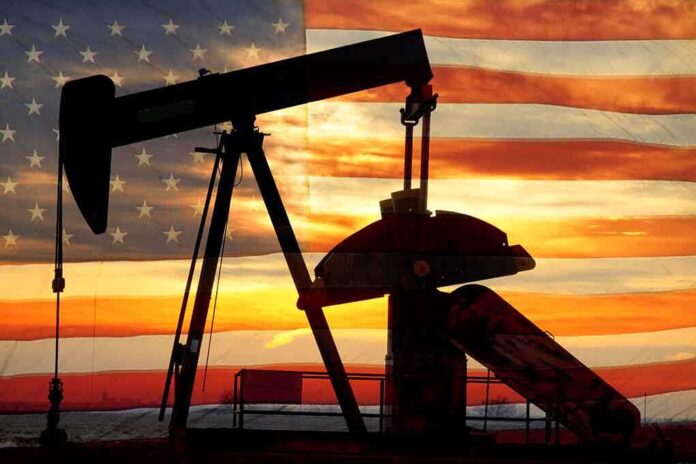
Venezuela’s vast petroleum reserves, the world’s largest proven deposits, now fall under U.S. influence following Maduro’s capture. Trump explicitly stated that seized oil would remain in American possession and that U.S. companies would play a central role in Venezuela’s energy sector moving forward. This development promises to significantly strengthen America’s energy independence while breaking the socialist regime’s stranglehold on these critical resources that had been mismanaged for decades.
The economic implications extend far beyond Venezuela’s borders, as U.S. control over these reserves could reshape global oil markets and pricing. Venezuelan oil exports, previously disrupted by sanctions and regime corruption, can now be redirected through legitimate channels benefiting American energy companies. This represents a complete reversal of the failed socialist policies that drove Venezuela into economic collapse and hyperinflation.
Dismantling Terrorist Networks Threatens Regional Security
Trump’s decisive action eliminated key nodes of the Cartel de los Soles and Tren de Aragua, both designated as foreign terrorist organizations upon his return to office. These criminal networks had operated with impunity under Maduro’s protection, using oil smuggling operations to finance drug trafficking and regional destabilization. The military strikes disrupted these illicit financing channels while demonstrating America’s commitment to combating narco-terrorism in Latin America.
Congressional critics have raised concerns about authorization for military action, with bipartisan senators threatening to block further unauthorized attacks. However, the swift success in capturing Maduro and dismantling terrorist infrastructure validates Trump’s strategic approach to protecting American interests. The operation’s precision minimized civilian casualties while achieving maximum impact against criminal targets that had threatened regional stability for years.
Sources:
Instability in Venezuela – Council on Foreign Relations
History of U.S. involvement in Venezuela’s petroleum industry – Wikipedia