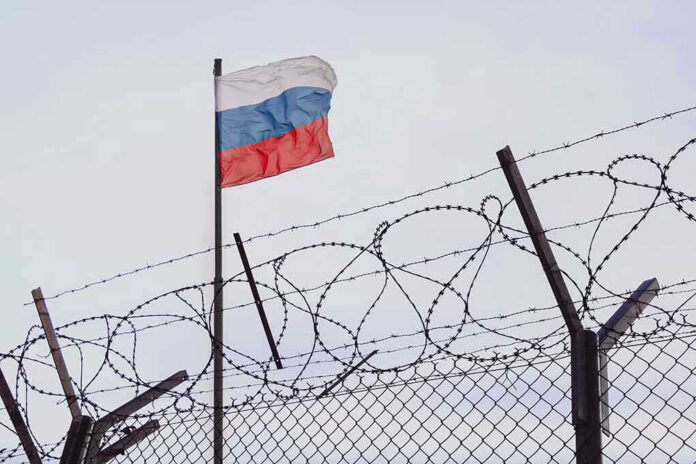
For the first time since its Soviet origins, Russia has scrapped its iconic Navy Day parade in St. Petersburg, blaming Ukrainian drone attacks—a move that leaves even the Kremlin’s bravado looking rattled and the world wondering just how deep the cracks in Moscow’s armor really run.
At a Glance
- Russia canceled its flagship Navy Day parade in St. Petersburg, citing urgent security threats from Ukrainian drone attacks.
- Ukrainian forces have escalated their drone campaign, reaching deep into Russian territory and disrupting major cities and infrastructure.
- The Kremlin’s decision marks an unprecedented retreat from public military celebrations and raises questions about Russia’s grip on domestic security.
- President Putin skipped the event, making only a remote appearance, further fueling doubts about the regime’s confidence and control.
Russia’s Navy Day Parade Canceled Under Shadow of Ukrainian Drone Assaults
For decades, Russia’s Navy Day parade in St. Petersburg was a spectacle of military might designed to rally the country and flex Moscow’s power for the world. This year, for the first time since the tradition’s Soviet revival, that show of force was nowhere to be found. On July 27, Russian authorities abruptly canceled the parade, citing an onslaught of Ukrainian drone attacks that left even the iron-fisted Kremlin scrambling for cover. By official account, an astonishing 100 drones were intercepted overnight—an unprecedented security crisis that forced the government’s hand and left the city’s annual patriotic celebration in shambles. The scale and precision of the Ukrainian strikes have not only disrupted the holiday but also raised chilling questions about the vulnerability of Russia’s homeland defenses.
Russia scales down celebrations honoring its navy as Ukraine launches more drone attacks https://t.co/FgHml0Sa5Q
— CTV News (@CTVNews) July 27, 2025
The fallout was immediate and chaotic. St. Petersburg’s Pulkovo airport ground to a halt as dozens of flights were delayed or canceled, and at least one civilian was wounded in the Leningrad region. Russian officials, usually quick to project an image of unflinching control, were caught flat-footed. Local authorities first announced the parade’s cancellation, then hastily walked back their statement, exposing bureaucratic confusion and unease at the highest levels of government. In the end, the Kremlin confirmed the grim reality: no parade, no grand display of warships, only a somber wreath-laying ceremony and a video message from President Putin—a leader now conspicuously absent from the front lines of his own propaganda machine.
Security Failures and Shifting Tactics in Modern Warfare
The Kremlin’s abrupt retreat from public celebrations signals a dramatic shift in Russia’s ability to guarantee security within its own borders. Ukrainian forces have transformed the landscape of the conflict with a relentless campaign of drone strikes, targeting not just military assets but also symbolic events meant to reinforce Russian morale. The parade’s cancellation is more than an isolated incident; it is a public admission that the old rules of military power have changed, and that traditional air defenses are struggling to keep up. Security analysts point to the effectiveness and reach of Ukrainian drones, which now pose credible threats deep inside what Moscow once considered safe territory.
For a regime obsessed with projecting strength and unity, this spectacle of unease is nothing short of embarrassing. President Putin’s decision to skip the event in person—relegating himself to a remote video address—only amplifies the sense of vulnerability. The Russian Ministry of Defense tried to save face by continuing large-scale naval exercises elsewhere, but the cancellation of the St. Petersburg parade, the crown jewel of Navy Day, speaks volumes about the limits of Kremlin control. Even Russian state media, typically a reliable mouthpiece for the regime’s narrative, could do little to spin the realities exposed by a parade that never happened.
Impact on Russian Society and the War’s Broader Trajectory
The cancellation’s shockwaves extend far beyond the military. For ordinary Russians—especially residents of St. Petersburg and military families—the disruption of a cherished holiday is a bitter pill. The sudden halt of transportation, the closure of public spaces, and the absence of the annual celebration have dented national pride and heightened public anxiety. The Kremlin’s ability to maintain the illusion of normalcy amid war is now in doubt, with this episode laying bare the psychological and strategic impact of Ukraine’s asymmetric tactics. The move may embolden further Ukrainian attacks on symbolic events, forcing Russian authorities to rethink how they safeguard national festivities and public gatherings.
Economically, the fallout is already being felt. Local businesses that depend on the parade’s massive crowds faced losses, while the inevitable ramp-up in counter-drone technologies and security measures will place additional strain on a Russian economy already battered by sanctions and war costs. Politically, the event has fueled criticism of the Kremlin’s handling of domestic security, exposing rifts and uncertainties that autocratic systems loathe to admit. Meanwhile, Ukrainian forces will likely interpret the parade’s cancellation as a strategic victory, proof that their campaign is resonating not just on the battlefield but deep within the Russian psyche.
Expert Reactions: A Symbolic Blow to Kremlin Authority
Security and political analysts across the spectrum agree: the cancellation of Russia’s Navy Day parade is a watershed moment in the war’s evolution. Military experts see it as a tacit acknowledgment by Moscow of the new realities of modern warfare—where small, cheap drones can paralyze even the most heavily defended cities. Political scientists interpret the move as an admission of vulnerability, a crack in the Kremlin’s narrative of invulnerability and control. Even some Russian commentators, accustomed to toeing the official line, have conceded that the psychological blow from this year’s events will linger long after the drones have been cleared from the skies.
Western analysts, meanwhile, view the episode as a sign of Ukraine’s growing ability to disrupt Russian society and undermine government authority. For a nation that built its modern identity around displays of military prowess and patriotic unity, the optics of a canceled parade could hardly be worse. Putin’s government, determined to project unwavering strength, now finds itself playing defense not just in Ukraine but on the streets of its own cities. The message to ordinary Russians and the world alike is clear: the war’s consequences are coming home, and not even the Kremlin can pretend otherwise.