What if the real battlefield of the Ukraine-Russia conflict isn’t just in the trenches but also in the minds of those trapped in it?
At a Glance
- Psychological warfare is a significant component of the Ukraine-Russia conflict.
- Civilians and POWs face systematic torture and emotional manipulation.
- Russian forces have been accused of severe human rights violations.
- The United Nations demands accountability and prevention of further abuses.
Psychological Warfare in Conflict
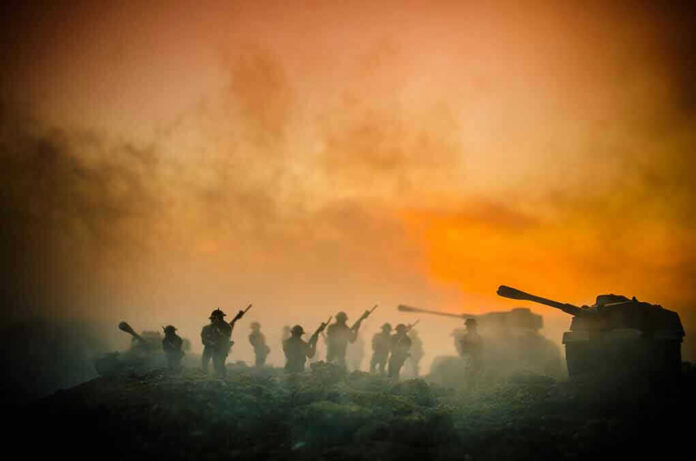
Amid the smoke and chaos of the Ukraine-Russia war, an insidious battle rages—not just for land, but for the very minds of those caught in the crossfire. The conflict, which has been a tragic headline since 2014, transcends physical violence. It’s a psychological warzone, where civilians and prisoners of war (POWs) endure torture not only of the body but of the spirit. The systematic abuse reported is reminiscent of a dark, twisted playbook that leaves no room for mercy.
https://www.youtube.com/watch?v=n90Yf546irA
The situation escalated dramatically when Russia launched a full-scale invasion in February 2022. Since then, reports of mental and emotional manipulation have flooded in. Imagine being coerced into false confessions, humiliated publicly, and then left to fend for yourself—thrown to the wolves, as it were. It’s a grim reality documented by the United Nations and other human rights organizations.
The Players in This Grim Drama
In this grim theater, the Russian Armed Forces take center stage with accusations of systematic torture and psychological abuse of Ukrainian POWs and civilians. The Ukrainian Armed Forces, though implicated to a lesser extent, are not entirely outside the spotlight. The United Nations Human Rights Monitoring Mission in Ukraine (HRMMU) stands as a beacon of hope, striving to shed light on these violations and push for accountability.
Power dynamics play a crucial role here. Russian forces wield significant control over occupied territories, using psychological tactics to intimidate and manipulate. Ukrainian authorities, while controlling narratives in their regions, face scrutiny over their conduct. International organizations, though limited in enforcement power, serve as the watchful eyes, documenting every infraction in hopes of eventually turning the tide.
A Grim Reality Unfolding
Recent developments paint a bleak picture. June 2025 marked the highest civilian casualties in three years, with 1,575 casualties reported. The increase in missile and loitering munition attacks signals an escalation in hostilities. The OHCHR reports credible allegations of torture, with 117 recently released Ukrainian POWs recounting severe abuses. Even Russian POWs and third-country nationals held by Ukraine report mistreatment, predominantly during transit.
In occupied territories, coercion reigns supreme. Ukrainians face mounting pressure to adopt Russian citizenship, with property confiscation looming over 16,000 homes. The United Nations has condemned these “widespread and systematic” tactics, calling for immediate accountability and emphasizing the urgent need for protection of vulnerable populations.
The Path Forward
The situation remains volatile, with little progress towards holding perpetrators accountable. However, the unyielding documentation by human rights organizations keeps the flame of hope alive. They serve as a reminder that the world is watching, and justice, though delayed, must eventually prevail.
As this conflict unfolds, it’s a stark reminder of the power of psychological warfare. The battlefield may be littered with physical debris, but the real scars are etched into the minds of those who endure this hellish ordeal. In the end, it is not just a battle for territory but a struggle for the soul of a nation and its people.
Sources:
UN Human Rights Report Warns of Worsening Violations and Mounting Civilian Casualties
Ukraine: Protection of Civilians in Armed Conflict – May 2025
UN News: Ukraine Conflict and Human Rights Violations
Protection of Civilians in Armed Conflict – June 2025
OHCHR Press Briefing on Ukraine: Impact on Civilians