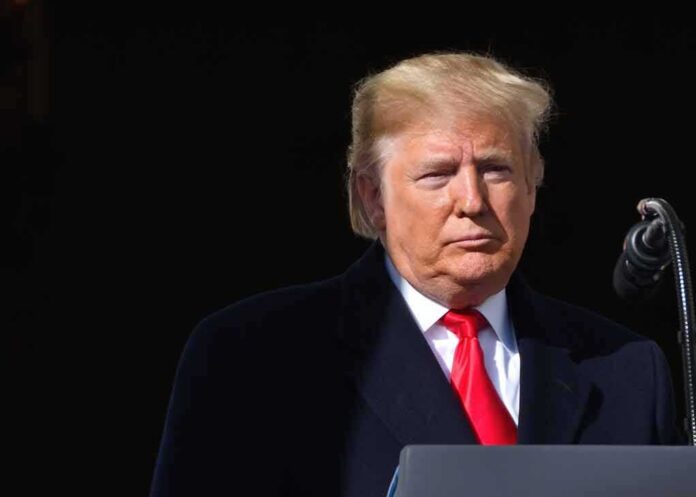
President Trump unveiled a “Super Intelligence Force” to steer federal action on artificial intelligence, promising speed, coordination, and an edge over China.
Story Highlights
- Trump announced a federal “Super Intelligence Force” and linked it to a new AI czar role.
- Director of National Intelligence Jay Clayton is slated to lead the task force with a 120-day timeline.
- Top officials from trade, defense research, and federal personnel will help direct the effort.
- The White House says the plan aims to boost innovation while guarding against risks, not to overregulate.
What The White House Announced
On September 19 and again in early October, President Trump said the federal government is forming an artificial intelligence “Super Intelligence Force,” modeled in spirit on his earlier Space Force branding. He said the United States must keep its lead over China in artificial intelligence and vowed not to “stifle” the industry while watching for risks. The White House also indicated an AI czar would guide the effort and coordinate across agencies and industry groups.
Major outlets reported that Director of National Intelligence Jay Clayton would serve as the administration’s AI czar and lead the task force. Reporting said the group would study risks and opportunities and define federal roles within 120 days. That timeline signals near-term deliverables rather than an open-ended study. Trump’s statement framed the move as both a push for growth and a plan for oversight that avoids heavy-handed rules.
Who Will Lead And How It Will Work
Coverage identified several senior officials expected to direct the new force alongside the White House. Reports named Federal Trade Commission chair Andrew Ferguson, Pentagon research and engineering leader Emil Michael, and Office of Personnel Management director Scott Kupor as key participants. They would report to President Trump and Chief of Staff Susie Wiles, giving the effort a direct line to the Oval Office and day-to-day management inside the West Wing.
Jay Clayton’s role as both intelligence chief and AI czar places national security at the center of the plan. That structure mirrors how recent presidents use “czar” roles to cut across departments and speed decisions. In this case, the White House is stressing coordination with companies, consumers, faith groups, and infrastructure providers, which shows a broad scope. The approach aims to align fast-moving private work with federal goals for safety and growth.
Why It Matters For Families, Workers, And Business
Artificial intelligence already touches jobs, health care, finance, and public safety. The White House says this force will push American strengths and protect people from harm without choking off progress. That balance speaks to concerns on both sides: people want better tools and lower costs, but they worry about bias, fraud, and lost work. The administration’s 120-day clock suggests near-term guidance that could shape rules, research, and federal buying power.
AI OFFENSIVE | President Donald Trump announced a new task force Sunday to coordinate the U.S. government's efforts with AI companies and ensure America leads in superintelligence.
Read more: https://t.co/Pi0B2MrfT4 pic.twitter.com/t6px457Cpd— WPEC CBS12 News (@CBS12) October 4, 2026
The plan also fits a wider trend in Washington: creating interagency task forces and high-profile coordinators to handle complex tech issues. Past efforts moved quickly to signal urgency, then filled in details on authority, staffing, and budgets later. Reporters noted some specifics remain unclear here too, such as formal funding and final structure, though the White House described the mission as coordination-first with industry and the public.
What To Watch Next
First, watch for a formal designation or memo confirming Clayton’s role and the task force’s mandate. Second, look for the member list, meeting schedule, and the reporting chain to the President and Chief of Staff. Third, track delivery of the 120-day report and any actions that follow, like safety standards, procurement plans, or research targets. Clear steps on these points will show whether this is a messaging move or a lasting change in how the government manages artificial intelligence.
Sources:
politico.com, cnbc.com, dw.com, abcnews.com, cbsnews.com, aljazeera.com, usatoday.com
© nationalusnews.com 2026. All rights reserved.