
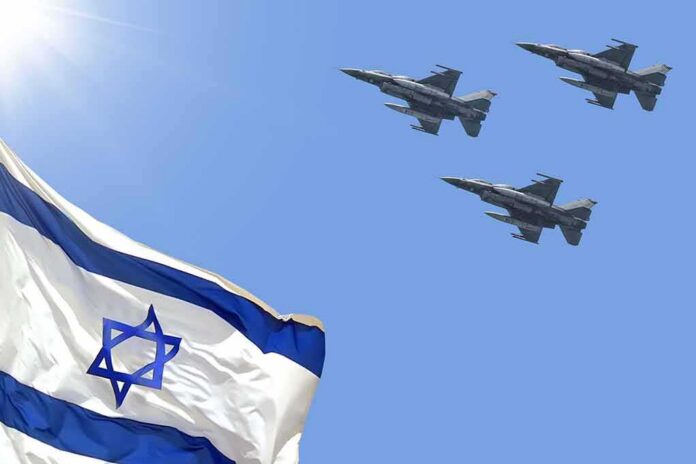
Retired Gen. Jack Keane says U.S. and Israeli jets already have the punch to batter Iran’s power centers, but experts warn airstrikes rarely flip a regime.
Story Snapshot
- Gen. Jack Keane argues allied air power can smash Iran’s defenses and leadership targets.
- Critics say bombing almost never triggers uprisings or regime change.
- Kurdish groups doubt strikes alone can defeat Iran’s security forces.
- Debate reflects a century-old fight over what air power can and cannot do.
What Keane Is Proposing And Why It Matters
Gen. Jack Keane, a retired four-star and former Army vice chief, has urged a hard push from the air. He argues Israel and the United States can protect friendly aircraft, hit air defenses first, and then strike leadership and command hubs inside Iran. He frames this as a way to weaken Iran’s rulers and their military network, fast, without a ground invasion. Supporters see this as decisive and lower risk for troops, with a chance to cut Iran’s reach across the region.
Keane’s view lands amid a broader allied air campaign against Iranian targets. He has praised joint operations and claimed they have degraded Iran’s ability to launch missiles and direct proxies. He suggests rapid, repeated strikes could change the balance and open space for pressure inside Iran’s borders. For many Americans, the appeal is simple: use jets and precision weapons, avoid another long ground war, and try to force Iran’s leaders to bend or break.
What History And Experts Say About Air Power Alone
Many scholars and planners agree that bombs can wreck arsenals and kill commanders. But they emphasize that toppling a government from the air is rare to nonexistent. Political scientist Robert Pape told CBS News that airstrikes alone have not ousted regimes in more than a century of attempts, and that such campaigns tend to drag on while risks rise. Think tanks echo this caution: air power can destroy, but it cannot reorder a country’s internal politics.
This split matters because aims drive strategy. If the goal is to blunt missile fire or disrupt foreign operations, air power can help. If the aim is regime collapse, the record looks poor. Bombing can also spark backlash, trigger nationalism, and push fence-sitters to side with the regime. That is why many experts press for clear, limited goals tied to what air power actually does well, and plans that avoid open-ended escalation.
On-The-Ground Limits: Uprisings Need More Than Jets
Inside Iran, security forces remain large and organized. Regional reporting says Kurdish opposition groups are far outnumbered and would depend on outside help for weapons and air cover. Analysts quoted in that coverage doubt that strikes alone can defeat the state’s security machine or produce a stable handover of power. This reflects a basic fact of politics: people must feel safe enough to act together. Air campaigns cannot supply that safety by themselves.
Keane himself has long noted that air power works best when paired with eyes and controllers on the ground to guide strikes. That view accepts a tradeoff: adding ground elements raises risk and cost, but often improves results. For a public tired of forever wars and broken promises, this is the core tension. Voters want strength without quagmires. Yet history suggests that seeking regime change through bombing alone invites big promises and thin results.
What To Watch Next: Goals, Escalation, And Exit
Watch for three signals. First, listen for clear end-states: punish, deter, degrade, or topple. Each one sets different measures of success. Second, watch escalation control. Strikes that hit leadership can provoke sharp replies, which can trap leaders into doing more. Third, look for political planning. If the aim reaches beyond deterrence, who governs next and how do services restart? Without answers, the cycle can burn money, risk troops, and still miss the mark.
Sources:
mediamatters.org, generaljackkeane.com, militarist-monitor.org, nypost.com, committees.parliament.uk, aei.org, rferl.org, thecairoreview.com
© nationalusnews.com 2026. All rights reserved.