The Supreme Court just gave states a green light to reshape girls’ and women’s sports, but it did so without demanding hard proof about who is really being protected — or hurt.
Story Snapshot
- The Court said states may reserve women’s sports for biological females under Title IX and the Constitution.
- Safety and fairness were accepted as important state interests, even without detailed data on actual harms.
- Civil rights groups warn of serious mental health and opportunity costs for a tiny group of transgender youth.
- Both sides now face a bigger fight over evidence, transparency, and the role of national “elites” in setting rules.
What the Supreme Court Actually Decided About Women’s Sports
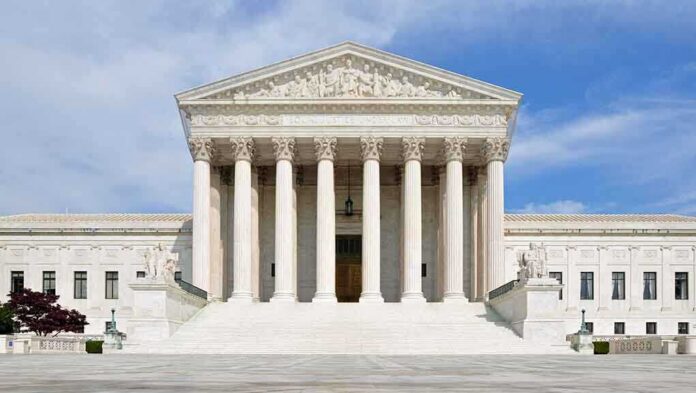
On June 30, 2026, the Supreme Court ruled in West Virginia v. B.P.J. that states may keep girls’ and women’s sports teams limited to biological females and set eligibility by biological sex. Justice Brett Kavanaugh’s opinion said this is consistent with Title IX, the main federal law meant to protect equal sports chances for women and girls. He also wrote that the Constitution does not require a complete overhaul of women’s sports across America.
The Court accepted West Virginia and Idaho’s claim that they are protecting safety and competitive fairness for female athletes. The opinion points to physical differences between males and females in height, speed, strength, and endurance, and says these differences matter in almost all sports. Because of this, the Court said it is reasonable for schools to keep separate teams for males and females and to limit female teams to biological females.
How This Ruling Fits a Bigger Shift in Power and Policy
This decision does not stand alone; it caps years of fights over who gets to define “sex” in law. The Court leaned on the original 1972 meaning of Title IX, which allowed separate teams for “each sex,” and treated “sex” as biological sex, not gender identity. That fits a broader national move, including a 2025 White House policy, to tie federal dollars to keeping biological males out of women’s sports. Republicans now control Congress and the presidency, so federal power backs this view.
At the same time, more than half of states have passed some form of ban or tight limits on transgender youth sports since 2020. Many conservative voters see this as finally standing up for their daughters after years of feeling brushed aside by “woke” rules and distant bureaucrats. But liberal states like New York and California are going the other way, protecting gender identity in school sports and building a patchwork system where kids’ rights depend heavily on their zip code.
The Hidden Costs and Gaps the Court Left Unanswered
Even as it upheld the bans, the Court admitted one uncomfortable fact: some transgender athletes take puberty blockers or hormones and may not pose the same fairness or safety risks as other males. Yet the laws it approved still bar them with no exception. Justice Sonia Sotomayor’s dissent stressed that the record did not show clear proof that the plaintiff, B.P.J., had an actual athletic edge, and she warned the Court was rushing ahead without full facts on the ground.
There was no detailed data in the opinion about injury rates, podium losses, or scholarship losses tied to transgender athletes in school competition. Groups like the American Psychological Association say there is “no evidence to support claims” that transgender youth participation has broadly harmed other kids in school sports. Civil rights advocates add that transgender students play sports at much lower rates than their peers, which means bans target a very small group but may carry large emotional and social costs.
Deepening Distrust: Elites, Youth, and the Future of Fairness
For many Americans, this ruling feeds a growing belief that powerful institutions talk about “fairness” while leaving regular families to juggle the fallout. Supporters cheer what they see as a victory against global sports bodies and national groups that opened women’s categories without asking parents or female athletes first. Critics counter that lawmakers wrote sweeping bans without collecting basic evidence on real harms, then used a few high-profile stories to reshape policy for an entire country.
🔴 US Supreme Court allows Idaho, West Virginia trans athlete bans
The US Supreme Court ruled that Idaho and West Virginia can enforce bans on transgender athletes competing on girls' and women's school sports teams. The decision is the latest legal development in what Chase… pic.twitter.com/RdHdY6Rdxd
— NewsTongue (@NewsTongueX) July 8, 2026
Advocacy groups warn that these bans add to mental health strain for transgender teens, who already face higher rates of bullying and depression and now see doors closing in school life. On the other side, many girls and parents say they feel gaslit when they raise worries about strength gaps or safety and are told those worries are hateful, not practical. Both sides share one frustration: they do not trust national “elites” to listen, gather honest data, and then craft narrow rules instead of broad, political ones.
What Comes Next in the Fight Over Women’s Sports
The next phase of this battle will likely move from courtroom theory to hard numbers. Researchers and advocates on both sides are already pushing for large studies on performance, injury rates, and displacement in schools with and without transgender participation. Parents’ groups want open audits of state athletic policies to show how many kids are actually affected and whether complaints from female athletes are being logged or ignored.
Some lawyers are preparing new cases that focus on narrow facts instead of sweeping bans, including challenges on behalf of transgender youth who have been on hormones for years and may not match the picture painted in legislative hearings. If these cases bring strong data and clear individual stories, they could test how far the Supreme Court is willing to go in treating all “biological males” the same. For now, the Court has handed states wide power, but it has also exposed a deep gap between high-level promises of fairness and the messy, human details still missing from the record.
Sources:
foxnews.com, reddit.com, scotusblog.com, youtube.com, aclu.org, williamsinstitute.law.ucla.edu, mapresearch.org, law.cornell.edu, supremecourt.gov, americanbar.org, nbcwashington.com, ncaa.org
© nationalusnews.com 2026. All rights reserved.