
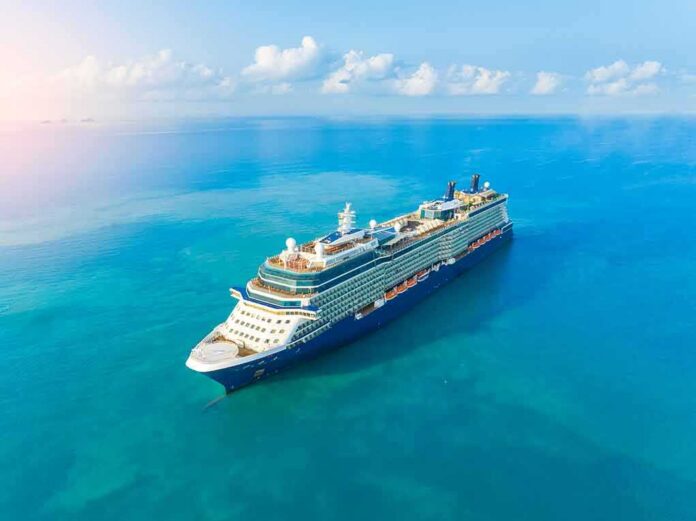
America’s sole heavy icebreaker demonstrated why national defense investment matters when it freed a luxury cruise ship trapped in Antarctic ice—on the vessel’s 50th birthday, no less.
Story Snapshot
- USCGC Polar Star rescued the Scenic Eclipse II from pack ice near McMurdo Sound on January 17, 2026
- The rescue coincided with the Polar Star’s 50th anniversary of commissioned service
- America’s only operational heavy icebreaker remains critical to Antarctic operations despite its age
- Cruise line downplayed the incident as “coordination” rather than rescue, raising questions about accountability
America’s Aging Icebreaker Proves Its Worth
The USCGC Polar Star freed the Australian-owned cruise ship Scenic Eclipse II after it became trapped in pack ice approximately eight nautical miles from McMurdo Sound in Antarctica’s Ross Sea. The Coast Guard cutter conducted two close passes through surrounding ice on January 17, 2026, breaking the vessel free before escorting it four nautical miles to open water. No injuries occurred during the operation. The rescue coincided precisely with the Polar Star’s 50th anniversary of commissioned service, marking a remarkable demonstration of capability for America’s only active heavy icebreaker supporting critical national interests in Antarctica.
The Polar Star deployed from Seattle in November 2025 for its 29th Antarctic deployment supporting Operation Deep Freeze 2026. This ongoing military operation assists the National Science Foundation’s U.S. Antarctic Program through search and rescue, transportation assistance, aeromedical evacuations, and icebreaking operations. The vessel’s 75,000 horsepower and multiple high-output engines enable it to break through ice reaching up to 21 feet thick. Commander Samuel Blase emphasized that despite its age, the Polar Star remains the world’s most capable non-nuclear icebreaker, a distinction that underscores both American engineering excellence and concerning gaps in fleet modernization.
Luxury Tourism Meets Antarctic Reality
The Scenic Eclipse II was conducting helicopter flights to the Dry Valleys on January 16, 2026, when pack ice conditions deteriorated rapidly, preventing the cruise ship from departing at normal speed. By approximately 11 p.m. local time on January 17, the vessel contacted the nearby Polar Star requesting assistance. Passengers aboard the luxury cruise ship—which carries up to 228 guests and 176 crew members—reportedly celebrated the rescue with champagne on the Observation Deck, transforming what could have been a serious situation into entertainment. This response raises questions about whether wealthy tourists fully appreciate the risks of Antarctic expedition cruising.
Scenic Luxury Cruises and Tours issued a defensive statement characterizing the incident as coordination rather than rescue: “While Scenic Eclipse II was never in need of rescue services, the coordination between both vessels ensured we could navigate the changing pack ice safely and efficiently.” This carefully worded response appears designed to minimize liability concerns and protect the cruise line’s premium brand reputation. The company’s reluctance to acknowledge the severity contrasts sharply with the Coast Guard’s professional response, which treated the incident as the maritime emergency it was. Such corporate spin undermines accountability when luxury tourism ventures into hazardous environments.
National Security Implications of Icebreaker Shortfall
The successful rescue operation highlights a disturbing strategic vulnerability: America’s entire heavy icebreaker capability depends on a single 50-year-old vessel. Maritime historian Sal Mercogliano noted the incident occurs amid broader geopolitical competition in polar regions, where nations including Russia and China have invested heavily in modern icebreaker fleets. The Polar Star’s aging status creates potential capability gaps that could undermine U.S. Antarctic research operations, search and rescue capabilities, and strategic presence in increasingly contested polar waters. Previous administrations failed to prioritize this critical national security investment, leaving America dangerously dependent on aging equipment.
The incident demonstrates why maintaining robust American capabilities matters for both humanitarian assistance and national interests. Operation Deep Freeze represents ongoing U.S. commitment to Antarctic scientific research and logistical support, but this commitment requires modern equipment. The Polar Star’s continued effectiveness proves American engineering excellence, yet relying on a half-century-old vessel for such critical operations reflects strategic neglect. The successful rescue should strengthen arguments for immediate investment in new heavy icebreaker construction, ensuring America maintains presence and capability in polar regions where adversaries actively seek advantage. National defense requires forward-thinking investment, not dependence on aging assets however capable they remain.
Sources:
Coast Guard rescues cruise ship stuck in Antarctic ice – Military Times
U.S. Coast Guard Rescues Luxury Cruise Ship Trapped In Antarctic Ice – Cruise Law News
Cruise ship trapped in heavy sea ice rescued by US Coast Guard vessel – Fox News
US Coast Guard Cutter Polar Star marks 50 years of service, begins Operation Deep Freeze – USCG
Scenic cruise ship freed from pack ice in Antarctica – Travel Weekly
Coast Guard Icebreaker Rescues Cruise Ship Thousands of Miles From America – National Interest