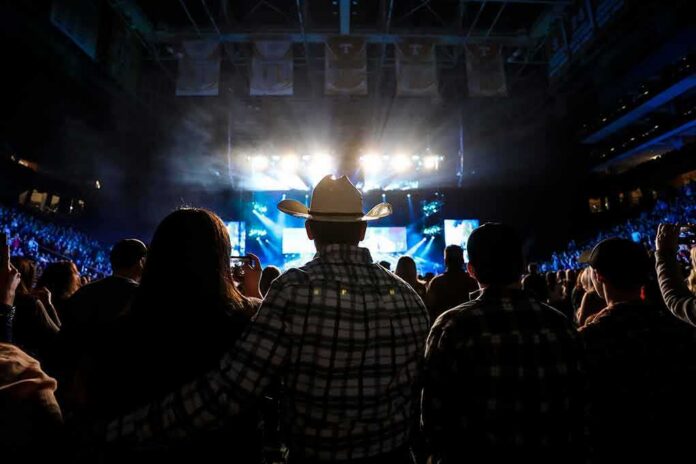
Country star Zach Bryan wore a “Free Palestine” shirt onstage at Gillette Stadium, reviving a high-stakes fight over who controls speech at America’s biggest venues.
Story Snapshot
- Bryan’s shirt said “Free Palestine” and “An appeal to heaven” during his Foxborough show.
- The moment followed Robert Kraft’s role in removing Macklemore from two Gillette dates.
- Reporters tied Bryan’s move to a broader clash over artist speech and venue control.
- Bryan and Gillette officials did not immediately explain or clarify policies.
What Happened Onstage At Gillette Stadium
On Friday in Foxborough, Zach Bryan performed wearing a shirt that read “Free Palestine” and “An appeal to heaven,” with a pine tree emblem, during the first of two Gillette Stadium dates. Coverage from multiple outlets confirmed the message and its staging during the live set. Reporters described the display as a political statement presented as part of the show, not as a backstage moment or private comment. No removal or disruption was reported. Bryan did not issue a statement about his intent or timing after the performance.
USA Today reported some band members wore matching shirts, suggesting a coordinated choice that extended beyond a single garment. CBS Boston detailed the full text on Bryan’s shirt and emphasized that it happened at a high-profile, sold-out tour stop. CNN and other outlets published video segments and news write-ups the same evening, which helped push the story across social platforms within hours. The stadium and Bryan’s representatives did not immediately respond to questions from reporters that night.
Why Gillette Stadium Is The Flashpoint
The shirt drew outsized attention because it came weeks after Patriots owner Robert Kraft’s role in removing Macklemore from Ed Sheeran’s Gillette shows. Kraft said the venue does not provide a platform for hate speech and cited what he described as Macklemore’s “broader history of antisemitic rhetoric and imagery” in defending the decision. Macklemore rejected that framing and argued that saying “Free Palestine” is not antisemitic. That standoff turned Gillette into a symbol of the speech-versus-safety debate.
Reports linked Bryan’s act to that earlier dispute, framing it as defiance at a stadium widely associated with strict lines on political messages. However, current reporting does not show that Gillette enforced any rule against Bryan or took action that night. The concert proceeded as scheduled. The available stories do not include the venue’s detailed written policies on performer speech, political apparel, or onstage images. Without those documents, the public can see the clash but not the rulebook.
The Bigger Question: Who Sets The Boundaries Of Stage Speech?
Legal experts often point to a key divide: speech rules differ at private venues versus public venues. Many private stadiums retain wide latitude to manage content through contracts and house policies, while publicly owned properties may face First Amendment limits, depending on how the space is used. That means an artist’s rights can change with the ticket, the lease, and the owner. Fans rarely see these contracts, which fuels confusion and outrage when disputes erupt.
Music history shows concerts double as civic spaces where many artists speak their minds. Venue owners now treat shows like brand assets, which they guard to avoid risk and backlash. That tension is not new, but social media makes the fallout faster and harsher. A T-shirt or a sentence can become a loyalty test for millions overnight. The Bryan episode fits that pattern, with clips and headlines setting the frame before any party issued a full explanation.
Why This Resonates Across The Political Spectrum
Americans on the left and the right are tired of powerful institutions setting rules in back rooms and shifting them when it suits their interests. Some see owners as heavy-handed and too quick to label speech as dangerous. Others see artists and promoters stirring division at family events. Both sides ask the same core question: who decides what can be said, and using what standard? Clear, public rules would build trust more than backstage edits ever could.
Zach Bryan Breaks Attendance Record At Robert Kraft's Gillette Stadium Wearing 'Free Palestine' Shirt https://t.co/Worb9Q72LJ
— TMZ (@TMZ) October 4, 2026
Here is what would actually help. First, release venue policies that govern onstage political messages, clothing, and visuals. Second, standardize how those rules apply so artists and fans are not guessing. Third, explain any limits in plain language focused on safety and operations, not viewpoints. Until then, each flashpoint becomes fresh proof to many that elites manage expression to protect their image, not to serve audiences who paid to be there.
Country singer Zach Bryan wore a “Free Palestine” shirt during his concert at Robert Kraft’s Gillette Stadium. Plus, news about Jay Vinnedge, The Traitors, Chad Lowe, Heated Rivalry, Irina Foundation, Ben Affleck, Paul Anthony Kelly, and more. https://t.co/XZMfaJoAPj
— SOCIALITE LIFE (@socialitelife) October 4, 2026
Sources:
facebook.com, cbsnews.com, bbc.com, jta.org, usatoday.com
© nationalusnews.com 2026. All rights reserved.