
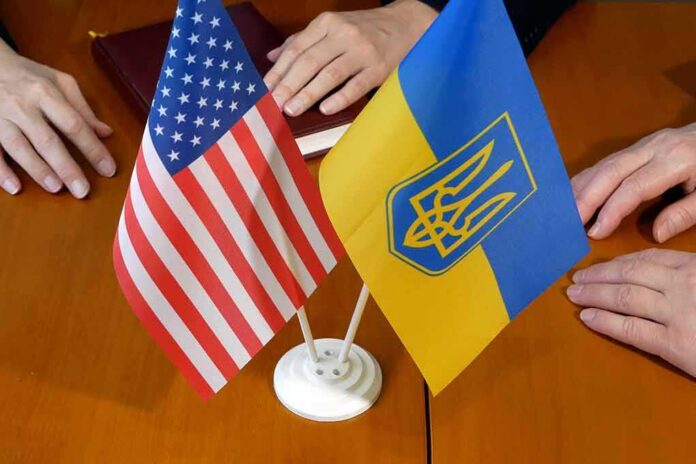
U.S.-brokered talks in Abu Dhabi put a sweeping “post-war” security deal for Europe on the table while securing a major Russia-Ukraine prisoner swap.
Story Snapshot
- U.S. envoys convened Russia and Ukraine in Abu Dhabi on Nov. 10–11 to push de-escalation, security pacts, and an end to the war.
- Negotiators agreed to a significant prisoner exchange, even as core disputes over territory remained.
- Russian delegates emphasized a broader European security framework as the talks’ main thrust.
- European officials signaled they expect a role in any architecture that affects the continent.
What Happened In Abu Dhabi
U.S. envoy Steve Witkoff said the United States brought Russian and Ukrainian delegations together in Abu Dhabi on November 10–11. He listed the agenda as ending the war, post-war security agreements, and de-escalation steps. The meeting marked the first direct talks between the two sides in nine months, with Washington mediating. U.S. officials framed the effort as a push to reduce fighting and create room for a larger deal, even as battlefield lines and sovereignty claims remain hard topics.
Russian and Ukrainian negotiators reached one clear result: a major prisoner exchange. U.S. mediators described this as progress on humanitarian grounds but said large gaps remain on territory and long-term security terms. The exchange signals limited trust-building is possible when goals are narrow and concrete. It also shows why talks matter to families on both sides right now. But it does not yet solve the tougher questions about borders, foreign forces, and future guarantees.
The Push For A Wider Security Framework
A source on the Russian side said the central thrust of the talks should be a new European security framework. That would define the rules after the war and set limits and assurances across the continent. Moscow has long argued for this kind of “comprehensive” reset, while many in Europe resist any format that rewards aggression or sidelines current European principles of sovereignty and territorial integrity. This tension surfaced as negotiators weighed how to anchor any ceasefire to durable rules.
European leaders signaled they will not accept a deal that redraws Europe’s security order without them at the table. A French statement ahead of the talks said Europeans would join, and broader European voices stressed that any architecture for the continent requires European participation. That stance reflects concern that a top-down bargain could ignore past agreements and allow a belligerent to define rules. It also reflects hard lessons from deals that looked firm on paper but lacked buy-in and enforcement.
Security Guarantees: The Core Bargain And Its Risks
Negotiators discussed security guarantees for Ukraine as a pillar of any peace path. Analysts note that guarantees have a mixed record. Some have deterred attacks; others became empty promises when pressure grew. Ukraine’s past experience with the Budapest Memorandum, which offered high-level assurances that did not prevent later violations, hangs over the talks. That history shapes Kyiv’s caution around vague pledges that do not include clear actions and real costs for breaking them.
Conflict research shows many peace deals fail at the implementation stage when guarantees are weak or unclear. Studies find that without credible security and political assurances, parties stall or return to fighting. Almost half of peace agreements from 1940 to 1992 were never implemented, often due to a lack of enforceable guarantees and persistent threats. That empirical record explains why today’s talks focus not only on stopping fire but also on who enforces what, how fast, and for how long.
Why This Matters To Americans Worried About Drift And Cost
These talks matter because they test whether diplomacy can reduce a costly war without endless spending or mission creep. U.S. taxpayers have carried a large burden since the invasion. A structured plan that pairs de-escalation with clear guarantees could lower costs and risks over time. The prisoner swap shows human gains are possible when negotiators focus on concrete steps. The larger question is whether Washington can back a deal that protects Ukraine’s sovereignty while avoiding an open-ended security blank check.
The general consensus around Russia's demands for reorganisation of the European security architecture – as reported by the NYTimes🔽- is that that they are unrealistic and that Russia will relax the nature and extent of its demands. I am less certain than most that this is the…
— Chamberlain's Ghost (@RSA_Observer) November 18, 2026
Americans across the spectrum worry that distant decisions are made by a small circle while citizens pay the bill. This process will face the same test. Any European security framework must be transparent, include those it binds, and be clear on who enforces what. If the architecture is built in secret or ignores prior violations, it will fail fast and breed more distrust. If it aligns promises with power and accountability, it could close a war and reduce the pull of the “deep state” narrative.
What To Watch Next
Watch for follow-on meetings that set timelines, enforcement triggers, and roles for European partners. Look for specific limits on weapons, patrols, or deployments that can be observed and verified. Track whether humanitarian steps continue, such as more prisoner exchanges or civilian protections along the line of contact. Concrete, measurable actions will show if this process is building real foundations, not just headlines. That kind of progress, not slogans, is how wars end and trust begins.
Sources:
theamericanconservative.com, reuters.com, carss.du.ac.bd, amp.dw.com
© nationalusnews.com 2026. All rights reserved.