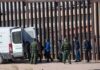
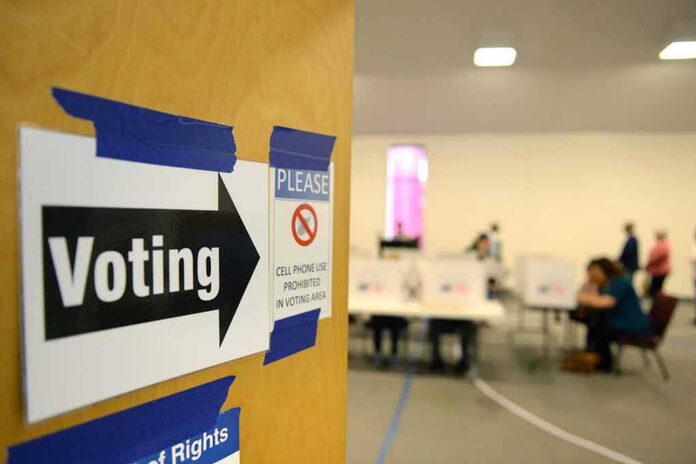
Israel will hold nationwide elections on Tuesday as the army shuts West Bank crossings for the day, underscoring a vote taking place under tight security.
Story Highlights
- Israel’s general election is scheduled for Tuesday, October 27, with polls open 7 a.m. to 10 p.m. local time.
- The Israeli military ordered a general closure of West Bank crossings on election day, with phased limits starting earlier in the week.
- About 7.3 million eligible voters will choose the full 120-seat Knesset under proportional representation.
- This is the first general election since the October 7, 2023 attack and the wars that followed.
Election Day Is Set and Security Is Tight
Israeli voters are set to cast ballots on Tuesday, October 27, in a full general election for all 120 seats in the Knesset. News reports state that polls open at 7:00 a.m. and close at 10:00 p.m. local time, with nationwide voting under proportional representation. The Israeli military announced a general closure of West Bank crossings for election day, with restrictions phased in on Sunday and Monday, and lifted after voting ends, to secure the process.
Al Jazeera reported that the vote will elect the 26th Knesset and that about 7.3 million people are eligible to vote, citing Israel’s Central Elections Committee figures. ABC News said 38 parties are running, reflecting a crowded field and the usual coalition math of Israeli politics. Together, these reports outline a normal legal process but under unusual strain. Officials are treating the day as a high-security event while keeping the core election schedule in place.
Why This Vote Carries Extra Weight
The election comes after the October 7, 2023 attack and the wars that followed in Gaza, Lebanon, and with Iran, shaping a campaign defined by security and accountability. ABC News framed the contest as closely watched, with Prime Minister Benjamin Netanyahu seeking to keep power amid fierce debate over leadership and direction. For many Israelis, the ballot is both routine and charged. It tests how a democracy votes while forces try to shake public trust and daily life.
For Americans watching from afar, the scene is familiar. People on the right and the left often feel elites protect their own power first. Israelis across factions also argue over costs, safety, and fairness. Yet the country is pressing forward with a scheduled vote, even as the army limits crossings to cut risk. The message is clear: hold the election, and guard it. That balance is hard, but it is the point of a resilient system.
How The System Is Built To Proceed
Israel’s laws make postponing a national vote rare and difficult. Analysis of the legal framework explains that delaying an election requires extraordinary grounds and, for extending a Knesset term, a law backed by at least 80 members, when special conditions block a timely vote. Reporting also notes that postponement is treated as a last resort, limited in time, and tied to real barriers to free and equal voting, not to politics. History shows this standard has held over decades.
Israel has delayed a Knesset election only once under the current state’s history, after the 1973 Yom Kippur War, moving an October vote to late December. That example sets a high bar for change. This week’s plan points the other way. Agencies prepared for a normal opening and closing of polls, uniform procedures, and a nationwide count. Security steps in the West Bank are meant to ring-fence risk while keeping the election on schedule.
What Voters And Observers Should Watch
Watch turnout patterns, especially in areas near security flashpoints. Look for reports on polling station access, lines, and any local closures. ABC News outlined the mechanics: a crowded party list, proportional seats, and coalition talks likely to follow. Al Jazeera’s maps and charts give a picture of who votes where and how past results shape this map. These tools help separate signal from noise as the first results arrive and parties set markers for talks.
⚠️ NETANYAHU WARNS IRAN COULD TRY TO DISRUPT ISRAEL’S ELECTION
With Israel’s election approaching, Benjamin Netanyahu says intelligence suggests Iran or its allies could attempt attacks to disrupt the vote. He warned that Israel was prepared to respond. pic.twitter.com/Ue4lKuoN1e
— SHOCKER MEDIA ⚡️ (@shocker_media) October 25, 2026
For readers frustrated with leaders who protect their jobs first, this election is a stress test. The army’s closure order shows the state can act fast to control risk. The civilian side shows up with ballot boxes, observers, and rules that treat every vote as equal. Both steps will draw critics. But the core fact is firm: Israel plans to vote on time, for the full legislature, under law, and under guard. That is how a democracy tries to hold the line.
Sources:
votes24.bechirot.gov.il, votes21.bechirot.gov.il, aljazeera.com, abc.net.au, refworld.org, ynetnews.com
© nationalusnews.com 2026. All rights reserved.